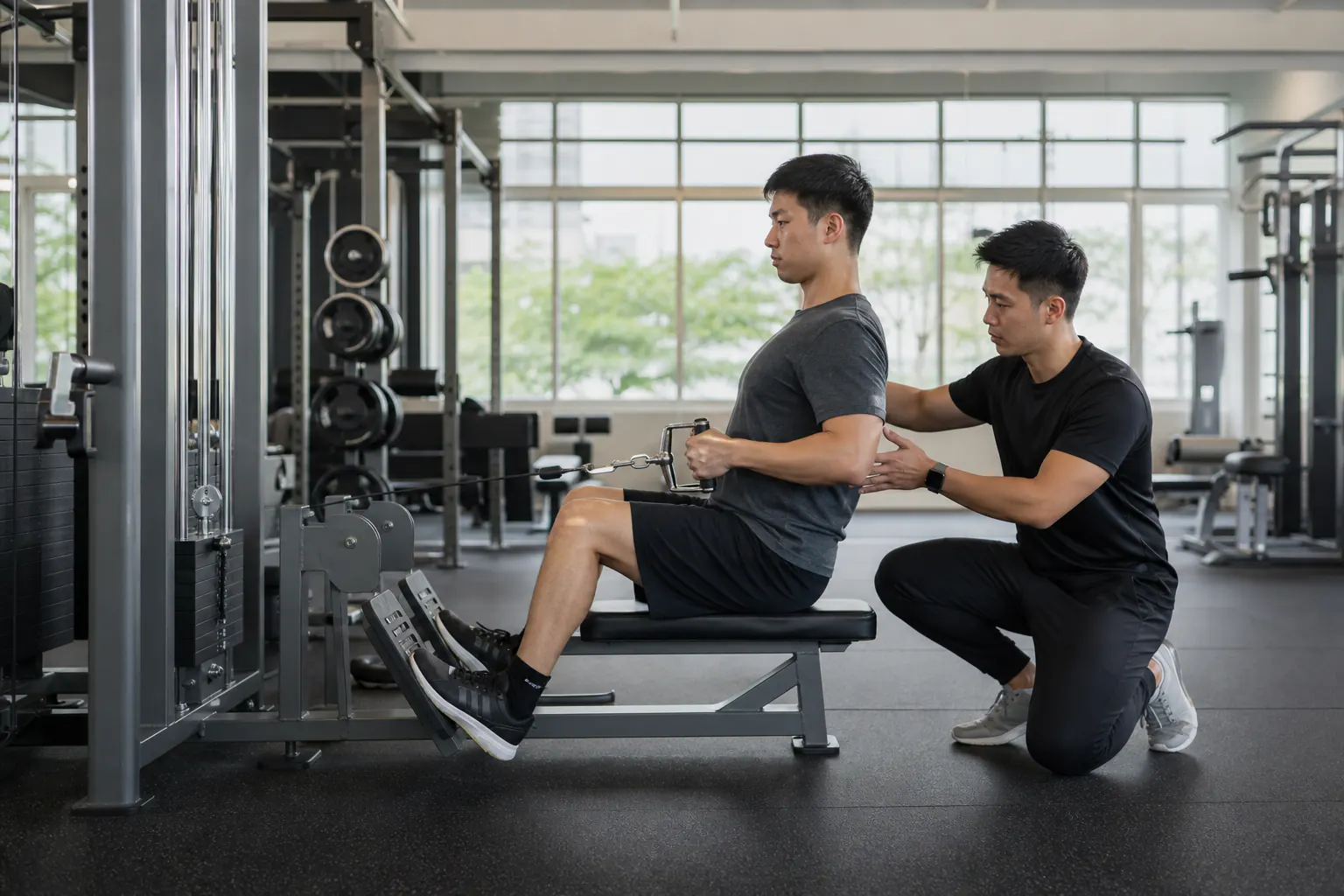
The reverse curl targets your brachioradialis and forearm extensors for complete arm development. Technique guide and programming for Malaysian gym-goers.
Most lifters train their biceps religiously but completely ignore the muscles on top of their forearms. The reverse curl - performed with an overhand grip - targets the brachioradialis and forearm extensors, muscles that are essential for grip strength, arm aesthetics, and injury prevention.
Why Reverse Curls Matter
The brachioradialis is the thick muscle running along the outside of your forearm. When well-developed, it creates a powerful, balanced look that makes your arms appear larger from every angle. Underdeveloped brachioradialis muscles make arms look incomplete - big biceps with thin forearms.
Beyond aesthetics, strong forearm extensors protect against common overuse injuries like tennis elbow (lateral epicondylitis) and carpal tunnel syndrome. For Malaysian office workers who type all day and then lift in the evening, reverse curls are preventive medicine for the elbow joint.
How to Perform Reverse Curls
With an EZ-bar (recommended):
- Stand with feet shoulder-width apart
- Grip the EZ-bar on the outer angled portions with an overhand grip (palms facing down)
- Arms extended, bar resting against your thighs
- Curl the bar up by flexing at the elbow
- Keep your wrists straight - do not let them bend backward
- Squeeze at the top for 1 second
- Lower under control for 2-3 seconds
With dumbbells:
- Same standing position
- Hold dumbbells with palms facing down (pronated grip)
- Curl up while maintaining the pronated position throughout
- This variation allows slightly more natural wrist alignment
With a straight barbell: Possible but places more stress on the wrists. The EZ-bar is preferred for comfort and safety.
Key Technique Points
Keep your wrists neutral: The most important cue. If your wrists bend backward during the curl, the forearm extensors disengage and the wrist joint takes excessive stress. Lock your wrists in a straight line with your forearms.
Use lighter weight than regular curls: Your overhand grip is weaker than your underhand grip. If you barbell curl 30kg, start reverse curls at 15-20kg. This is normal and expected.
Elbows stay pinned: Just like regular curls, your upper arms should remain stationary. No swinging, no shoulder involvement.
Programming
As a forearm finisher:
- 3 sets of 12-15 reps
- Light to moderate weight
- At the end of your arm or pull workout
Paired with regular curls:
- Superset regular curls with reverse curls
- 3 sets of 10 each, back-to-back
- Outstanding arm pump
For grip strength development:
- 4 sets of 8-10 reps
- Moderate weight, slow tempo
- 2 times per week
Reverse curls are one of the simplest additions you can make to your training that will have a visible impact on your arm development. They require no special equipment - just the same barbells and dumbbells already in your gym. Add them consistently for 8 weeks and compare your forearm development before and after.
Part of our comprehensive guide:
The Complete Guide to Personal Training Methods in Malaysia→Also in this series:
Related Articles
Find a Personal Trainer
Ready to put this into practice? Connect with a certified personal trainer near you, or explore by service and goal.