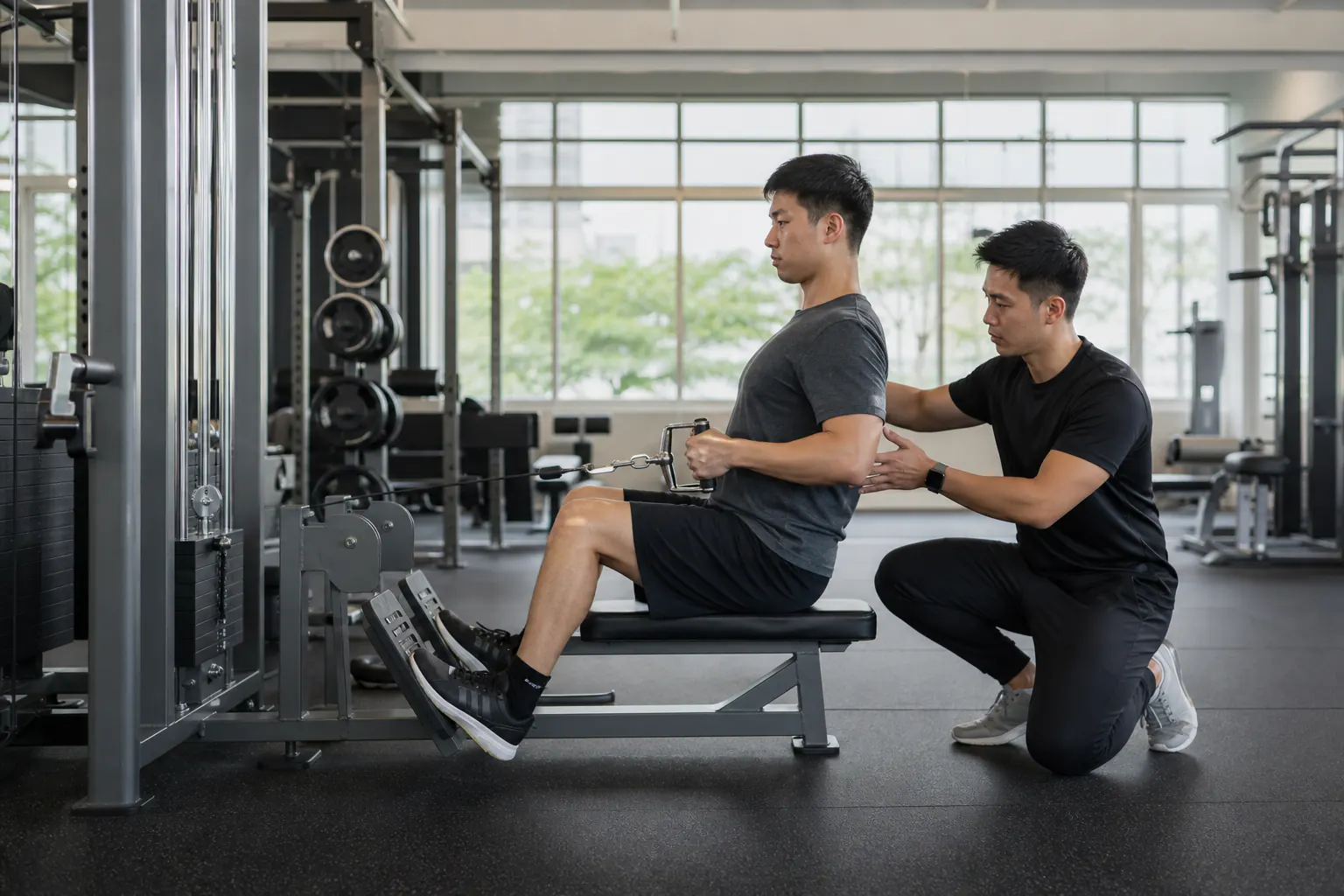
Improve scapular stability with these exercises to press heavier and prevent shoulder injuries. Covers serratus anterior, lower traps, and rhomboid work.
Your shoulder blade - the scapula - is the platform that every arm movement launches from. If that platform is unstable, every press, pull, and raise you do is compromised. You lose force, gain injury risk, and develop the kind of nagging shoulder pain that never fully goes away.
I assess scapular function in every new client who walks through my door. At least 70 percent of them have some degree of scapular dysfunction - usually scapular winging, where the inner border of the shoulder blade pokes out from the ribcage instead of lying flat. It is so common among Malaysian office workers that I have started to consider it the default rather than the exception.
What Scapular Stability Actually Means
Your scapula is not fixed to your skeleton by joints like most bones. It floats on the back of your ribcage, held in position by 17 muscles that attach to it. These muscles must coordinate precisely to move the scapula through its various positions:
- Upward rotation: Tilting the scapula so the socket faces upward (needed for overhead pressing)
- Downward rotation: Returning from the upward position
- Protraction: Moving the scapula forward around the ribcage (needed for punching, push-ups)
- Retraction: Pulling the scapula back toward the spine (needed for rowing, bench press setup)
- Elevation: Shrugging upward
- Depression: Pulling downward
Stability means these muscles fire in the right sequence, at the right intensity, at the right time. Dysfunction means they do not - certain muscles are weak, certain muscles are overactive, and the scapula moves in patterns that create impingement, instability, or pain.
The Key Scapular Stabiliser Muscles
Serratus Anterior
Wraps around the ribcage under your shoulder blade. Its primary job is to keep the scapula flat against the ribcage and rotate it upward during overhead movements. When the serratus is weak, you get scapular winging.
Lower Trapezius
The lower fibres of the trapezius depress and upwardly rotate the scapula. Most lifters have overdeveloped upper traps (from shrugging, carrying heavy bags, and stress) and underdeveloped lower traps. This imbalance pulls the scapula upward and reduces its ability to rotate properly.
Rhomboids
Connect the inner border of the scapula to the spine. They retract the scapula - pulling it toward the midline. Important for rowing movements and maintaining a retracted position during bench press.
Middle Trapezius
Works with the rhomboids to retract the scapula. Also stabilises the scapula during arm movements.
Scapular Stability Exercises
1. Scapular Push-Up
Get into a push-up position with arms straight. Without bending your elbows, let your chest sink between your shoulder blades (scapulae protract apart). Then push your upper back toward the ceiling by protracting your shoulder blades together and rounding your upper back slightly.
This isolates the serratus anterior. Most people have never done this movement and will feel their serratus working intensely.
Programming: 3 sets of 12-15 reps. Include in every pressing warm-up.
2. Wall Slide
Stand with your back flat against a wall. Press your lower back, upper back, head, and arms against the wall. Start with your arms at 90 degrees (like a goalpost position). Slide your arms upward while maintaining contact with the wall at all times - elbows and wrists touching the wall.
If you cannot keep your arms against the wall, your pecs and lats are tight and your lower traps are weak. Go only as high as you can while maintaining wall contact.
Programming: 3 sets of 10 slow repetitions. Hold the top position for 2 seconds.
3. Prone Y Raise
Lie face down on an incline bench (30-45 degrees). Hold very light dumbbells (1-3kg) or no weight. Raise your arms at a 30-degree angle from your head, forming a Y shape. Thumbs pointing toward the ceiling.
This targets the lower trapezius with minimal upper trap involvement. The incline position removes momentum.
Programming: 3 sets of 10-12. Stay light - if you need more than 3kg and your form is good, you are doing well.
4. Band-Resisted Scapular Retraction
Anchor a resistance band at chest height. Hold the band with both arms extended in front of you. Pull your shoulder blades together without bending your elbows. Hold the retracted position for 3 seconds. Release slowly.
This isolates the rhomboids and middle traps without lat involvement.
Programming: 3 sets of 12 with a 3-second hold at peak contraction.
5. Serratus Punch
Lie on your back holding a light dumbbell (5-10kg) with one arm extended toward the ceiling. Without bending your elbow, punch the dumbbell toward the ceiling by protracting your shoulder blade off the bench. Your shoulder should lift 3-5cm off the surface.
This is pure serratus anterior isolation. A weak serratus will fatigue rapidly - even with light weight.
Programming: 3 sets of 12 per arm.
6. Quadruped Scapular Circles
Get on all fours. Without bending your elbows, move your torso in circles by protracting, elevating, retracting, and depressing your scapulae. Perform slow, controlled circles in both directions.
This develops coordination between all scapular muscles simultaneously.
Programming: 2 sets of 8 circles each direction.
7. High Pull to External Rotation
Use a cable or resistance band at shoulder height. Pull toward your face (like a face pull) but continue the motion by externally rotating your forearms until your fists point to the ceiling. This trains upward rotation, retraction, and external rotation - the three most important scapular movements for overhead lifting.
Programming: 3 sets of 12-15.
8. Farmer's Walk
Hold heavy dumbbells or kettlebells at your sides and walk. This forces the scapular stabilisers to maintain position under load while your body moves. The lower traps work to keep your shoulders from shrugging upward.
Programming: 3 sets of 30-40 metres. Use the heaviest weight you can hold without your shoulders rising toward your ears.
A 10-Minute Scapular Stability Routine
Do this before any upper body training session:
- Scapular push-ups: 2 x 12
- Wall slides: 2 x 10
- Band scapular retraction: 2 x 12
- Face pull with external rotation: 2 x 12
Total time: 8-10 minutes. This primes the stabilisers so they function properly during your pressing and pulling exercises.
How Scapular Stability Improves Your Big Lifts
Bench Press
A stable, retracted scapular position gives you a solid base to press from. Without scapular retraction, the bench press loads the anterior shoulder more than the chest, and pressing strength suffers. Many bench press plateaus break once scapular retraction is properly established.
Overhead Press
Upward rotation of the scapula is essential for safe overhead pressing. Without it, the supraspinatus tendon gets pinched in the subacromial space every time you press. Improve scapular upward rotation and overhead pressing becomes both safer and stronger.
Pull-Ups and Rows
Scapular depression and retraction initiate every pulling movement. If your scapulae do not move properly, you pull with your arms instead of your back. The result is weak lats despite doing lots of pull-ups.
Deadlift
Scapular depression keeps your shoulders in a packed, secure position during heavy pulls. When the scapulae elevate (shrug upward) during a deadlift, the bar drifts forward and your upper back rounds.
When to Seek Professional Help
If you have visible scapular winging (you can see or feel the inner border of your shoulder blade sticking out when you push against a wall), see a physiotherapist for assessment. Scapular winging can indicate nerve involvement - specifically the long thoracic nerve, which innervates the serratus anterior.
Nerve-related scapular winging requires different treatment than simple muscular weakness. A physiotherapist can differentiate between the two and create an appropriate rehabilitation programme.
In KL and major Malaysian cities, sports physiotherapy assessments cost RM100-200 per session. Worth every ringgit if you have persistent scapular dysfunction that is not responding to general strengthening exercises.
Your shoulder blades are the platform. Stabilise the platform, and everything built on top of it - your pressing, your pulling, your shoulder health - becomes more solid.
Part of our comprehensive guide:
The Complete Guide to Personal Training Methods in Malaysia→Also in this series:
Related Articles
Find a Personal Trainer
Ready to put this into practice? Connect with a certified personal trainer near you, or explore by service and goal.