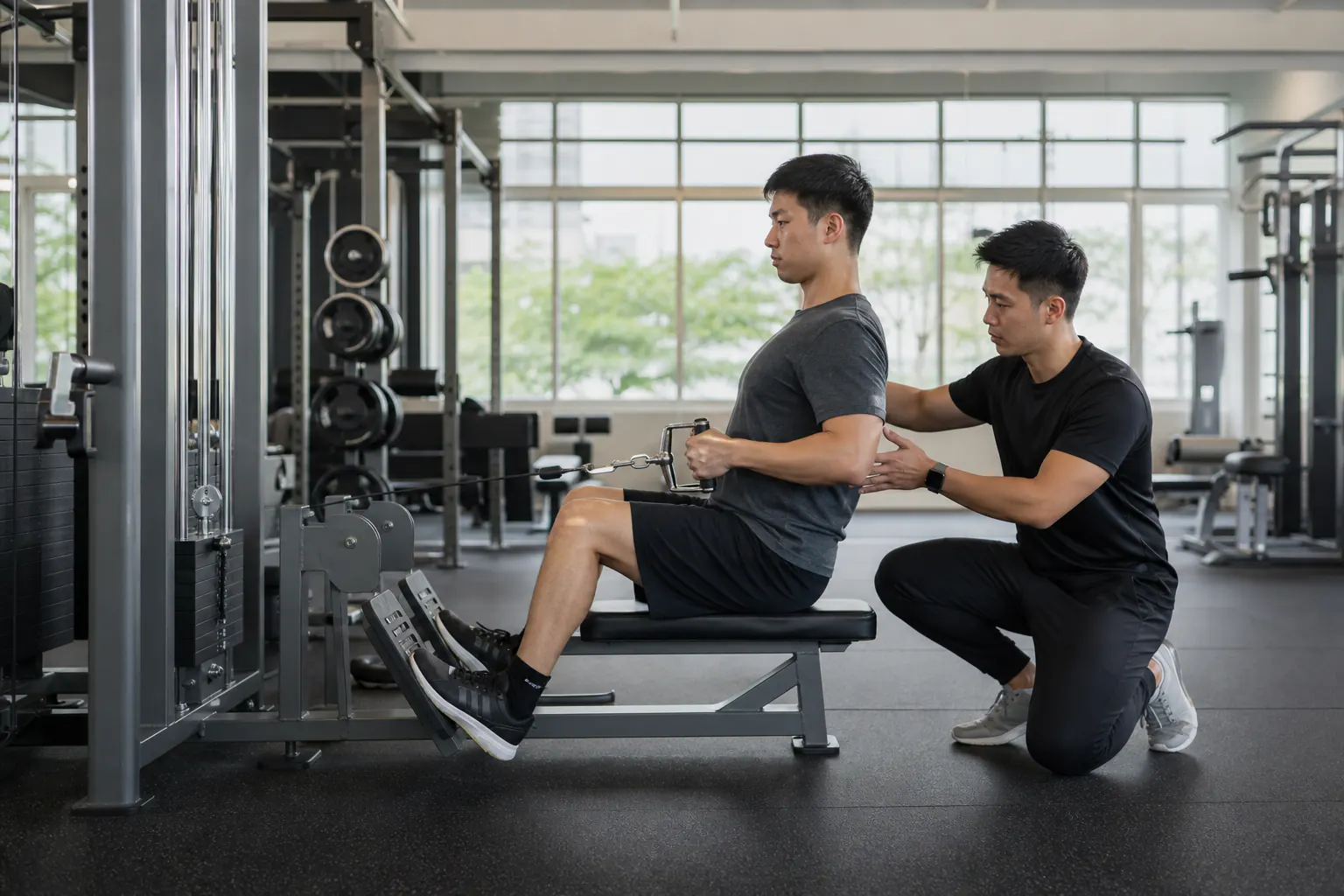
Every training method explained for Malaysian lifters. From barbell basics to calisthenics, programming models to advanced techniques. Find the right approach for your goals.
What Training Method Should You Use?
The right training method depends on three things: your current fitness level, your goal, and what equipment you have access to. In Malaysia, that last factor varies wildly — from fully equipped commercial gyms in KL to condo gyms with a single cable machine to outdoor parks with pull-up bars.
This guide covers every major training method used by personal trainers in Malaysia, explains who each one suits best, and links to detailed breakdowns for each.
Barbell Training: The Foundation
Barbell training is the most efficient way to build strength. Movements like the squat, deadlift, bench press, and overhead press work multiple muscle groups simultaneously and allow progressive overload in small increments.
If you have access to a gym with a squat rack and barbell, this should be the foundation of your programme regardless of your goal — weight loss, muscle building, or sports performance.
Who it suits: Beginners to advanced lifters. Anyone with gym access. Where in Malaysia: Most commercial gyms (Fitness First, Anytime Fitness, Celebrity Fitness) and serious independent gyms.
Read the full breakdown: Barbell Training for Beginners
Calisthenics: Training Without a Gym
Calisthenics uses your bodyweight as resistance. Push-ups, pull-ups, dips, squats, and their progressions can build impressive strength and physique without any equipment.
In Malaysia's climate, outdoor calisthenics is popular — many public parks have pull-up bars and parallel bars. Training before 8am or after 5:30pm avoids the worst of the heat.
Who it suits: People who prefer training outdoors, travellers, those without gym access. Where in Malaysia: KLCC Park, Taman Tasik Perdana, Taman Metropolitan Kepong, and most state-level public parks.
Read the full breakdown: Beginner Calisthenics Program
Programme Design: Splits and Structures
How you organise your training week matters as much as the exercises themselves. The three most common approaches:
Upper/Lower Split
Train upper body one day, lower body the next. Four sessions per week. Good balance of frequency and recovery.
Read more: Upper Lower Split Guide
Push/Pull/Legs
Group muscles by movement pattern. Six sessions per week (each muscle group twice). Higher volume, suited to intermediate lifters.
Full Body
Train everything each session, three times per week. Best for beginners and time-constrained professionals — common recommendation from Malaysian personal trainers.
Progressive Overload Models
Progressive overload — gradually increasing the challenge — is the single non-negotiable principle for any training goal. Two popular models used in Malaysia:
5/3/1 (Wendler)
A monthly progression model built around four main lifts. Slower but sustainable. Excellent for lifters who have been training 6+ months.
Read more: 5/3/1 Wendler Program Guide
5x5 StrongLifts
Five sets of five reps, adding weight each session. Simple and effective for the first 3-6 months of training. The most commonly recommended beginner programme.
Read more: 5x5 StrongLifts Review
Autoregulation: Training by Feel
RPE (Rate of Perceived Exertion) lets you adjust training intensity based on how you feel each day. Instead of fixed percentages, you train to a subjective effort level.
This is especially relevant in Malaysia where heat, humidity, sleep quality during Ramadan, and post-holiday recovery all affect daily performance. A rigid percentage programme does not account for these variables.
Read more: RPE and Autoregulation Training Guide
Advanced Techniques
Once you have 12+ months of consistent training, these methods can break plateaus:
Blood Flow Restriction (BFR)
Restricting blood flow during light-weight exercise stimulates muscle growth without heavy loads. Useful for rehabilitation and training around injuries.
Read more: Blood Flow Restriction Training
Agility and Speed Work
Ladder drills, cone drills, and plyometrics for sports performance. Common in Malaysian futsal, badminton, and rugby training.
Read more: Agility Ladder Drills
Choosing the Right Method for Your Goal
| Goal | Best Method | Programme |
|---|---|---|
| Lose weight | Full body + cardio | 3x/week full body, 2x cardio |
| Build muscle | Upper/Lower or PPL | 4-6x/week with progressive overload |
| Get stronger | Barbell + 5/3/1 | 4x/week focused on compound lifts |
| Sports performance | Sport-specific + strength | 3x gym + 2x sport training |
| General fitness | Full body + calisthenics | 3x/week, mix of methods |
Working With a Personal Trainer in Malaysia
A certified personal trainer takes the guesswork out of method selection. They assess your starting point, design a programme matched to your goal, and adjust it as you progress.
Prices across Malaysia:
- Premium urban (KL, PJ, Mont Kiara): RM150-300 per session
- State capitals and major cities: RM100-200 per session
- Towns and smaller areas: RM70-150 per session
Most trainers offer a free consultation or trial session. Use it to assess whether their training philosophy matches your goals.
Frequently Asked Questions
Q: What is the best training method for beginners in Malaysia? A: Full-body barbell training three times per week. It teaches fundamental movement patterns, builds strength across all muscle groups, and is time-efficient. Most Malaysian personal trainers start clients here regardless of their long-term goal.
Q: Can I build muscle with calisthenics only? A: Yes, up to an intermediate level. Push-ups, pull-ups, dips, and pistol squats build real muscle. Beyond that, adding weight (weighted vest or gym work) accelerates progress. Many Malaysian trainers combine both.
Q: How do I know when to change my training programme? A: When you stop making progress for 2-3 consecutive weeks despite adequate sleep and nutrition. Most programmes work for 8-12 weeks before adaptation slows and a change in stimulus helps.
Q: Is training in Malaysia's heat dangerous? A: Indoor gym training is fine year-round. Outdoor training should be scheduled before 8am or after 5:30pm. Hydrate aggressively — aim for 3-4 litres of water daily when training in tropical conditions. Watch for dizziness, nausea, or confusion as signs of heat exhaustion.
Q: How many times per week should I train? A: Three to four times per week for most people. Beginners can see results with three sessions. Advanced lifters may train five to six times. More important than frequency is consistency over months and years.
Related Articles
Find a Personal Trainer
Ready to put this into practice? Connect with a certified personal trainer near you, or explore by service and goal.