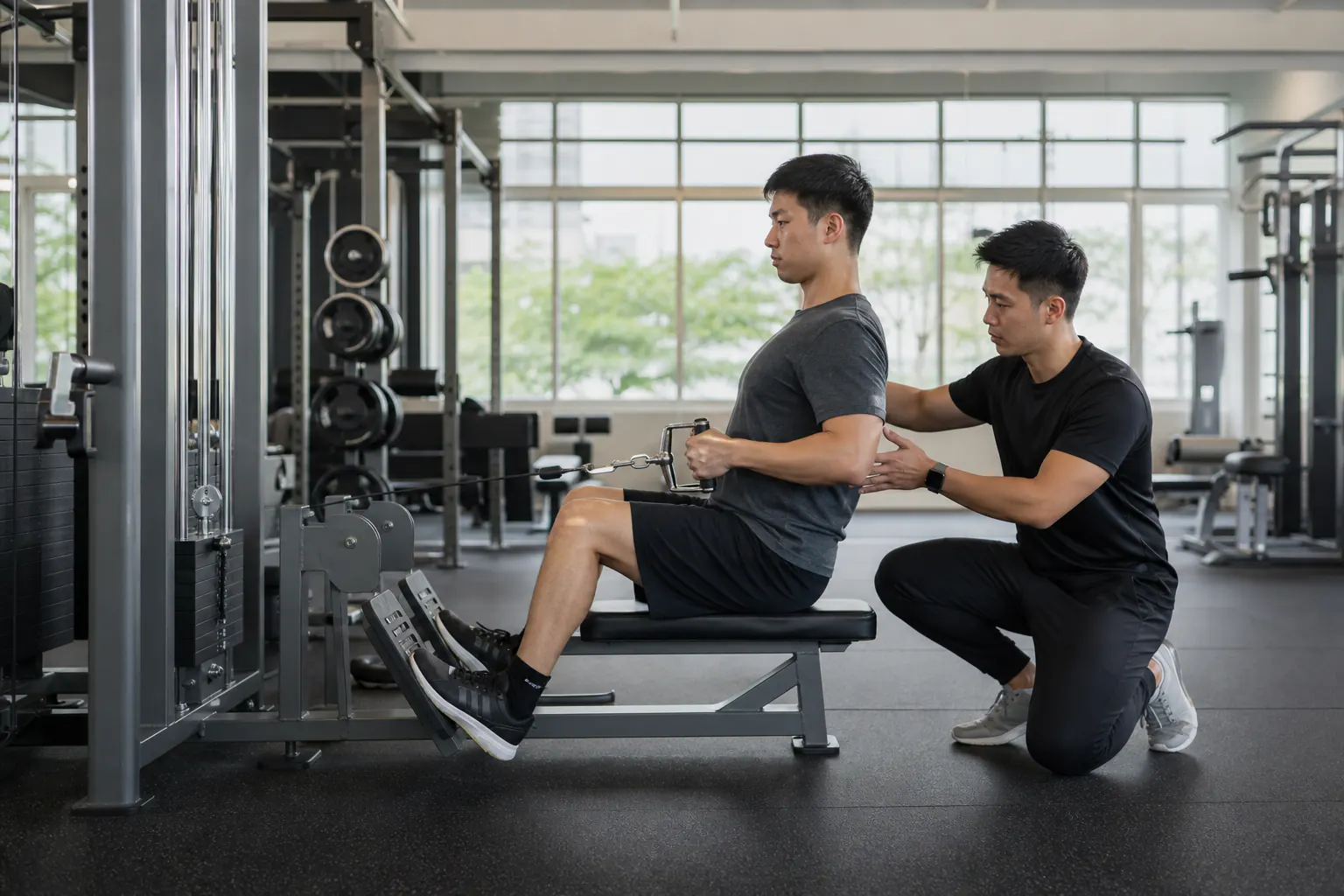
Learn how to use Rate of Perceived Exertion (RPE) to autoregulate your training intensity.
If you have ever followed a rigid percentage-based programme and found yourself struggling on days when the Malaysian heat has drained your energy, autoregulation training might be the answer. By using Rate of Perceived Exertion (RPE), you can adjust your training intensity based on how you actually feel on any given day, leading to better long-term results.
What Is RPE?
The RPE scale, as applied to resistance training, runs from 1 to 10 and measures how difficult a set feels relative to your maximum effort:
- RPE 6: Could do 4 more reps. A light warm-up effort.
- RPE 7: Could do 3 more reps. Moderate effort, good for technique work.
- RPE 8: Could do 2 more reps. Hard but manageable. Most working sets target this range.
- RPE 9: Could do 1 more rep. Very challenging. Reserved for heavy singles or intensity blocks.
- RPE 10: Maximum effort. Could not do another rep. Rarely used in planned training.
Why RPE Matters in Malaysia
Training in Malaysia presents unique challenges that make autoregulation particularly valuable:
Climate Impact
The tropical heat and humidity affect your performance more than most people realise. Research shows that training in high temperatures can reduce strength output by 5 to 15 percent. On a particularly hot day, your usual 100 kg squat at RPE 8 might only be 90 to 95 kg. RPE allows you to adjust accordingly rather than grinding through a prescribed weight that is too heavy for the conditions.
Lifestyle Factors
Malaysian work culture often involves long hours, unpredictable schedules, and social obligations. A rigid programme that demands specific weights on specific days does not account for nights when you slept poorly because your neighbour's renovation started at 7am, or when a client dinner at a mamak kept you up until midnight.
Fasting Periods
During Ramadan or other fasting periods, energy levels fluctuate significantly. RPE-based training allows Muslim athletes to train effectively while respecting the natural energy fluctuations of fasting.
How to Implement RPE Training
Step 1: Learn to Rate Your Sets
Start by adding RPE ratings to your existing programme. After each working set, honestly assess how many reps you had left in reserve. This takes practice - most beginners overestimate their RPE by 1 to 2 points. Record your RPE alongside your sets and reps in your training log.
Step 2: Use RPE Targets Instead of Fixed Weights
Instead of programming "Squat 80 kg for 4 sets of 6," programme "Squat 4 sets of 6 at RPE 8." Work up to a weight that feels like you could have done 2 more reps, and use that weight for your working sets.
Step 3: Allow for Daily Variation
On good days, your RPE 8 might be higher than expected. On tough days, it might be lower. Both are perfectly fine. The goal is consistent effort, not consistent weight.
Sample RPE-Based Programme
Here is a sample lower body day using RPE:
- Squat: Work up to RPE 8 for a set of 5, then perform 3 back-off sets at RPE 7
- Romanian deadlift: 3 sets of 8 at RPE 7-8
- Bulgarian split squat: 3 sets of 10 per leg at RPE 7
- Leg curl: 3 sets of 12 at RPE 8
The weights used will vary from session to session based on your recovery, sleep, nutrition, and the weather.
Common Mistakes with RPE
Sandbagging
Some lifters consistently rate sets as harder than they actually were, effectively training too light. If every set feels like RPE 9 but you never fail a rep, you are likely overestimating your RPE.
Ego Lifting
The opposite problem - pushing to RPE 10 on every set because "it did not feel that hard." Leave your ego at the door. RPE 8 means leaving 2 reps in the tank, not grinding until your form breaks down.
Not Tracking
RPE is only useful if you track it consistently. Without records, you cannot identify trends or ensure progressive overload. Use a simple notebook or an app like Strong (available on both iOS and Android) to log your training.
Combining RPE with Percentage-Based Training
You do not have to choose one or the other. Many effective programmes use percentages for main lifts and RPE for accessories. For example:
- Main lift: Squat at 82.5 percent of 1RM for 4 sets of 4, with an RPE cap of 9 (reduce weight if it exceeds RPE 9)
- Accessories: Romanian deadlift 3 sets of 8 at RPE 8
This hybrid approach gives you structure while allowing flexibility for daily performance variations.
Getting Started
If you are new to RPE training, spend 4 weeks simply rating your existing sets without changing anything. This calibration period helps you develop accurate self-assessment. After that, begin using RPE targets for your accessory work first, then gradually apply it to your main lifts as your rating accuracy improves.
Part of our comprehensive guide:
The Complete Guide to Personal Training Methods in Malaysia→Also in this series:
Related Articles
Find a Personal Trainer
Ready to put this into practice? Connect with a certified personal trainer near you, or explore by service and goal.