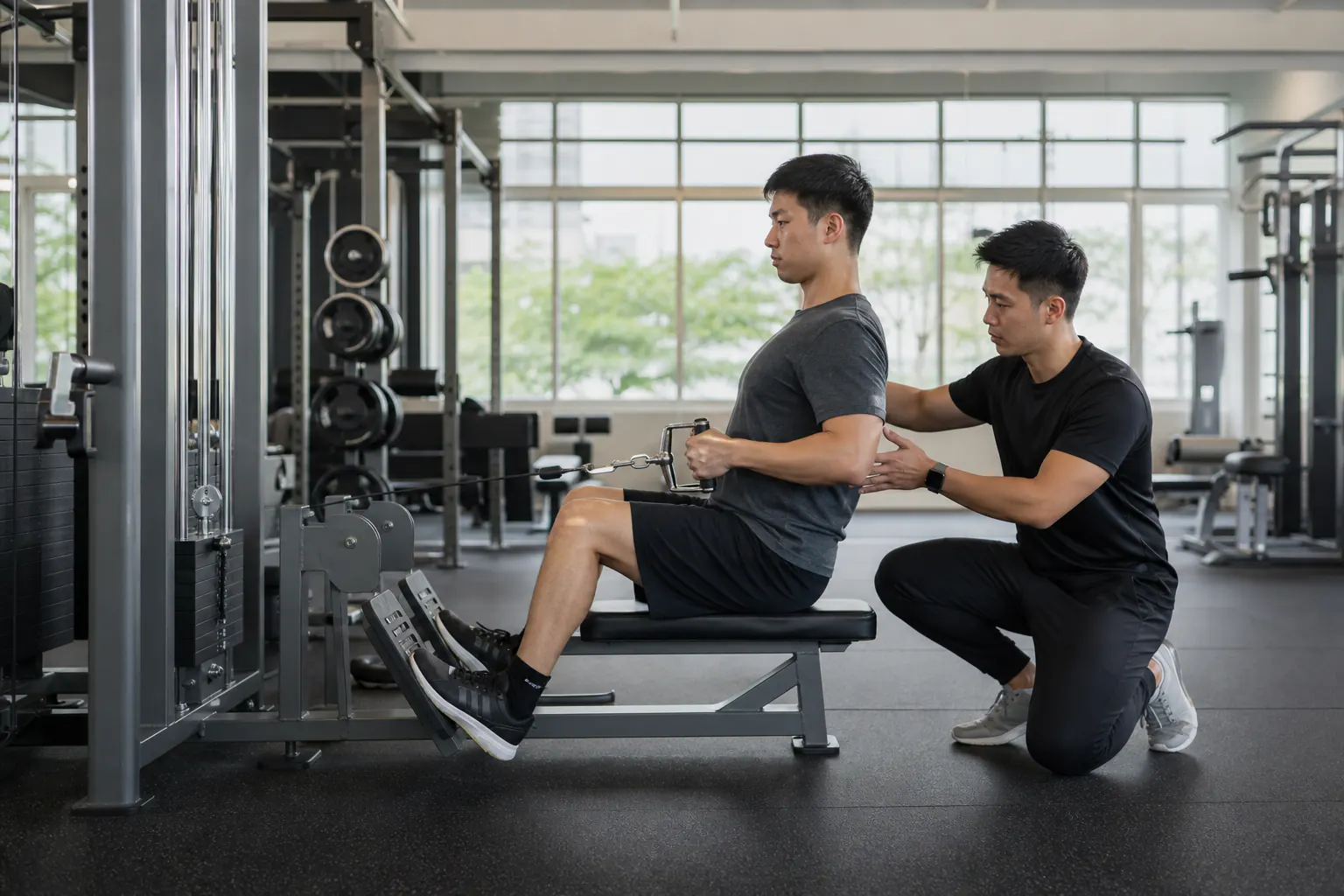
Learn how contrast training pairs heavy strength sets with explosive movements to develop power and speed. An advanced method for Malaysian athletes.
Contrast training, also known as complex training, is one of the most effective methods for developing explosive power. By alternating between a heavy strength exercise and a biomechanically similar explosive exercise, you train your nervous system to produce maximum force at high speeds. This method is widely used by strength coaches worldwide and is particularly valuable for Malaysian athletes preparing for competition.
How Contrast Training Works
The method exploits a principle called post-activation performance enhancement (PAPE). When you perform a heavy strength exercise first, your nervous system becomes highly activated. The subsequent explosive exercise takes advantage of this heightened neural state, allowing you to produce more power than you normally could.
Think of it this way: after squatting at 85 percent of your max, your body is primed to recruit more muscle fibres. When you immediately follow with box jumps, those extra recruited fibres contribute to a more powerful jump.
Classic Contrast Pairs
Lower Body
| Heavy Exercise | Explosive Exercise |
|---|---|
| Back squat (3-5 reps at 80-85%) | Box jumps (5 reps) |
| Trap bar deadlift (3-5 reps at 80-85%) | Broad jumps (5 reps) |
| Front squat (3-5 reps at 80-85%) | Squat jumps (5 reps) |
| Hip thrust (5 reps at 80-85%) | Kettlebell swings (8 reps) |
| Bulgarian split squat (5 per leg at 80%) | Split squat jumps (5 per leg) |
Upper Body
| Heavy Exercise | Explosive Exercise |
|---|---|
| Bench press (3-5 reps at 80-85%) | Medicine ball chest pass (5 reps) |
| Weighted chin-ups (3-5 reps) | Medicine ball slams (5 reps) |
| Overhead press (3-5 reps at 80-85%) | Push press or overhead medicine ball throw (5 reps) |
| Bent-over row (5 reps at 80%) | Band-resisted row (8 explosive reps) |
Programme Design
Rest Periods
- After the heavy exercise: Rest 2 to 4 minutes before the explosive exercise
- After the explosive exercise: Rest 2 to 3 minutes before the next contrast pair
- Total rest per pair: approximately 5 to 7 minutes
Sets and Reps
Perform 3 to 4 contrast pairs per session. Each pair includes:
- Heavy exercise: 3 to 5 reps at 80 to 87 percent of 1RM
- Explosive exercise: 3 to 6 reps performed with maximum intent
Session Structure
A full contrast training session should include:
- Thorough warm-up (10 minutes of dynamic mobility and activation)
- Two to three lower body contrast pairs
- One to two upper body contrast pairs
- Cool-down and stretching
Sample Full-Body Contrast Session
Warm-up: 10 minutes of light cardio, dynamic stretches, and activation drills
Pair 1 - Lower Body:
- Back squat: 4 reps at 82 percent, rest 3 minutes
- Box jumps: 5 reps with maximum height, rest 3 minutes
- Repeat for 3 rounds
Pair 2 - Upper Body:
- Bench press: 4 reps at 82 percent, rest 3 minutes
- Medicine ball chest pass: 5 explosive reps, rest 3 minutes
- Repeat for 3 rounds
Pair 3 - Lower Body:
- Trap bar deadlift: 4 reps at 80 percent, rest 3 minutes
- Broad jumps: 5 reps for maximum distance, rest 3 minutes
- Repeat for 3 rounds
Cool-down: 10 minutes of static stretching and foam rolling
Practical Considerations for Malaysian Gyms
Equipment Availability
Many Malaysian commercial gyms like Celebrity Fitness or Chi Fitness may not have medicine balls or plyo boxes. Alternatives include:
- Replace box jumps with squat jumps (no equipment needed)
- Replace medicine ball throws with explosive push-ups from a bench
- Replace broad jumps with explosive step-ups on a sturdy bench
Space Considerations
Explosive exercises like jumps and throws require space. During peak hours at busy KL gyms, this can be challenging. Consider training during off-peak hours (mid-morning or early afternoon) or using a functional training area if your gym has one.
Heat Management
Contrast training is neurologically demanding. In Malaysia's tropical climate, stay well-hydrated and train in air-conditioned environments when possible. Keep a water bottle with electrolytes nearby and sip between pairs.
Who Benefits Most?
Contrast training is most effective for:
- Athletes in sports requiring explosive power (badminton, futsal, martial arts)
- Intermediate to advanced lifters with at least a 1.5x bodyweight squat
- Athletes preparing for competitive events
- Anyone looking to improve their rate of force development
Beginners should build a foundation of strength before attempting contrast training. If you cannot squat 1.25 times your bodyweight for 5 reps with good form, focus on building base strength first.
Expected Outcomes
With consistent contrast training performed 2 to 3 times per week for 6 to 8 weeks, you can expect improvements of 5 to 15 percent in vertical jump height and broad jump distance, along with noticeable improvements in sprint speed and agility. These gains transfer directly to athletic performance on the field or court.
Part of our comprehensive guide:
The Complete Guide to Personal Training Methods in Malaysia→Also in this series:
Related Articles
Find a Personal Trainer
Ready to put this into practice? Connect with a certified personal trainer near you, or explore by service and goal.