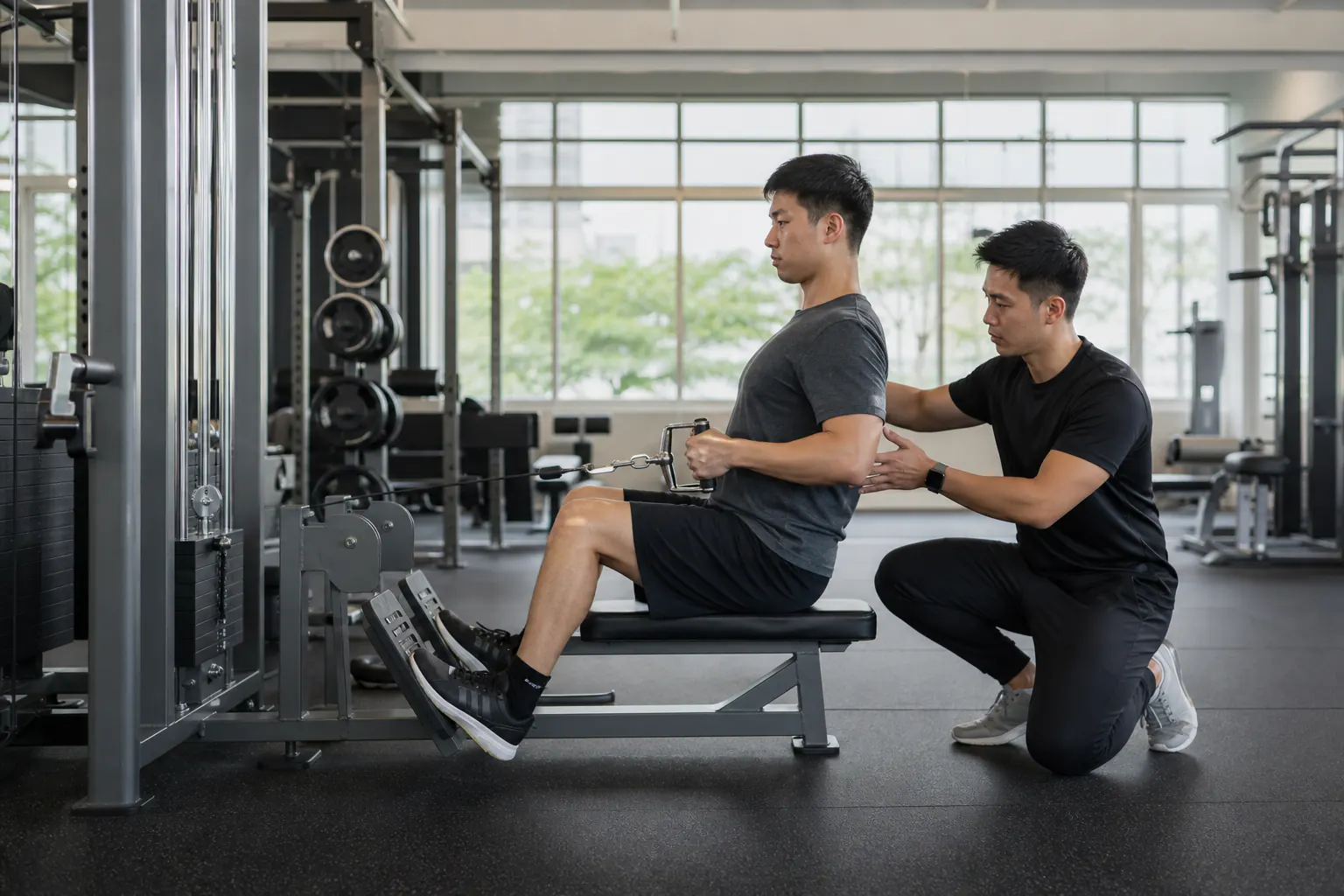
Learn how mechanical drop sets use biomechanical advantages to extend sets without reducing load. An advanced hypertrophy technique for intermediate lifters.
Traditional drop sets involve reducing weight to continue repping past failure. Mechanical drop sets take a different approach - instead of dropping the weight, you switch to a biomechanically easier variation of the same exercise. This keeps the load constant while extending the set, creating a brutal stimulus for muscle growth.
How Mechanical Drop Sets Work
Every exercise has variations that are easier or harder depending on leverage, grip, or body position. A mechanical drop set exploits these differences by progressing from the hardest variation to the easiest, all using the same weight.
For example, with dumbbell curls:
- Start with incline curls (hardest - muscles fully stretched)
- When you cannot complete another rep, sit upright for standing curls (moderate)
- When you fail again, switch to concentration curls with the arm braced (easiest)
You never put the dumbbells down, and you never change the weight. The changing leverage allows you to continue pushing the muscle despite accumulating fatigue.
Advantages Over Traditional Drop Sets
Constant Load, More Mechanical Tension
Mechanical tension is the primary driver of muscle growth. Traditional drop sets reduce load as you fatigue, which decreases mechanical tension. Mechanical drop sets maintain the same load throughout, keeping tension high even as you extend the set.
Faster Setup
No need to scramble to change plates or grab different dumbbells between sets. In crowded Malaysian gyms where equipment is limited, this is a significant practical advantage. You simply change your body position and keep going.
Full Range Stimulus
By moving through different positions, you challenge the muscle at various points in its strength curve. This provides a more complete growth stimulus than repeating the same movement pattern.
Best Mechanical Drop Set Combinations
Chest
- Incline dumbbell press (8-10 reps)
- Flat dumbbell press (6-8 reps)
- Decline or floor press (6-8 reps)
Use the same dumbbells throughout. The increasingly favourable pressing angle allows you to continue despite fatigue.
Back
- Wide-grip pull-up or lat pulldown (to failure)
- Medium-grip pulldown (to failure)
- Close-grip supinated pulldown (to failure)
The narrower, supinated grip recruits more bicep assistance, allowing continued pulling when your lats are exhausted.
Shoulders
- Seated overhead press (8-10 reps)
- Standing push press (6-8 reps, using leg drive)
- Lateral raises with same weight (to failure)
The push press allows you to use momentum to continue pressing, and the lateral raise finishes the delts with a different movement pattern.
Biceps
- Drag curls (8-10 reps)
- Standard barbell curls (6-8 reps)
- Cheat curls with controlled eccentric (4-6 reps)
Triceps
- Overhead cable extension (8-10 reps)
- Pushdowns with rope (to failure)
- Pushdowns with straight bar (to failure)
Legs
- Front squat (6-8 reps)
- Back squat with same weight (6-8 reps)
- Goblet squat with same weight converted to holding a plate or dumbbell (to failure)
Programming Guidelines
Volume Recommendations
One to two mechanical drop sets per muscle group per session is sufficient. These are incredibly demanding and generate significant fatigue. More is not better with this technique.
Frequency
Use mechanical drop sets for a specific muscle group once per week. Rotate which muscle groups receive this stimulus to avoid excessive systemic fatigue.
Weight Selection
Choose a weight that allows you to get 8 to 10 reps on the hardest (first) variation. This ensures the load is meaningful throughout all three positions.
When to Use Them
Mechanical drop sets work best as a finisher at the end of your training for a particular muscle group. Perform your heavy compound work first with traditional sets, then finish with one or two mechanical drop sets to maximise volume and metabolic stress.
Common Mistakes
- Too many variations: Stick to 2 to 3 positions per mechanical drop set. More than that leads to excessive fatigue without additional benefit.
- Rushing transitions: Take 3 to 5 seconds to change position. Breathe. The brief transition is part of the technique.
- Using them every session: Reserve mechanical drop sets for phases focused on hypertrophy. During strength or peaking phases, traditional straight sets are more appropriate.
Getting Started
If you train at a Malaysian gym with a reasonable dumbbell selection, start with the chest or bicep mechanical drop sets described above. They are the easiest to set up and execute. As you become comfortable with the technique, experiment with other muscle groups and find the combinations that challenge you most.
Part of our comprehensive guide:
The Complete Guide to Personal Training Methods in Malaysia→Also in this series:
Related Articles
Find a Personal Trainer
Ready to put this into practice? Connect with a certified personal trainer near you, or explore by service and goal.