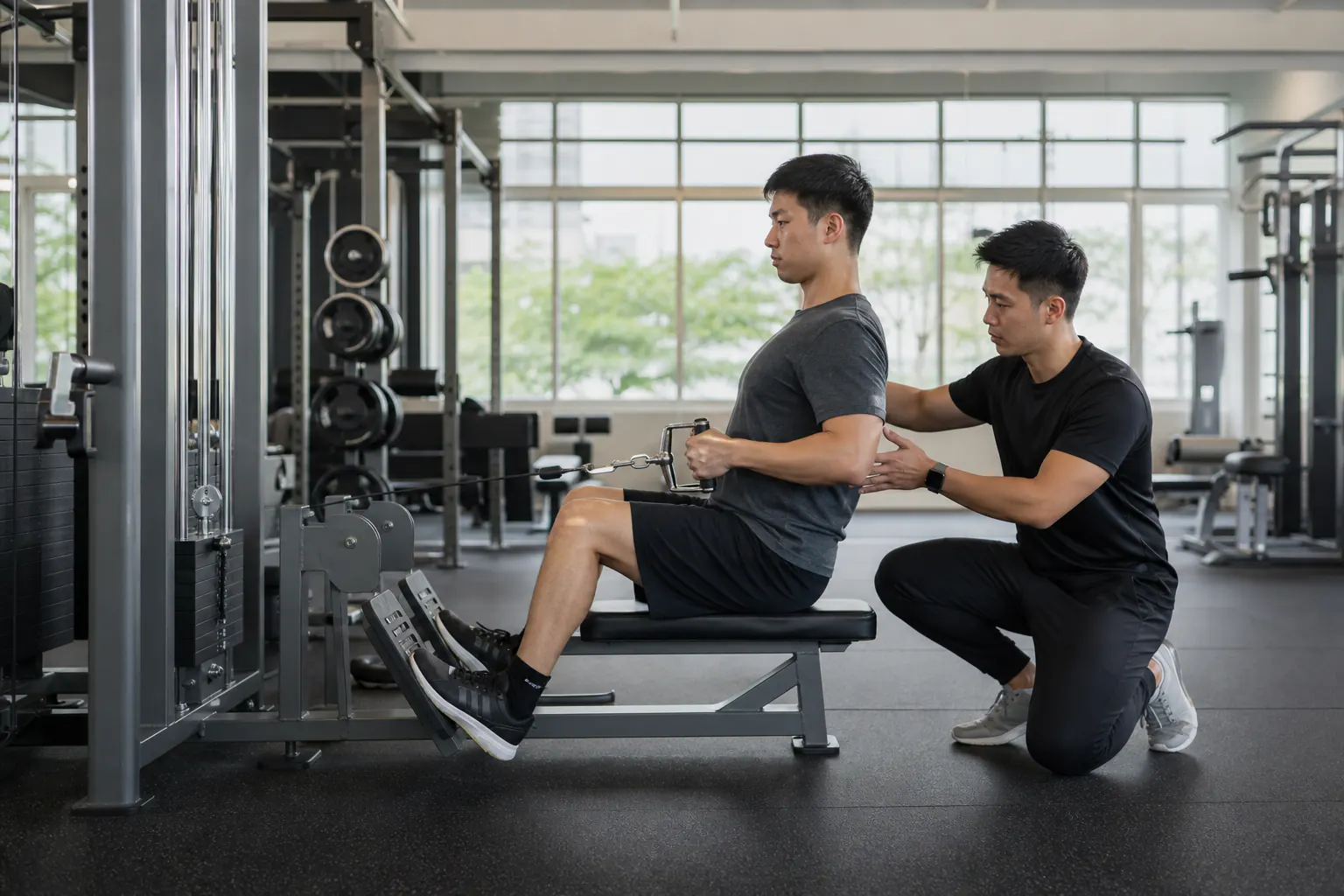
Start barbell training the right way. Learn proper technique for the five fundamental barbell lifts and follow a proven beginner programme for strength.
Barbell training is the fastest path to building total-body strength and muscle. The barbell allows you to load more weight than any other tool and progress in small, measurable increments. If you are new to barbell training, this guide covers everything you need to get started safely and effectively.
The Five Fundamental Barbell Lifts
Every barbell beginner programme revolves around these movements:
Squat - place the bar on your upper traps, take a shoulder-width stance, and sit down between your hips until your hip crease drops below your knees. Drive through your whole foot to stand.
Bench press - lie on the bench with your eyes under the bar. Plant your feet, retract your shoulder blades, and press the bar from your mid-chest to full lockout.
Deadlift - stand with the bar over your midfoot. Hinge at the hips, grip the bar just outside your legs, flatten your back, and drive through the floor until you stand tall.
Overhead press - hold the bar at your collarbone with a grip just outside shoulder width. Brace your core and press the bar straight overhead until your arms are fully extended.
Barbell row - hinge at the hips with the bar hanging at arm's length. Pull the bar into your lower chest while keeping your torso at roughly 45 degrees.
A Proven Beginner Programme
Train three days per week on non-consecutive days. Alternate between two workouts:
Workout A: Squat 3x5, bench press 3x5, barbell row 3x5.
Workout B: Squat 3x5, overhead press 3x5, deadlift 1x5.
Week one: A on Monday, B on Wednesday, A on Friday. Week two: B on Monday, A on Wednesday, B on Friday. Continue alternating.
Start with just the bar (20 kilograms) for upper body lifts and add weight in 2.5-kilogram increments each session when you complete all sets and reps with good form. For squats and deadlifts, start with 40 kilograms if you can and add 5 kilograms each session.
Essential Equipment
Barbell - a standard 20-kilogram Olympic barbell is ideal. Most gyms in Malaysia have these.
Weight plates - you need pairs of 1.25, 2.5, 5, 10, and 20-kilogram plates for gradual progression.
Squat rack or power cage - essential for safe squatting and bench pressing. Never squat without safety bars.
Flat bench - for bench pressing inside the power cage.
Lifting shoes or flat-soled shoes - avoid running shoes with cushioned heels. Flat shoes like Converse or dedicated weightlifting shoes provide a stable base.
Common Beginner Mistakes
Adding weight too fast. Patience with small jumps ensures consistent progress for months. Jumping up 10 kilograms because the weight felt easy leads to stalling prematurely.
Not learning to brace. Take a deep breath into your belly, tighten your core as if someone is about to punch your stomach, and hold it throughout the rep. This protects your spine under heavy loads.
Neglecting mobility. If you cannot squat to depth or press overhead comfortably, spend time on hip, ankle, and shoulder mobility daily.
When to Move On
This programme works for three to six months for most beginners. When you can no longer add weight every session despite eating and sleeping well, it is time to transition to an intermediate programme with weekly progression. A personal trainer can assess when you are ready for this transition and programme your next phase accordingly.
Part of our comprehensive guide:
The Complete Guide to Personal Training Methods in Malaysia→Also in this series:
Related Articles
Find a Personal Trainer
Ready to put this into practice? Connect with a certified personal trainer near you, or explore by service and goal.