Flexibility & Mobility
Find personal trainers specialising in flexibility and mobility training across Malaysia. Improve range of motion, reduce pain, and move better.
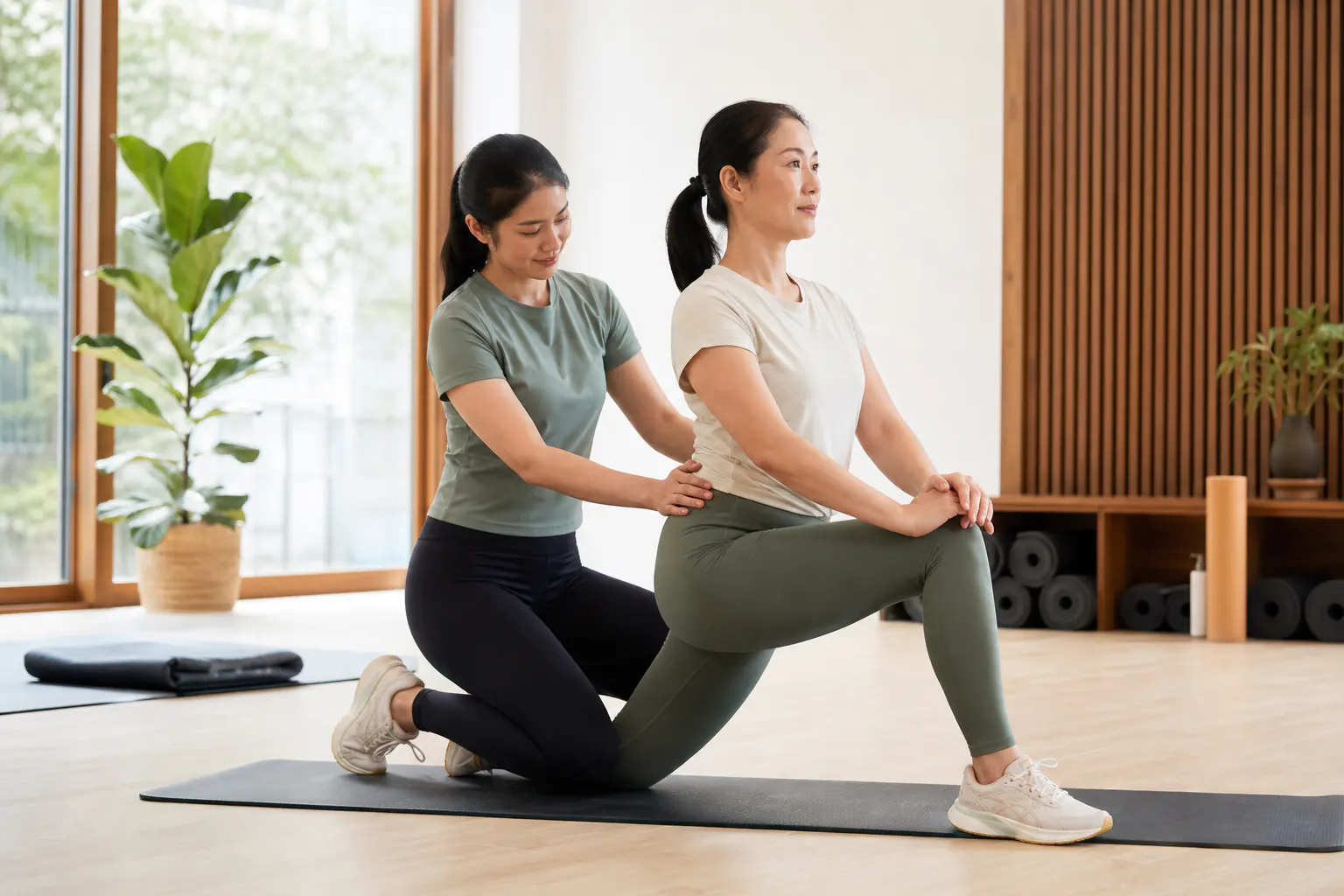
Flexibility & Mobility Training: Move Better, Feel Better
Stiff hips, tight hamstrings, rounded shoulders - these are not just cosmetic issues. They limit your performance in the gym, increase injury risk, and often cause chronic aches that Malaysians dismiss as "normal ageing." They are not normal. They are fixable.
Flexibility refers to the passive range of motion of a muscle or joint - how far you can stretch. Mobility goes further - it is the ability to actively control your body through a full range of motion under load. Both matter, but mobility is what keeps you moving well for decades.
Why Malaysians Specifically Need This
The typical Malaysian lifestyle creates a predictable pattern of restrictions. Long commutes in traffic, desk-bound office work, and evenings on the couch produce shortened hip flexors, tight chest muscles, weak glutes, and a stiff thoracic spine. Layer on humid weather that makes people reluctant to move, and you get a population with significant movement limitations by their thirties.
These restrictions do not just affect gym performance. They cause lower back pain, neck tension headaches, knee discomfort, and shoulder impingement - all common complaints in Malaysian physiotherapy clinics.
How a Personal Trainer Approaches Mobility
A qualified trainer starts with a movement assessment. The Functional Movement Screen (FMS) or similar tool identifies which joints lack range of motion and where movement compensation is occurring. This matters because stretching random body parts wastes time - targeted work on your specific restrictions produces fast results.
Common assessment findings for Malaysian clients include limited ankle dorsiflexion (from years of wearing flat sandals or heels), restricted hip internal rotation, poor thoracic extension, and limited overhead shoulder mobility.
Mobility Training Methods
Controlled Articular Rotations (CARs) involve slowly rotating each joint through its full range of motion. These serve as both an assessment and a daily maintenance tool. Five minutes of CARs every morning keeps your joints healthy and highlights any new restrictions early.
Progressive and Regressive Angular Isometric Loading (PAILs/RAILs) are advanced stretching techniques that build strength at end ranges. Unlike passive stretching, these methods teach your nervous system that new ranges of motion are safe, producing lasting improvements.
Active stretching and loaded stretching bridge the gap between flexibility and strength. A deep goblet squat hold, for example, improves hip and ankle mobility while strengthening the muscles through the full range.
Soft tissue work using foam rollers, lacrosse balls, or massage guns reduces tissue density and improves blood flow before mobility work. This is preparation, not a solution - the real gains come from active mobility training.
Mobility for Specific Activities
If you squat but cannot hit parallel without your heels rising, you need ankle and hip mobility work. If overhead pressing causes shoulder pinching, your thoracic spine and shoulder external rotation need attention. A trainer identifies the mobility bottleneck limiting each movement pattern and addresses it directly.
For golfers, adequate thoracic rotation prevents lower back compensation. For badminton players - common in Malaysia - hip and shoulder mobility directly impacts court performance. Runners need adequate hip extension and ankle dorsiflexion to maintain efficient stride mechanics.
How Long Until You See Results
Passive flexibility gains can happen in weeks with consistent work. True mobility improvements - where you own new ranges of motion and can use them under load - take two to three months of regular practice. The good news is that even five to ten minutes of targeted mobility work daily produces meaningful change.
Start Moving Better
A mobility-focused personal trainer in Malaysia will assess your specific restrictions, create a targeted programme, and teach you self-maintenance techniques that keep you moving well between sessions. This is not yoga or random stretching - it is systematic movement improvement backed by assessment and progression.
How long does flexibility & mobility take with a personal trainer?
Flexibility and mobility training improves your joint range of motion and movement quality, reducing pain and injury risk. A personal trainer assesses your movement restrictions and creates a targeted programme using stretching, mobilisation, and corrective exercises.
What Results to Expect
Flexibility and mobility training improves your joint range of motion and movement quality, reducing pain and injury risk. A personal trainer assesses your movement restrictions and creates a targeted programme using stretching, mobilisation, and corrective exercises.
Find a Flexibility & Mobility Trainer Near You
Browse personal trainers across Malaysia who specialise in flexibility & mobility.
Recommended Training Styles for Flexibility & Mobility
Choose a training format that suits your lifestyle and helps you achieve flexibility & mobility faster.
Explore Other Goals
Start Your Flexibility & Mobility Journey Today
Connect with a certified personal trainer who specialises in flexibility & mobility. No commitment - just send us a message.
Chat on WhatsApp