Injury Rehabilitation
Find personal trainers specialising in injury rehabilitation and post-rehab training across Malaysia. Safe return to exercise after injury or surgery.
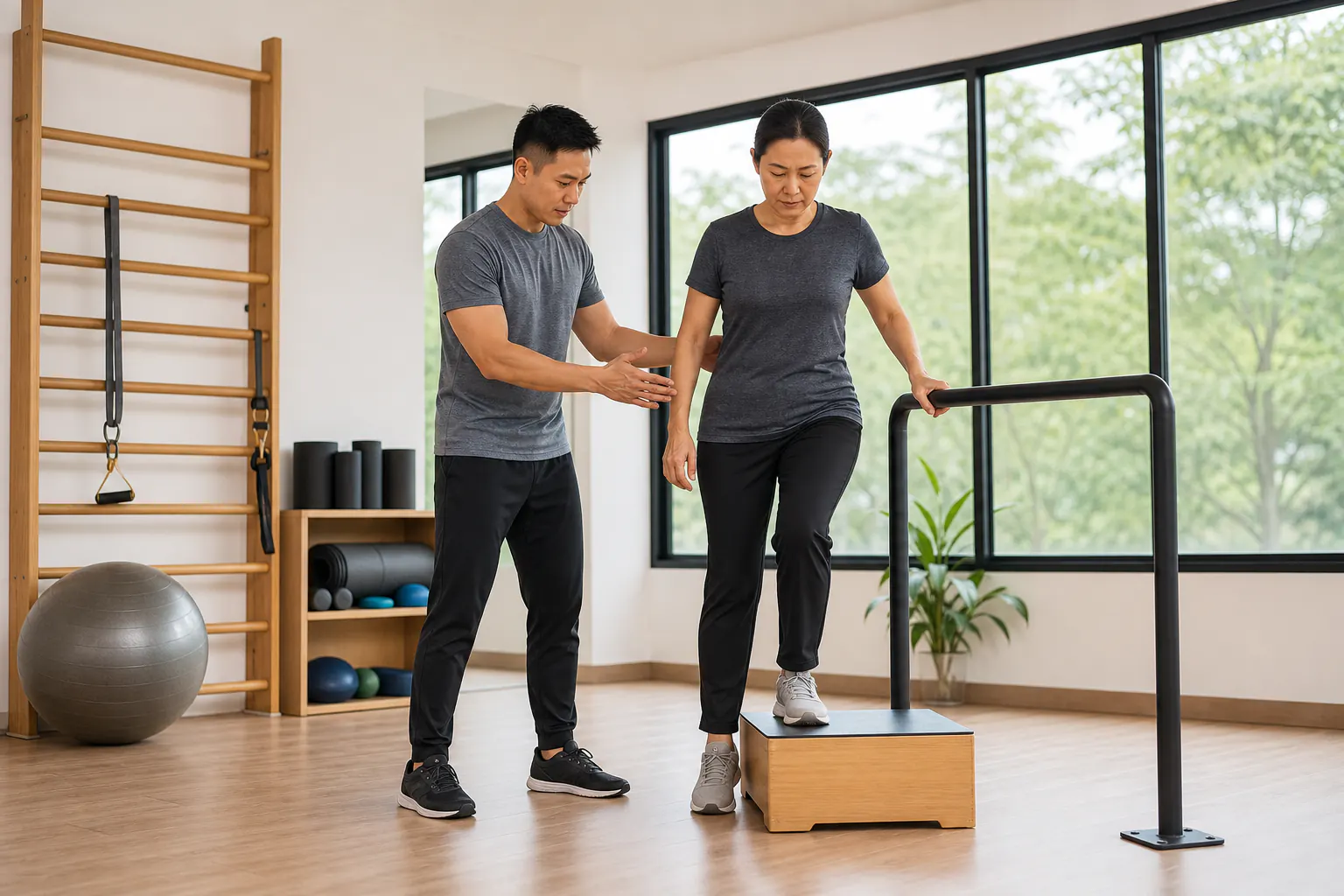
Injury Rehabilitation & Return to Exercise
Every year, thousands of Malaysians injure themselves through sports, gym accidents, or daily life - ACL tears from futsal, rotator cuff issues from poor bench press form, slipped discs from sitting all day, or ankle sprains from running on uneven pavement. After seeing a doctor and completing physiotherapy, most people face a frustrating question: now what?
Physiotherapy typically restores basic function - walking without a limp, lifting your arm overhead, bending your knee past 90 degrees. But the gap between "physiotherapy cleared" and "back to training at full capacity" is significant. This is where a post-rehab personal trainer becomes essential.
The Post-Rehab Gap
Malaysian healthcare does a decent job with acute injury management. You see a doctor at a government hospital or private orthopaedic clinic, get an MRI if needed, and receive physiotherapy sessions - typically six to twelve sessions covered by insurance or at subsidised rates.
But physiotherapy has practical limits. Sessions are short, often thirty minutes. The focus is on pain reduction and basic function restoration. Once you can perform daily activities without significant pain, you are usually discharged with a sheet of home exercises.
The problem is that daily function and gym fitness are vastly different demands. Walking up stairs pain-free does not mean your knee is ready for barbell squats. Raising your arm overhead does not mean your shoulder can handle overhead pressing with load.
What Post-Rehab Training Looks Like
A post-rehab personal trainer works within your medical clearances - respecting weight restrictions, movement limitations, and healing timelines set by your doctor or physiotherapist. Within those boundaries, they systematically rebuild your capacity.
Phase 1: Rebuild basic movement patterns. If you had knee surgery, this means restoring a full bodyweight squat without compensation. If it was a shoulder injury, regaining full overhead range under control. This phase uses bodyweight movements, bands, and light loads with high attention to movement quality.
Phase 2: Rebuild strength. Once movement patterns are clean, progressive loading begins. This is methodical - small increments, careful monitoring of how the injured area responds, and regular communication with your medical team if needed.
Phase 3: Return to sport or full training. The final phase adds sport-specific demands - change of direction for futsal players, impact loading for runners, high-load barbell work for gym-goers. This phase also addresses any training modifications needed long-term.
Common Injuries in the Malaysian Context
ACL tears are extremely common among futsal players. Malaysia's futsal culture means thousands of recreational players are at risk, particularly those who play on hard court surfaces multiple times per week without adequate conditioning.
Lower back injuries affect office workers across KL, Penang, and JB who sit for extended periods then attempt deadlifts or squats with compromised spinal mechanics.
Rotator cuff issues frequently arise from poor bench press and overhead press technique, particularly in commercial gyms where coaching is minimal.
Knee pain from running is prevalent among the growing Malaysian running community, especially those who ramp up marathon training volume too quickly.
Choosing the Right Post-Rehab Trainer
Look for trainers with certifications in corrective exercise (NASM-CES), post-rehabilitation (ACE Post-Rehab), or strength and conditioning (NSCA-CSCS). Experience matters here more than in general fitness training - ask specifically about their experience with your type of injury.
A good post-rehab trainer communicates with your medical team, respects healing timelines, and does not rush the process. Recovery takes as long as it takes - anyone promising to get you back to full capacity in an unrealistically short timeframe is a red flag.
Do Not Skip This Step
The most common mistake is going straight from physiotherapy back to your old training routine. Re-injury rates for ACL reconstruction patients who return to sport without structured rehabilitation are alarmingly high. The same applies to back injuries, shoulder surgeries, and chronic conditions.
Investing in a post-rehab trainer for eight to sixteen weeks after medical discharge dramatically reduces re-injury risk and gets you back to full capacity faster than winging it on your own.
How long does injury rehabilitation take with a personal trainer?
Post-injury and post-surgery rehabilitation through personal training bridges the gap between physiotherapy discharge and full return to exercise. A qualified trainer works within medical clearances to rebuild strength, restore movement patterns, and get you back to training safely.
What Results to Expect
Post-injury and post-surgery rehabilitation through personal training bridges the gap between physiotherapy discharge and full return to exercise. A qualified trainer works within medical clearances to rebuild strength, restore movement patterns, and get you back to training safely.
Find a Injury Rehabilitation Trainer Near You
Browse personal trainers across Malaysia who specialise in injury rehabilitation.
Recommended Training Styles for Injury Rehabilitation
Choose a training format that suits your lifestyle and helps you achieve injury rehabilitation faster.
Explore Other Goals
Start Your Injury Rehabilitation Journey Today
Connect with a certified personal trainer who specialises in injury rehabilitation. No commitment - just send us a message.
Chat on WhatsApp