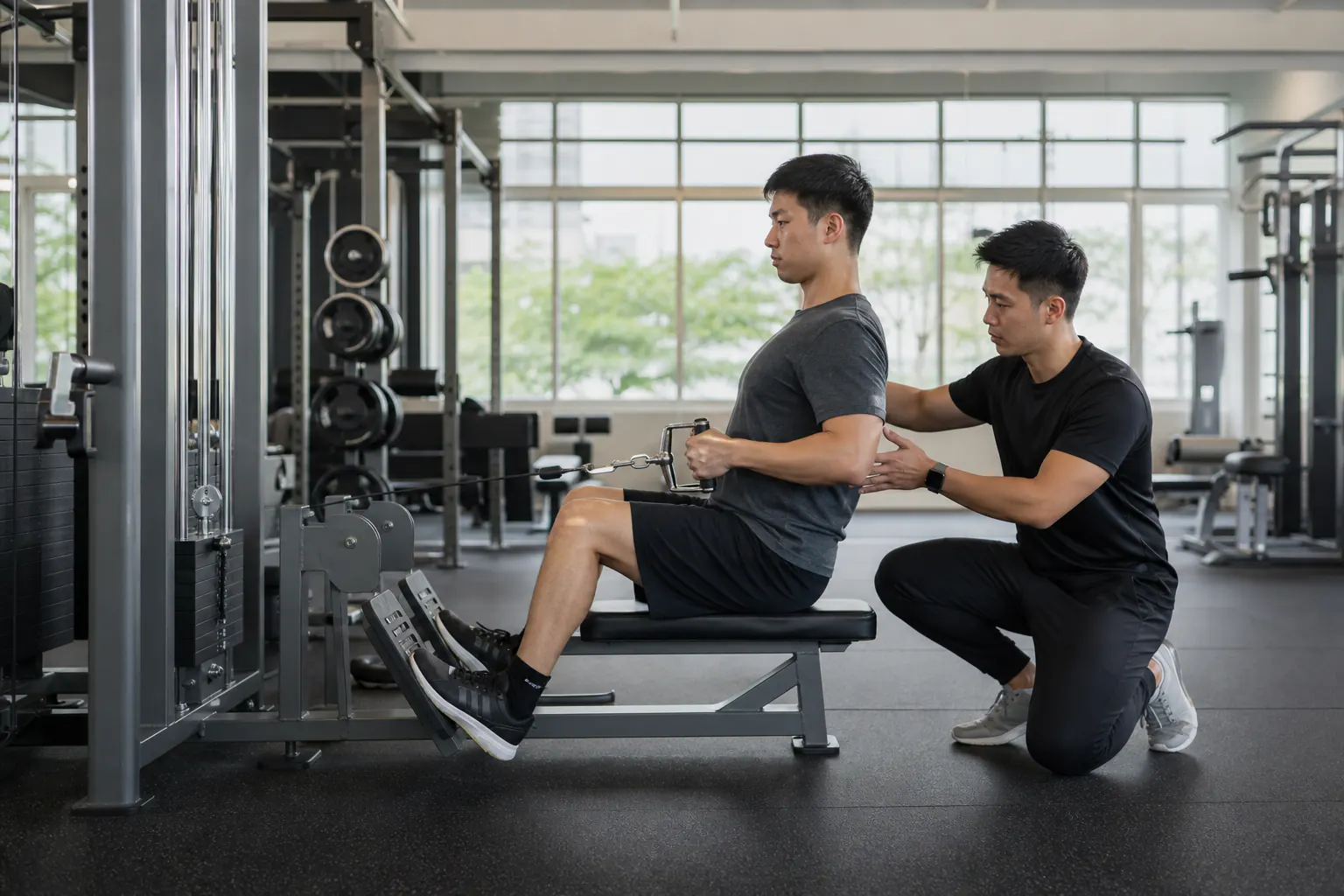
Master the rowing machine with proper technique and effective workouts. Complete rowing machine guide for Malaysian gym goers of all levels.
The Most Underused Machine in Malaysian Gyms
Walk into almost any gym in Malaysia, and you will find the rowing machines sitting empty while treadmills and ellipticals have queues. This is a shame because the rowing machine, also called an ergometer or erg, is arguably the most effective piece of cardio equipment available. It works roughly eighty-six percent of your muscles in a single stroke, provides both cardiovascular and muscular conditioning, and is low-impact on your joints.
Whether you are looking to lose weight, improve your cardiovascular fitness, or add a challenging conditioning element to your strength training, the rowing machine deserves a place in your programme. Let us break down proper technique and then explore some effective workouts.
Understanding Proper Rowing Technique
Poor technique is the main reason people avoid the rower or fail to get results from it. Most beginners make the mistake of pulling with their arms first, turning the row into an arm exercise rather than a full-body movement. Here is how to row correctly.
The Four Phases of the Rowing Stroke
The Catch (Starting Position): Sit on the seat with your shins vertical, knees bent, and arms extended straight in front of you holding the handle. Your torso should lean slightly forward from the hips, roughly at the one o'clock position. Your core is engaged, and your shoulders are relaxed.
The Drive: This is where the power comes from, and the sequence matters enormously. Push with your legs first. Your legs generate about sixty percent of the total power in a rowing stroke. Once your legs are nearly straight, lean your torso back to the eleven o'clock position. Finally, pull the handle to your lower chest with your arms. The sequence is legs, back, arms.
The Finish: At the end of the drive, your legs are fully extended, your torso is leaning slightly back, and the handle is at your lower ribcage. Your elbows are pulled behind you, and your wrists are flat.
The Recovery: Reverse the sequence to return to the catch. Extend your arms first, then hinge forward at the hips, then bend your knees to slide back to the start. This should be a controlled, fluid motion, not a rush. The recovery should take roughly twice as long as the drive.
Common Technique Mistakes
Pulling with arms first: This is the most common error. The arms should be the last to engage during the drive. Think of them as hooks that connect you to the handle while your legs and back do the work.
Shooting the slide: This happens when your seat moves backward but your body stays in place, meaning your legs straightened without your torso moving. Keep your core engaged and your back connected to your legs.
Gripping too tightly: Hold the handle with a relaxed grip, primarily using your fingers. A death grip wastes energy and causes forearm fatigue. Many Malaysian gym goers who are new to rowing grip far too tightly out of unfamiliarity.
Rushing the recovery: The recovery phase should be smooth and unhurried. A common ratio is one count for the drive and two counts for the recovery. Rushing back to the catch position disrupts rhythm and reduces efficiency.
Understanding the Monitor
Most rowing machines in Malaysian gyms are Concept2 ergometers or similar models with a performance monitor. The key metrics to understand are:
Split time (per 500m): This tells you how fast you are rowing. A lower split time means faster rowing. For most recreational rowers, a split time of 2:00 to 2:30 per 500 metres is a solid working range.
Stroke rate: Measured in strokes per minute (SPM). Higher is not necessarily better. For steady-state rowing, aim for 18 to 24 SPM. For intervals, you might push to 26 to 32 SPM. Power per stroke is more important than stroke rate.
Total distance and time: Useful for tracking workouts and monitoring progress over time.
Watts: A direct measure of power output. This is the most objective metric for tracking improvement.
Rowing Machine Workouts
Beginner Workout: Introduction to Rowing
If you are new to the rowing machine, start with this simple workout to build technique and base fitness.
- 5-minute easy row at 18-20 SPM (warm-up)
- 3 rounds of: 3 minutes moderate effort, 2 minutes easy effort
- 5-minute easy row (cool-down)
- Total time: 25 minutes
Focus entirely on technique during this workout. Film yourself from the side if possible and compare your form to the technique cues above.
Intermediate Workout: Interval Training
Once your technique is solid, interval training on the rower is brutally effective for both fat loss and cardiovascular conditioning.
- 5-minute warm-up at easy pace
- 8 rounds of: 30 seconds hard effort (26-30 SPM), 30 seconds easy rowing
- 3 minutes easy rowing recovery
- 6 rounds of: 45 seconds hard effort, 45 seconds easy rowing
- 5-minute cool-down
- Total time: approximately 30 minutes
The hard efforts should feel like a seven to eight out of ten in terms of intensity. You should be breathing heavily but maintaining good form throughout.
Advanced Workout: The 2K Test Preparation
The 2,000-metre row is the gold standard test of rowing fitness. If you want to test yourself, here is a workout that builds the capacity needed.
- 10-minute progressive warm-up (increase pace every 2 minutes)
- 4 x 500 metres at target 2K split with 2 minutes rest between sets
- 3 x 250 metres at slightly faster than 2K split with 90 seconds rest
- 10-minute easy cool-down
For reference, a competitive time for the 2K row is under seven minutes for men and under eight minutes for women, though these are aspirational targets. Anything under eight minutes for men and nine minutes for women is respectable for recreational athletes.
Fat Loss Workout: Steady State
For those primarily using the rower for weight loss, steady-state rowing at moderate intensity is highly effective and easier to sustain.
- 20 to 40 minutes of continuous rowing at 60-70% effort
- Maintain a stroke rate of 20-24 SPM
- Split time should be conversational pace
- Aim to complete this 2-3 times per week
This type of session is excellent to do in the morning before work. Many gyms in Malaysia open at 6 AM, and a thirty-minute steady-state row followed by a shower is an efficient start to the day.
Combining Rowing with Strength Training
The rowing machine integrates beautifully with strength training. Here are some practical approaches:
As a warm-up: Five to ten minutes of easy rowing before your weight training session warms up your entire body and prepares your posterior chain for heavy lifts.
As a finisher: A short, intense rowing interval at the end of your weights session (three to five rounds of 250 metres with one minute rest) provides an excellent metabolic conditioning stimulus.
As a standalone cardio day: A full rowing session on your non-lifting days provides cardiovascular training that complements your strength work without the impact stress of running.
Benefits Specific to the Malaysian Context
The rowing machine is ideal for Malaysians who want cardio without the heat. While running outdoors in Malaysia's thirty-plus degree weather with high humidity can be miserable and even dangerous, the rower lets you get an intense full-body cardio workout in the air-conditioned comfort of your gym.
It is also a joint-friendly alternative for those who find running painful. Many Malaysians carry excess body weight, and the rowing machine allows intense cardio without the repetitive impact that aggravates knees and ankles.
Final Thoughts
The rowing machine offers one of the best return-on-time investments in the gym. Twenty to thirty minutes on the rower provides a full-body workout that builds cardiovascular fitness, muscular endurance, and calorie burn simultaneously. Learn proper technique first, start with shorter sessions, and progressively increase duration and intensity. Your body will thank you for discovering the most underappreciated machine in the gym.
Part of our comprehensive guide:
The Complete Guide to Personal Training Methods in Malaysia→Also in this series:
Related Articles
Find a Personal Trainer
Ready to put this into practice? Connect with a certified personal trainer near you, or explore by service and goal.