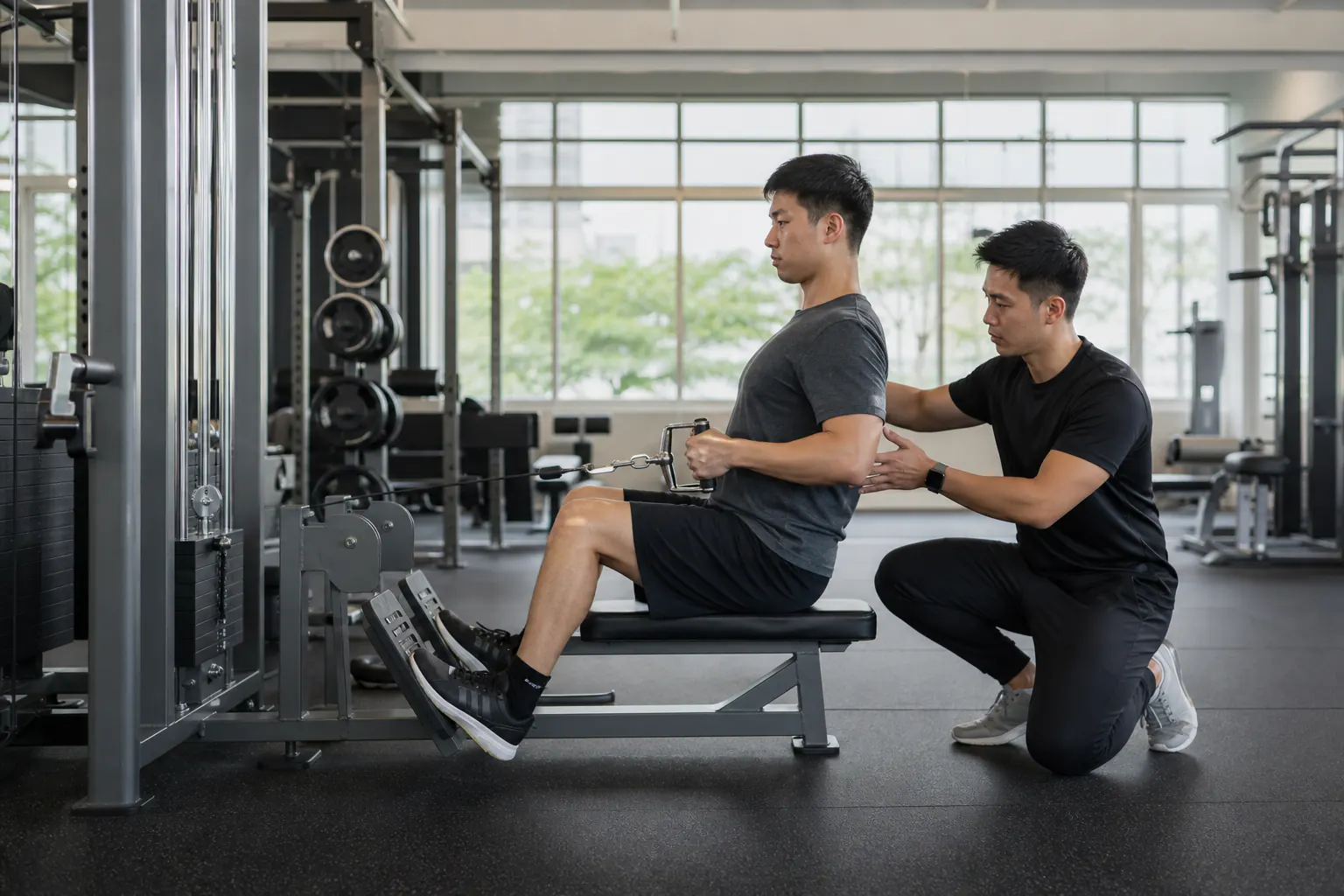
MMA conditioning goes beyond fighting technique. Strength, endurance, and injury prevention training for Malaysian MMA enthusiasts and competitors.
Malaysia's MMA scene has grown rapidly. ONE Championship events in KL draw massive crowds, local gyms like Monarchy MMA, KL Combat Club, and Bali MMA KL produce competitive fighters, and recreational MMA training has become a popular fitness option for office workers seeking something more engaging than a treadmill.
Whether you fight competitively or just train MMA for fitness, your performance depends heavily on your physical conditioning outside the cage.
Physical Demands of MMA
MMA combines the demands of multiple combat sports into one:
Striking (Muay Thai, boxing): Requires explosive power for punches and kicks, shoulder endurance for keeping guard up, and cardiovascular conditioning for sustained output across rounds.
Grappling (wrestling, BJJ): Demands isometric grip strength, hip and core strength for takedowns and guard retention, and muscular endurance for grinding through scrambles.
Transitions: Repeated explosive movements - shooting for takedowns, sprawling defensively, standing up from bottom position - are the most fatiguing aspect of MMA. Your conditioning must support these repeated bursts.
Energy system requirements
A 3-round MMA fight consists of repeated 8-15 second bursts of near-maximal effort separated by brief lower-intensity periods. This demands both aerobic capacity (to recover between bursts) and anaerobic power (to execute each burst).
Strength Training for MMA
Focus: Relative strength, not maximum mass
Unlike bodybuilding, MMA has weight classes. Adding 5 kg of muscle means fighting bigger opponents. The goal is maximum strength per kilogram of bodyweight.
Key exercises
Deadlift - builds the hip hinge power needed for takedowns, throws, and ground-to-standing transitions. 3-5 sets of 3-5 reps, heavy.
Pull-ups (weighted) - grip endurance, back strength for clinch work and grappling. 3-4 sets of 5-8.
Turkish get-up - full-body coordination and strength from the ground to standing. Mimics the real-world demands of standing up while someone tries to keep you down. 3 sets of 3 per side.
Landmine rotational press - rotational pressing power for hooks and uppercuts. 3 sets of 8 per side.
Farmer's walks - grip endurance, core stability, total body conditioning. 3 sets of 40 metres, heavy.
Neck training - reduces concussion risk. Neck curls, extensions, and lateral flexion with light resistance. 3 sets of 15-20 in each direction.
Conditioning for MMA
Zone 2 base (aerobic foundation)
30-45 minutes of steady-state cardio 2-3 times per week. Running, cycling, or swimming at conversational pace. This builds the aerobic base that supports recovery between high-intensity exchanges during a fight.
Interval training (fight simulation)
5-minute rounds with 1-minute rest - the standard MMA format. Design interval sessions around this structure:
Example session:
- Round 1: Battle ropes 30 sec, burpees 30 sec, shadow boxing 30 sec, kettlebell swings 30 sec, rest 30 sec. Repeat until 5 minutes.
- 1 minute rest
- Rounds 2-3: Same structure with different exercises
Sprint intervals
10 × 15-second all-out sprints with 45 seconds rest. This mimics the burst-recovery pattern of MMA exchanges.
Flexibility and Mobility for MMA
Hip mobility - essential for kicking height, guard retention in BJJ, and takedown defence. Deep squat holds, 90/90 hip switches, pigeon pose.
Shoulder mobility - needed for grappling, maintaining frame, and avoiding shoulder injuries from kimuras and americanas.
Thoracic mobility - enables rotational power for strikes and prevents lower back compensation during grappling.
Spend 15 minutes daily on mobility work. MMA athletes who skip mobility work get injured more frequently and perform worse as their careers progress.
Training Schedule (Recreational MMA + Gym)
| Day | AM/PM | Activity |
|---|---|---|
| Mon | PM | MMA class (striking) |
| Tue | PM | Strength training (compound lifts) |
| Wed | PM | MMA class (grappling) |
| Thu | AM/PM | Zone 2 cardio (30-40 min run or cycle) |
| Fri | PM | MMA class (sparring) |
| Sat | AM | Strength + conditioning circuit |
| Sun | Rest | Mobility work only |
This balances skill training with physical development. Recovery between MMA sessions and gym sessions matters - do not stack heavy sparring and heavy deadlifts on the same day.
MMA Gyms in Malaysia
Kuala Lumpur has the densest concentration of MMA facilities in Southeast Asia. Monarchy MMA, Bali MMA, KL Combat Club, Fighters Fitness, and numerous Muay Thai and BJJ academies offer classes for all levels. Monthly memberships range from RM150-400 depending on the gym and class frequency.
Outside KL, growing MMA scenes exist in Penang, JB, Ipoh, and Kota Kinabalu. The sport is expanding rapidly across Malaysia, fuelled by ONE Championship's regional presence and the increasing popularity of combat sports for fitness.
Part of our comprehensive guide:
The Complete Guide to Personal Training Methods in Malaysia→Also in this series:
Related Articles
Find a Personal Trainer
Ready to put this into practice? Connect with a certified personal trainer near you, or explore by service and goal.