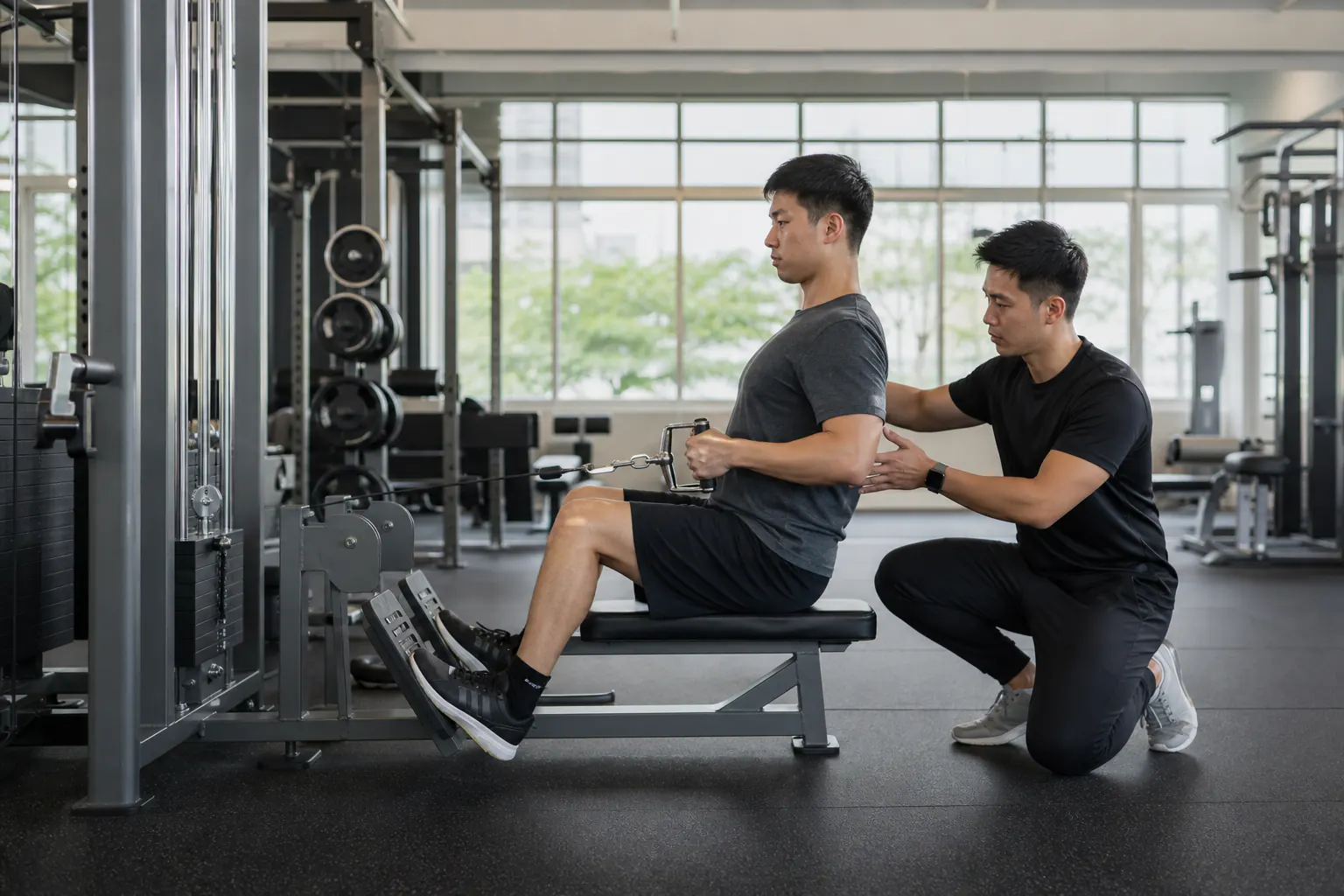
Understand the science of muscle memory and why previously fit individuals regain strength faster. Encouraging news for Malaysians returning to the gym.
The Comeback Is Always Faster
You spent a year building an impressive physique, then life happened - a new job, injury, marriage, pregnancy, or simply a long break from training. Months pass without touching a weight. Your muscles shrink, your strength drops, and it feels like all your hard work has vanished.
But then you return to the gym and something remarkable happens: your strength comes back in weeks rather than months. Your muscles inflate noticeably within the first two to three weeks. Exercises that took you months to master feel familiar and coordinated almost immediately. It is as if your body remembers.
That is exactly what is happening. Muscle memory is real, scientifically documented, and genuinely encouraging for anyone returning to fitness after time away. For the many Malaysians who fell out of their gym routines during the COVID lockdowns or due to life changes and are now considering a comeback - this is the best news you will hear today.
The Two Types of Muscle Memory
Neurological Muscle Memory (Motor Learning)
The first type of muscle memory relates to motor skills - the learned movement patterns your brain and nervous system have encoded. When you learn to squat, deadlift, ride a bicycle, or throw a badminton shuttlecock, your brain creates neural pathways that coordinate the required muscle activations.
These pathways are remarkably durable. A movement pattern you practised extensively does not disappear during time off - it becomes dormant but remains encoded. When you return to the exercise, your nervous system reactivates these pathways rapidly, allowing you to perform the movement with reasonable coordination almost immediately.
This is why someone who squatted regularly can return after a year off and perform the movement with decent form within one or two sessions. A complete beginner, by contrast, takes weeks to develop that same coordination.
Cellular Muscle Memory (Myonuclear Persistence)
The second type - and the more exciting discovery - is cellular muscle memory. This refers to permanent structural changes that occur within your muscle fibres when you train.
Here is how it works:
When you build muscle through resistance training, your muscle fibres grow larger. To support this growth, satellite cells (stem cells located on the surface of muscle fibres) donate their nuclei to the muscle fibres. Each fibre accumulates additional nuclei - a process called myonuclear accretion.
The groundbreaking finding, published in research from the University of Oslo and confirmed by multiple subsequent studies, is that these extra nuclei persist even when the muscle shrinks due to detraining. When you stop training, your muscle fibres get smaller (atrophy), but the nuclei stick around for months or even years.
When you resume training, these existing nuclei rapidly reactivate protein synthesis, allowing muscle fibres to regrow much faster than they originally grew. Your muscles essentially have a blueprint and the machinery to rebuild quickly - they just need the stimulus (training) to flip the switch.
What the Research Shows
Speed of Regaining vs Building
Studies consistently show that regaining previously built muscle takes approximately 50 to 60 percent of the time it took to build originally. If it took you 12 months to gain 5 kg of muscle as a beginner, you might regain that same muscle in 5 to 7 months after a prolonged break.
For shorter breaks (1 to 3 months), the regain is even faster - many people return to their previous strength levels within 4 to 6 weeks.
Duration of Muscle Memory
Research suggests that myonuclei persist for at least 15 years and possibly for life. This means that even decades-long breaks cannot fully erase the structural advantages of previous training. A 50-year-old who trained seriously in their 20s will still benefit from muscle memory.
Implications for Malaysians Returning to Fitness
If you trained consistently before COVID lockdowns (2020 to 2021) and have not returned to the gym, your muscle nuclei are still there, waiting. The physical foundation you built remains intact at the cellular level. All you need is the training stimulus to reactivate it.
Practical Guidelines for Returning to Training
Week 1-2: The Re-Introduction Phase
Do not jump straight back to your previous training intensity. Your muscles may remember how to perform exercises, but your tendons, ligaments, and cardiovascular system need time to readapt.
- Train 3 times per week
- Use approximately 50 to 60 percent of your previous working weights
- Focus on full range of motion and reestablishing proper form
- Keep sets to 2 to 3 per exercise with moderate reps (10 to 15)
- Expect significant soreness - your muscles are not accustomed to the stimulus
Week 3-4: Ramping Up
- Increase weights to approximately 70 to 80 percent of your previous levels
- Add an extra set per exercise (3 to 4 sets)
- Introduce more variety in exercise selection
- Soreness should begin to diminish significantly
Week 5-8: Approaching Previous Levels
- By this point, many people are lifting 85 to 95 percent of their previous weights
- Full training volume can be restored
- Strength gains are rapid and motivating during this phase
- Muscle fullness returns noticeably as stored nuclei drive rapid hypertrophy
Month 3 and Beyond: Exceeding Previous Levels
With consistent training and proper nutrition, most people surpass their previous best within 3 to 6 months of returning. You are not just regaining - you are rebuilding with the added knowledge and maturity of your previous training experience.
Nutrition for the Comeback
Your muscles are primed to regrow, but they need the raw materials. Prioritise:
Protein. Consume 1.6 to 2.2 grams per kilogram of bodyweight daily. Your muscle nuclei are ready to synthesise protein at an accelerated rate - give them the amino acids they need. Chicken, fish, eggs, tempeh, and tofu are staples of the Malaysian protein toolkit.
Adequate calories. Eat at maintenance or a slight surplus during the comeback phase. This is not the time for aggressive calorie restriction - your body needs energy to rebuild tissue.
Creatine. If you used creatine previously, resume supplementation. Creatine accelerates strength and muscle recovery and is one of the most well-researched supplements available. It is affordable (RM50 to RM100 for a three-month supply) and widely available in Malaysia.
Sleep. Growth hormone, which drives muscle repair, is released primarily during deep sleep. Aim for 7 to 9 hours per night during your comeback phase.
The Psychology of Coming Back
The mental aspect of returning to fitness is often the hardest part. Seeing lower numbers on the bar, feeling winded during previously easy cardio, and comparing your current state to your previous best can be discouraging.
Reframe your perspective:
- You are not starting from zero. Your cellular machinery, your movement patterns, and your training knowledge all carry over.
- Progress will be faster than expected. Muscle memory means the first few months of a comeback are thrilling in terms of visible progress.
- Every comeback makes the next one easier. The nuclei you build now will persist through any future breaks.
- Comparison is the enemy. Do not compare your current self to your peak self. Compare your current self to who you will be if you do not start.
Muscle Memory Beyond the Gym
The concept of muscle memory extends to any physical skill. The martial arts techniques you learned in silat class years ago, the swimming strokes from your school days, the badminton skills from university - these are all encoded in your nervous system, ready to be reactivated.
This is profoundly encouraging for Malaysians at any age who are considering returning to physical activity after time away. Your body has not forgotten. It is waiting for you to begin again.
The hardest part of any comeback is showing up for the first session. After that, muscle memory takes over, and the journey back to fitness becomes a satisfying and surprisingly rapid process. If you have been away from training, now you know - the comeback will be faster than you think.
Part of our comprehensive guide:
The Complete Guide to Personal Training Methods in Malaysia→Also in this series:
Related Articles
Find a Personal Trainer
Ready to put this into practice? Connect with a certified personal trainer near you, or explore by service and goal.