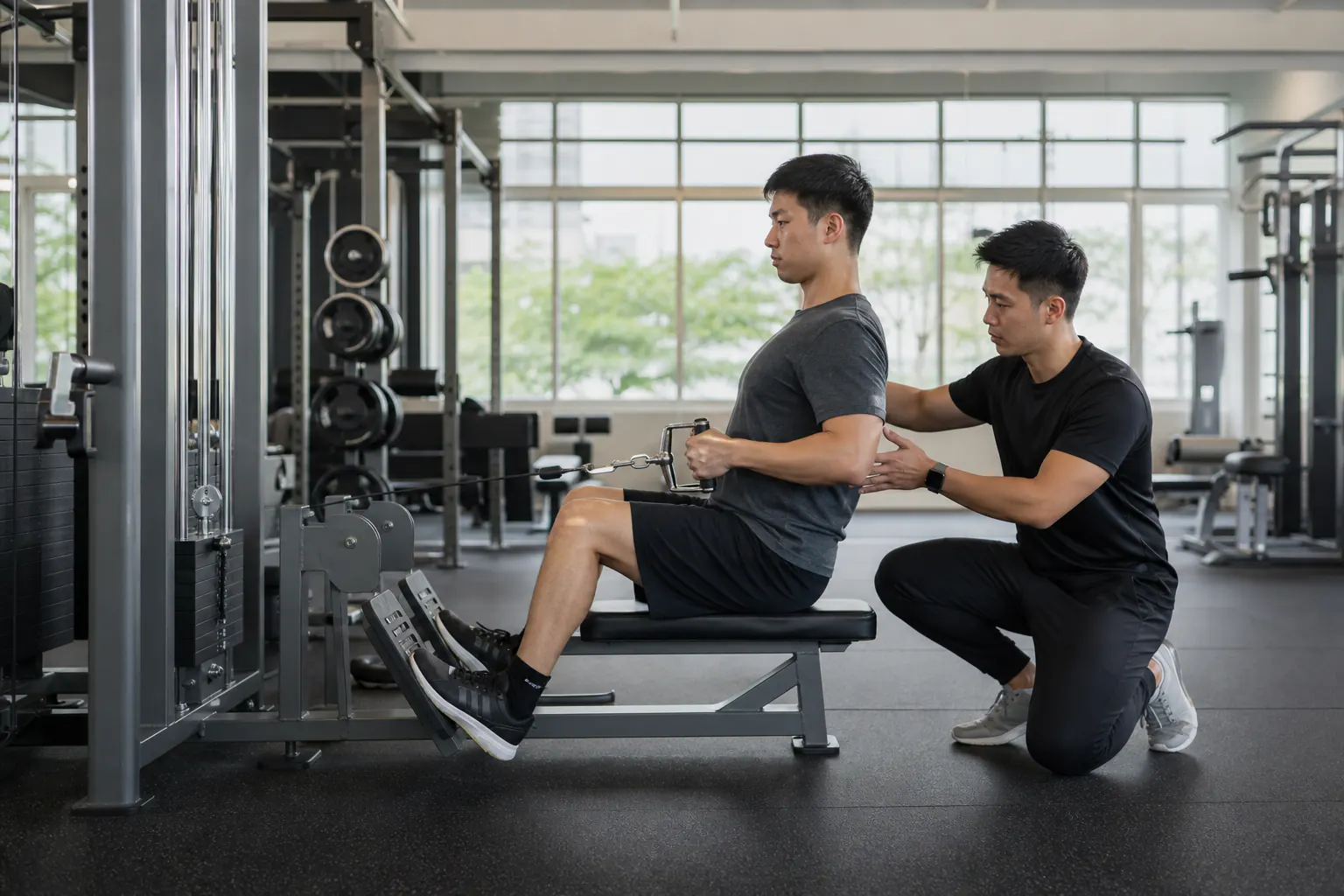
Discover how wave loading uses ascending and descending intensity waves to potentiate your nervous system and build impressive strength gains.
Wave loading is one of the most effective advanced strength methods available, yet it remains relatively unknown among Malaysian gym-goers. By alternating between heavier and lighter loads in a specific pattern, wave loading exploits the post-activation potentiation effect to help you handle weights you previously could not.
What Is Wave Loading?
Wave loading involves performing sets in ascending waves of intensity, where each wave consists of progressively heavier sets. After completing one wave, you start the next wave slightly heavier than the first. The key insight is that the heavy sets in the first wave prime your nervous system, making the subsequent wave feel manageable despite the increased load.
Classic Wave Loading Patterns
7-5-3 Wave
This is the most common wave loading pattern, ideal for building both strength and muscle.
Wave 1:
- Set 1: 7 reps at 75 percent
- Set 2: 5 reps at 80 percent
- Set 3: 3 reps at 85 percent
Wave 2:
- Set 4: 7 reps at 77.5 percent
- Set 5: 5 reps at 82.5 percent
- Set 6: 3 reps at 87.5 percent
Rest 2 to 3 minutes between each set.
5-3-1 Wave
A more intensity-focused pattern for experienced lifters seeking maximum strength.
Wave 1:
- Set 1: 5 reps at 80 percent
- Set 2: 3 reps at 85 percent
- Set 3: 1 rep at 90 percent
Wave 2:
- Set 4: 5 reps at 82.5 percent
- Set 5: 3 reps at 87.5 percent
- Set 6: 1 rep at 92.5 percent
3-2-1 Wave
The most aggressive pattern, reserved for peaking phases or advanced lifters.
Wave 1:
- Set 1: 3 reps at 87 percent
- Set 2: 2 reps at 90 percent
- Set 3: 1 rep at 93 percent
Wave 2:
- Set 4: 3 reps at 89 percent
- Set 5: 2 reps at 92 percent
- Set 6: 1 rep at 95 percent
Why Wave Loading Works
Nervous System Potentiation
The heavy sets in each wave activate high-threshold motor units that remain "switched on" for subsequent sets. When you return to the lower end of the next wave, your nervous system is more prepared to handle the load, making it feel relatively lighter.
Psychological Advantage
After handling a heavy triple at 87 percent, returning to a set of 5 at 82.5 percent feels manageable. This psychological contrast gives you confidence to push harder on subsequent waves.
Volume and Intensity Balance
Wave loading provides a unique combination of moderate volume (12 to 18 total reps) at relatively high intensity. This sweet spot is highly effective for strength development.
Practical Implementation
Exercise Selection
Wave loading works best with the main compound lifts:
- Back squat
- Bench press
- Deadlift
- Overhead press
- Barbell row
Avoid using wave loading for isolation exercises or machines - the technique is unnecessary for these movements.
How Many Waves?
Most lifters should perform 2 waves (6 total sets). Advanced lifters in a peaked state may attempt 3 waves (9 total sets), but this is extremely demanding. If you cannot increase the weight on the second wave, you are either too fatigued or your 1RM estimate is too high.
Rest Periods
Take 2 to 3 minutes between sets within a wave. Take 3 to 4 minutes between waves. In Malaysian gyms, use this rest time to hydrate - keep a large water bottle with you, ideally with electrolytes given the tropical climate.
When to Use Wave Loading
Wave loading is best used for 3 to 4 week blocks within a larger periodised programme. It is too demanding to use year-round. Follow a wave loading block with a deload week, then transition to a different training emphasis.
Sample Wave Loading Session
Monday - Squat Focus:
- Squat warm-up: 5 reps at 50 percent, 3 reps at 60 percent, 2 reps at 70 percent
- Wave 1: 5 reps at 80 percent, 3 at 85 percent, 1 at 90 percent
- Wave 2: 5 reps at 82.5 percent, 3 at 87.5 percent, 1 at 92.5 percent
- Back-off set: 1 set of 8 at 72.5 percent (optional)
- Accessories: Leg press, leg curls, calf raises - standard programming
Total time for the squat portion: approximately 25 to 30 minutes including rest.
Common Mistakes
- Starting too heavy: Your first wave should feel moderate. If the first set of 5 at 80 percent feels like an 8 out of 10, your percentages are too high.
- Insufficient rest: Cutting rest periods short prevents potentiation from occurring. Be patient between sets.
- Using it too frequently: Wave loading is a tool, not a permanent approach. Use it strategically during strength-focused training blocks.
- Poor technique under fatigue: The heavy singles at the end of each wave demand excellent form. If your technique breaks down, end the session.
Wave loading is a powerful method that can add significant weight to your lifts when applied correctly. For Malaysian lifters who have plateaued on traditional linear or percentage-based programmes, it offers a refreshing and effective change of stimulus.
Part of our comprehensive guide:
The Complete Guide to Personal Training Methods in Malaysia→Also in this series:
Related Articles
Find a Personal Trainer
Ready to put this into practice? Connect with a certified personal trainer near you, or explore by service and goal.