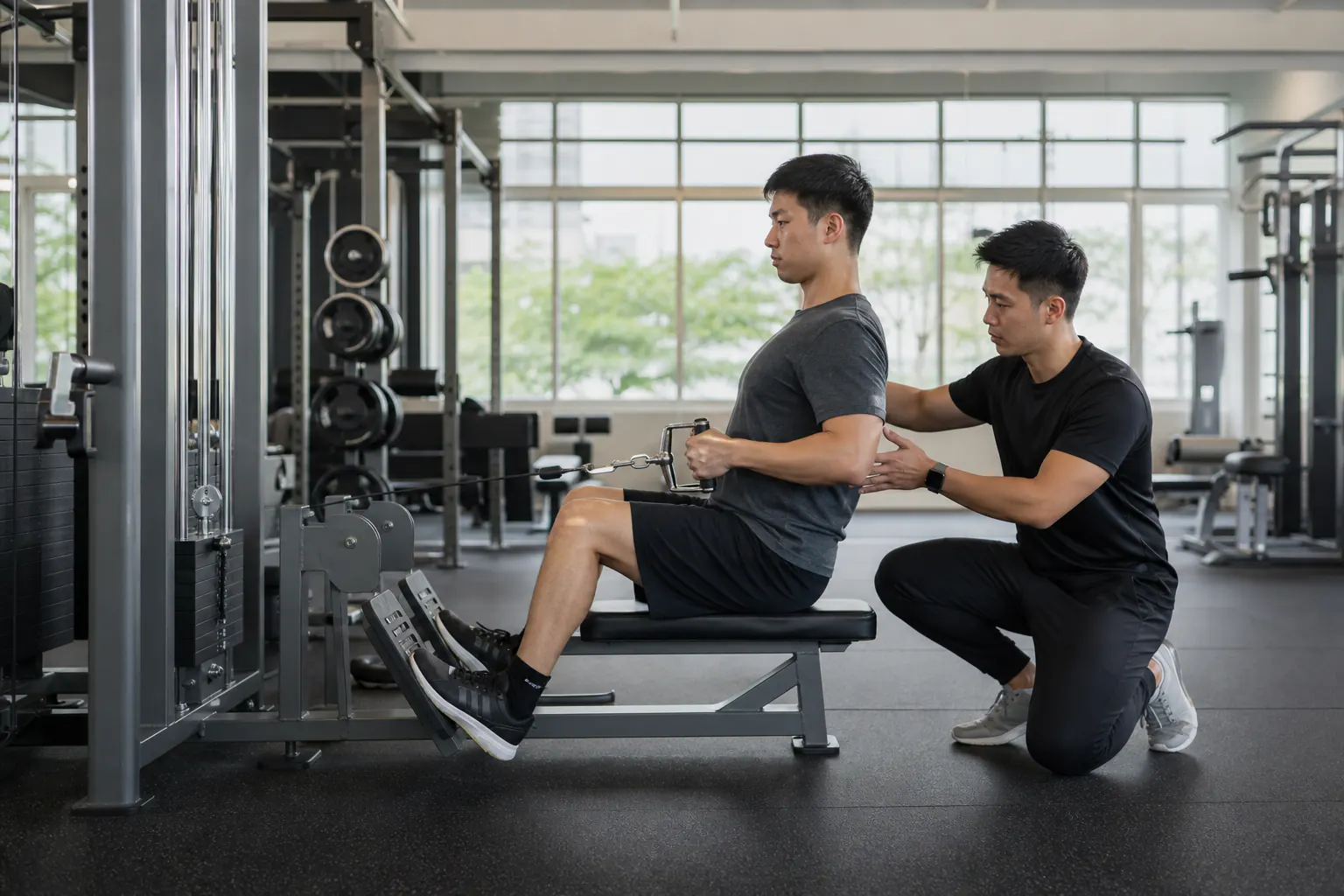
Build a bigger chest with dumbbells only. This complete workout includes pressing, fly, and push-up variations for home or gym training.
No barbell? No bench press station? No problem. You can build an impressive chest using nothing but dumbbells. In fact, dumbbells have several advantages over barbells for chest development that most people overlook.
Whether you train at a condo gym with limited equipment, prefer dumbbells for joint health, or just want variety in your chest training, this guide gives you everything you need.
Why Dumbbell Chest Training Works
Greater Range of Motion
A barbell stops at your chest. Dumbbells can go deeper. This increased stretch at the bottom of pressing movements puts your pec fibres under greater tension at their longest position - which research shows is a primary driver of muscle growth.
Independent Arm Training
Each arm works independently with dumbbells. This prevents your dominant side from compensating for your weaker side, which is common with barbell pressing. Over time, dumbbell training corrects strength imbalances between left and right.
Safer at High Intensity
No spotter? Dumbbells are safer than a barbell. If you fail a rep on a dumbbell bench press, you simply drop the weights to the sides. Failing a barbell bench press without a spotter can be genuinely dangerous.
Joint-Friendly
The wrist and shoulder can rotate naturally during dumbbell movements, finding the angle that's most comfortable for your individual anatomy. Barbell movements lock you into a fixed grip position, which can aggravate shoulder impingement in some people.
The 8 Best Dumbbell Chest Exercises
1. Flat Dumbbell Bench Press
The foundational movement. Lie on a flat bench, dumbbells at shoulder level, press up until arms are extended, lower with control.
Key cues:
- Feet flat on the floor, slight arch in lower back
- Lower the dumbbells until they're level with your chest (deeper than a barbell would allow)
- Press up and slightly inward - don't clang the dumbbells together at the top
- 4 sets of 8-10 reps
2. Incline Dumbbell Press (30-45 degrees)
Targets the upper chest (clavicular head of the pec major). Set your bench to 30-45 degrees. Higher angles shift more work to the front delts, so stay at 30 degrees for maximum upper pec activation.
- 3-4 sets of 8-12 reps
- Don't go too heavy - the incline angle is inherently weaker than flat
3. Decline Dumbbell Press
Targets the lower chest. If you don't have a decline bench, lie on the floor and place your hips on a pillow or folded towel, creating a slight decline angle. Or use a regular flat bench - most people's lower chest gets sufficient work from flat pressing.
- 3 sets of 10-12 reps
4. Dumbbell Flyes (Flat or Incline)
The best isolation movement for chest. The key is controlling the eccentric (lowering) phase and not going too deep - stop when you feel a strong stretch, typically when your elbows are level with or slightly below your torso.
- 3 sets of 12-15 reps
- Use significantly less weight than your pressing movements (roughly 40-50% of your press weight)
- Maintain a slight bend in your elbows throughout - straight arms put excessive stress on the bicep tendons
5. Dumbbell Pullover
An old-school exercise that works both the chest and lats. Lie across a bench (only your upper back on the bench), hold one dumbbell with both hands above your chest, and lower it behind your head in an arc.
- 3 sets of 12-15 reps
- Focus on feeling the stretch in your chest and lats
- Don't go excessively heavy - this is a stretch-focused exercise
6. Squeeze Press (Hex Press)
Hold two dumbbells together (touching) with a neutral grip (palms facing each other). Press them up while squeezing them together throughout the movement. This creates constant tension on the inner chest.
- 3 sets of 12-15 reps
- Moderate weight - the squeeze is more important than the load
7. Floor Press
Lie on the floor instead of a bench. The floor limits your range of motion (upper arms touch the floor at the bottom), which eliminates the stretch reflex and increases the difficulty of the pressing portion.
- 3 sets of 8-10 reps
- Great for condo gyms without a proper bench
- Also reduces shoulder stress for people with shoulder issues
8. Dumbbell Push-Up Variations
Place your hands on hexagonal dumbbells and perform push-ups. The elevated position increases range of motion, and the unstable surface activates more stabiliser muscles.
- 3 sets to near failure
- For extra difficulty: at the top of each rep, row one dumbbell up (renegade row combo)
Workout Programmes
Programme A: Full Dumbbell Chest Session (40-50 minutes)
| Exercise | Sets | Reps | Rest |
|---|---|---|---|
| Flat Dumbbell Press | 4 | 8-10 | 2.5 min |
| Incline Dumbbell Press | 3 | 10-12 | 2 min |
| Flat Dumbbell Flyes | 3 | 12-15 | 90 sec |
| Squeeze Press | 3 | 12-15 | 90 sec |
| Dumbbell Pullover | 2 | 12-15 | 90 sec |
Programme B: Minimal Equipment (Condo Gym / Home)
Only requires dumbbells and floor space:
| Exercise | Sets | Reps | Rest |
|---|---|---|---|
| Floor Press | 4 | 8-10 | 2.5 min |
| Dumbbell Push-Ups (elevated on dumbbells) | 3 | 12-20 | 90 sec |
| Floor Flyes | 3 | 12-15 | 90 sec |
| Squeeze Press (on floor) | 3 | 12-15 | 60 sec |
Programme C: Upper Chest Emphasis
| Exercise | Sets | Reps | Rest |
|---|---|---|---|
| Incline Dumbbell Press (30°) | 4 | 8-10 | 2.5 min |
| Incline Dumbbell Flyes | 3 | 12-15 | 90 sec |
| Flat Dumbbell Press | 3 | 10-12 | 2 min |
| Decline Push-Ups (feet on bench) | 3 | 12-20 | 60 sec |
Selecting the Right Dumbbell Weight
If you're setting up a home gym, here's what I recommend:
Beginners: A pair of adjustable dumbbells (5-20kg range). Available on Shopee and Lazada for RM200-500. Brands like Bowflex-style selectorised dumbbells are premium (RM1,500+) but the most convenient.
Intermediate: Two pairs - a heavier set (15-25kg) for pressing and a lighter set (8-12kg) for flyes and isolation work.
Advanced: Adjustable dumbbells up to 32-40kg, or a full dumbbell rack if budget allows. A proper set of adjustable dumbbells from 5-32.5kg runs about RM800-1,500 from local fitness equipment suppliers.
Progressive Overload With Dumbbells
Dumbbell weight jumps are typically 2-2.5kg per dumbbell, which represents a larger percentage increase than barbell training (where you can add 1.25kg per side). This makes progression trickier.
Strategies:
- Rep progression: Start at the low end of your rep range. Add reps each session until you hit the top of the range, then increase weight and drop back to the low end.
- Set progression: Add a set before adding weight. Go from 3x8 to 4x8, then increase weight and drop back to 3x8.
- Tempo manipulation: Slow the eccentric to 3-4 seconds before adding weight. This increases time under tension without needing heavier dumbbells.
- Micro-loading: Buy fractional weight plates (0.5-1kg) and attach them to dumbbells using tape or magnetic micro-plates. This allows smaller jumps.
- Pause reps: Add a 2-second pause at the bottom of each rep. This eliminates the stretch reflex and makes the same weight feel significantly harder.
Common Mistakes
Flying Too Deep
During flyes, many people lower the dumbbells until their arms are practically parallel with the floor. This puts enormous stress on the shoulder joint and bicep tendon insertion. Stop the descent when you feel a good stretch - usually when your elbows are level with your torso.
Not Retracting Shoulder Blades
For all pressing movements, squeeze your shoulder blades together before you start pressing. This creates a stable base, protects your shoulders, and actually improves chest activation. If your shoulders round forward during pressing, you're working your front delts more than your chest.
Pressing Straight Up Instead of Up and In
The pec fibres run horizontally from the sternum to the upper arm. To maximally contract them, the dumbbells should come slightly inward at the top of the press, not just straight up. Think of an arc motion, not a straight line.
Using the Same Weight for Everything
Your flat press weight should be heavier than your incline weight, which should be heavier than your flye weight. Adjust loads appropriately for each exercise. Ego-loading flyes with your pressing weight is how shoulder injuries happen.
Can You Build a Complete Chest With Only Dumbbells?
Yes. Dumbbells allow you to train all three portions of the pec (upper, middle, lower) through full range of motion with independent loading. Many competitive bodybuilders prefer dumbbell pressing over barbell pressing for chest development.
The limiting factor is eventually you'll need very heavy dumbbells for continued progression. But for most recreational lifters, dumbbells up to 30-35kg per hand will support years of chest development. Use them with proper form, progressive overload, and adequate nutrition, and your chest will grow.
Part of our comprehensive guide:
The Complete Guide to Personal Training Methods in Malaysia→Also in this series:
Related Articles
Find a Personal Trainer
Ready to put this into practice? Connect with a certified personal trainer near you, or explore by service and goal.