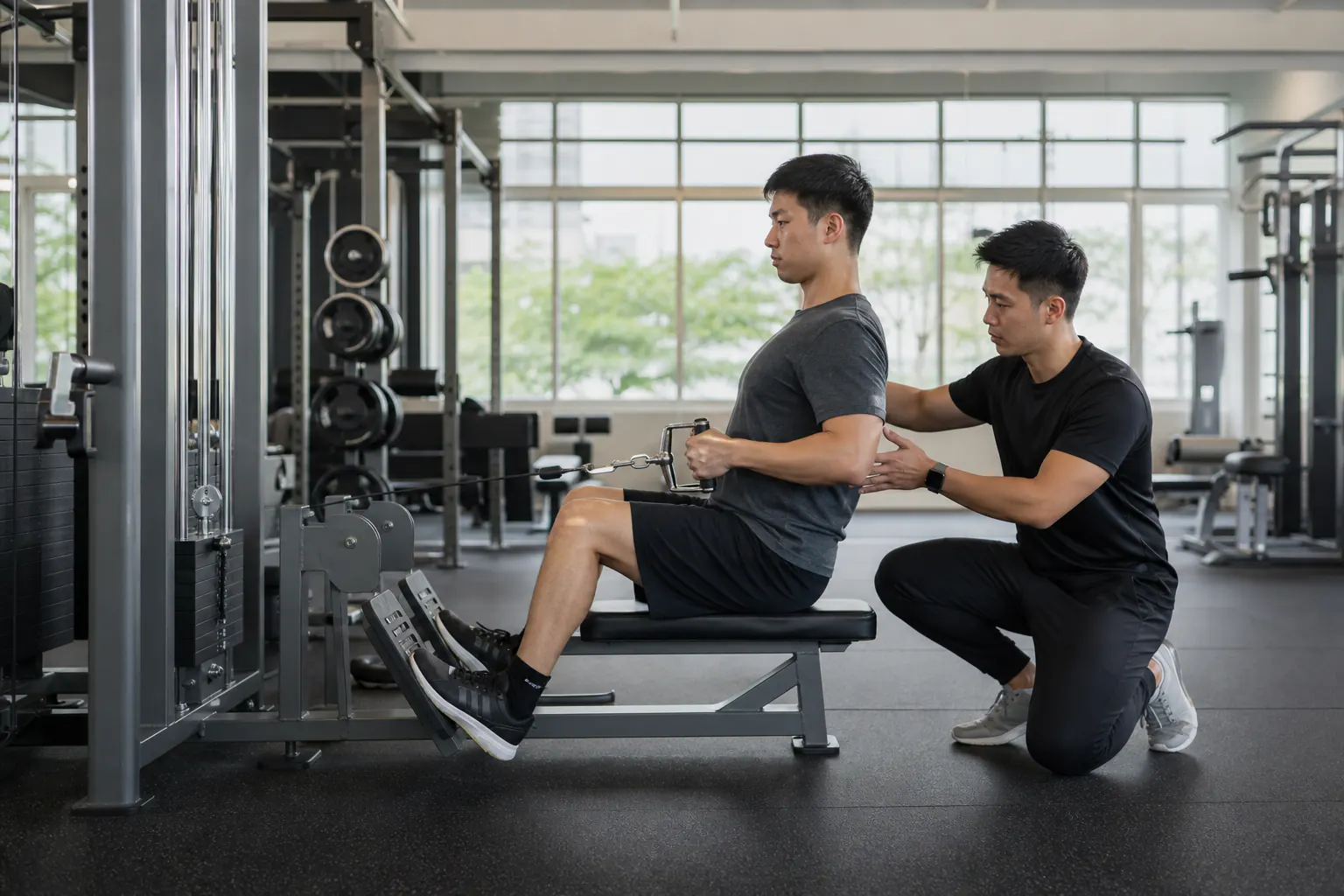
Discover cluster set training for breaking through strength plateaus. Learn how this rest-pause method helps Malaysian lifters build more power.
If your strength gains have stalled despite consistent training, cluster sets might be the advanced technique you need. This method, popular among strength coaches and powerlifters worldwide, allows you to handle heavier loads for more total repetitions than traditional straight sets - a recipe for breaking through plateaus.
While common in elite training circles, cluster sets remain relatively unknown in most Malaysian commercial gyms. Understanding and applying them can give you a serious edge.
What Are Cluster Sets?
A cluster set breaks a traditional set into smaller segments, or clusters, separated by brief intra-set rest periods of 10 to 30 seconds. Instead of performing five continuous repetitions, you might perform two reps, rack the weight for 15 seconds, perform two more reps, rest 15 seconds, and perform one final rep.
The total volume is the same - five reps - but the brief rest periods allow partial recovery of the phosphocreatine energy system, enabling you to maintain higher force output throughout the set. The result is better rep quality, more weight on the bar, and greater total training stimulus.
The Science Behind Cluster Sets
During a traditional set, fatigue accumulates with each repetition. By the fourth or fifth rep of a heavy set, your force output has decreased significantly, and your bar speed has slowed. This means the last reps of a traditional set are performed with reduced power - not ideal for strength development.
Cluster sets interrupt this fatigue accumulation. The 10 to 30-second rest periods allow partial replenishment of phosphocreatine - your body's immediate energy source for explosive efforts - and brief neural recovery. Each cluster therefore begins with a more refreshed nervous system and energy supply.
Research published in the Journal of Strength and Conditioning Research found that cluster set protocols produced higher average power output per repetition, greater barbell velocity across all repetitions, similar or greater total volume, and less perceived fatigue compared to traditional sets of equal volume.
How to Structure Cluster Sets
Method 1: The Classic Cluster
Take your five-rep max weight. Instead of attempting five grinding reps, perform five singles with 15 to 20 seconds rest between each. Each rep is performed with maximum intent and excellent form because fatigue never accumulates to the point of form breakdown.
Method 2: Doubles Clusters
Using a weight you could normally lift for six to eight reps, perform doubles with 15 seconds rest. Perform four to five doubles for a total of eight to 10 reps at a weight that would normally limit you to six to eight continuous reps.
Method 3: Rest-Pause Clusters
Perform reps until two to three reps short of failure. Rack the weight, rest 15 to 20 seconds, and perform as many quality reps as possible. Rest again, and repeat for one more mini-set. This method maximises volume at a given load.
Method 4: Wave Clusters
Perform two reps, rest 15 seconds, one rep at slightly heavier weight, rest 15 seconds, two reps at the original weight. This undulating loading pattern provides varied stimuli within a single set.
Best Exercises for Cluster Sets
Cluster sets work best with compound, barbell-based exercises where the bar can be easily racked and re-gripped during rest periods.
The back squat is ideal - rack the bar on the pins during each rest period, take a breath, re-brace, and perform the next cluster. The bench press works excellently with the barbell resting on the j-hooks between clusters. The overhead press can be performed from the rack. Deadlifts benefit from cluster singles, as each rep starts from a dead stop anyway. Barbell rows can use the floor as a rest point between clusters.
Cluster sets are less practical for exercises like pull-ups, dumbbell work, or machine exercises, where racking and re-gripping is awkward.
Programming Cluster Sets
For Maximum Strength
Use 85 to 95 percent of your one-rep max. Perform five to six total reps per cluster set as singles or doubles with 20 to 30 seconds intra-set rest. Complete three to four cluster sets with three to four minutes rest between sets. Train the cluster exercise one to two times per week.
For Strength-Speed
Use 75 to 85 percent of your one-rep max. Perform eight to 10 total reps per cluster set as doubles or triples with 15 to 20 seconds intra-set rest. Focus on moving the bar as fast as possible during each cluster. Complete three to four sets with two to three minutes between sets.
For Hypertrophy-Focused Strength
Use 70 to 80 percent of your one-rep max. Perform 10 to 12 total reps per cluster set as triples or quadruples with 10 to 15 seconds rest. The shorter rest and higher volume create more metabolic stress while still allowing quality reps with meaningful loads.
A Sample Cluster Set Workout
Here is how a Malaysian lifter might structure a squat-focused session using cluster sets.
Warm-up with bodyweight squats, light barbell squats, and progressive loading sets. Main exercise: back squat cluster sets. Load the bar to 87.5 percent of your one-rep max. Perform two reps, rack for 20 seconds, two reps, rack for 20 seconds, two reps. That is one cluster set of six total reps. Rest three minutes and repeat for three total cluster sets.
Follow with accessory work: Bulgarian split squats for three sets of eight per leg, leg press for three sets of 10, and hamstring curls for three sets of 12.
The cluster sets serve as the primary strength stimulus, while the traditional accessory work provides volume for muscle growth.
Who Should Use Cluster Sets?
Cluster sets are best suited for intermediate to advanced lifters who have at least one to two years of consistent training experience, have established baseline strength levels, understand proper form on compound lifts, are experiencing a strength plateau on traditional programming, and can accurately estimate or have tested their one-rep max.
Beginners should focus on building foundational strength and technique with traditional sets before implementing cluster protocols.
Common Mistakes
Rest Periods Too Long
If you rest more than 30 seconds between clusters, you are essentially just doing multiple sets with short rest, not true cluster training. The brief rest should be just enough to catch your breath and partially recover - not a full rest.
Using Cluster Sets for Everything
Cluster sets are a high-intensity tool for compound strength exercises. Applying them to bicep curls or lateral raises is unnecessary and misses the point. Use clusters for your main lifts and traditional methods for accessories.
Inadequate Warm-Up
Because cluster sets use near-maximal loads, thorough warm-up is essential. Build up through progressive sets - empty bar, 50 percent, 70 percent, 80 percent - before your working cluster sets.
Too Frequent
Cluster sets are demanding on the nervous system. Using them for every session of a given lift can lead to overtraining. Two to three weeks of cluster training followed by a deload week, then a return to traditional methods, creates an effective undulating approach.
The Malaysian Gym Context
Most Malaysian commercial gyms have squat racks and bench presses suitable for cluster set training. The brief rest periods between clusters mean you are not occupying the rack significantly longer than normal - an important consideration during peak hours at busy KL gyms.
If your gym is crowded and you cannot hold a rack for extended periods, perform your cluster sets during off-peak hours - early morning or late evening sessions when equipment is more available.
The Bottom Line
Cluster sets are a scientifically supported method for enhancing strength development beyond what traditional straight sets provide. They allow you to handle heavier loads with better rep quality, breaking through plateaus that have been holding you back. Use them strategically on your main compound lifts, respect the programming guidelines, and watch your strength numbers climb to new levels.
Part of our comprehensive guide:
The Complete Guide to Personal Training Methods in Malaysia→Also in this series:
Related Articles
Find a Personal Trainer
Ready to put this into practice? Connect with a certified personal trainer near you, or explore by service and goal.