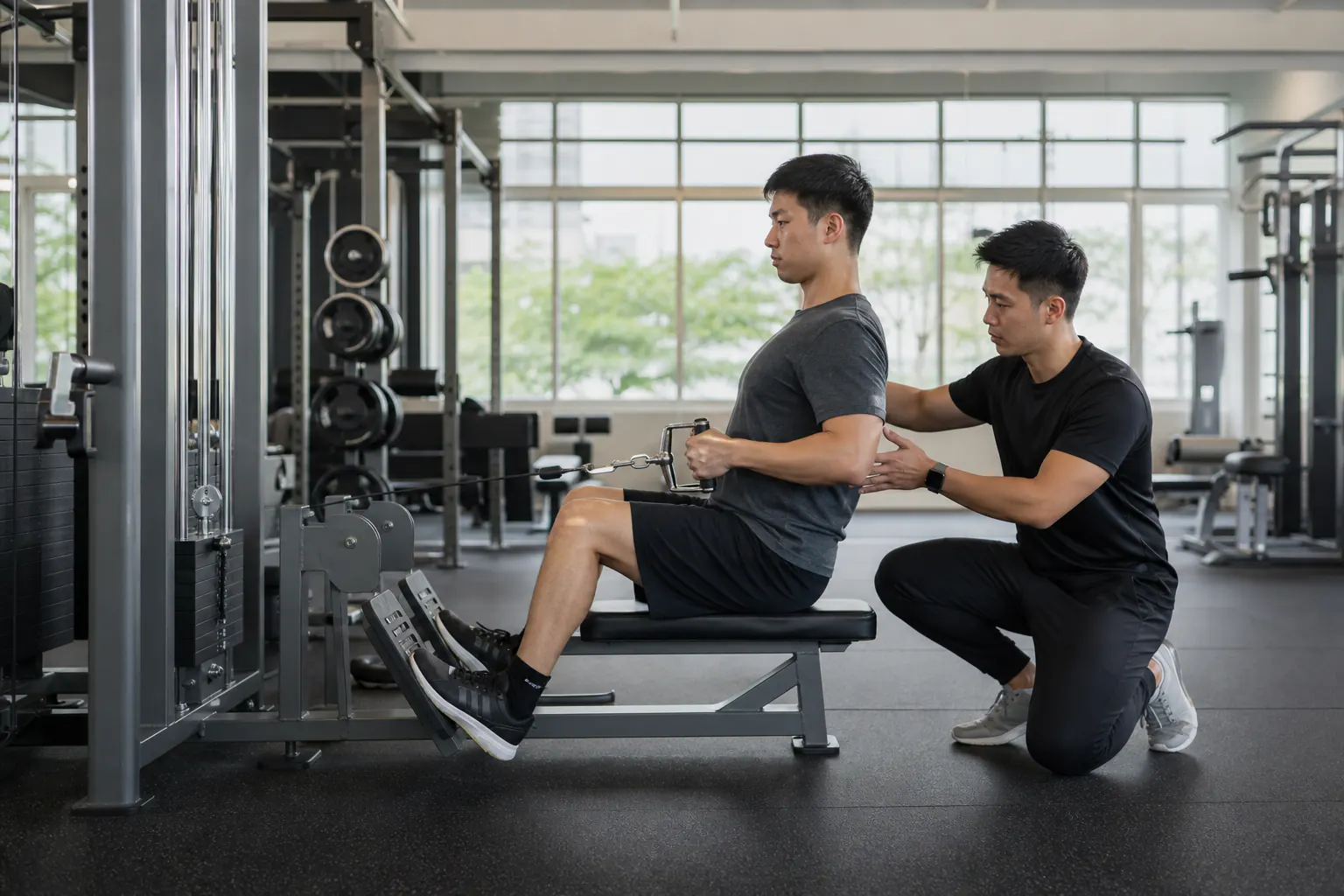
Should you train twice a day? Honest breakdown of two-a-day training benefits, risks, and how to structure sessions for Malaysian schedules.
Twice a day training sounds hardcore. Arnold did it. Olympic athletes do it. So naturally, the guy who just started training six months ago at his condo gym thinks he should do it too.
Before you reorganise your entire life around two daily gym sessions, let us talk about whether this actually makes sense - and if so, how to structure it without running yourself into the ground.
Who Actually Benefits from Twice a Day Training?
Two-a-day training is not for everyone. In fact, it is not for most people. You might benefit from it if:
- You have been training consistently for at least 2-3 years
- Your current programme is stalling and you have already addressed sleep, nutrition, and programming
- You have a flexible schedule that genuinely allows two separate sessions
- You can recover adequately - good sleep (7-9 hours), proper nutrition, manageable stress levels
- You have a specific performance goal (competition prep, peaking for a test)
If you are still making progress training once a day, 4-5 times per week, there is no reason to add a second session. More is not always better.
The Science Behind Training Frequency
The rationale for splitting volume across two sessions comes from research on muscle protein synthesis (MPS). After a training stimulus, MPS remains elevated for roughly 24-48 hours in trained individuals. By the time you train the same muscle group again 48-72 hours later, the previous wave of MPS has returned to baseline.
Two-a-day training does not necessarily mean training the same muscle twice in one day. It often means splitting your daily training volume across two shorter sessions, which has some real advantages.
A 2019 study in the Journal of Strength and Conditioning Research found that distributing training volume across more frequent sessions (keeping total volume equal) produced similar or slightly better hypertrophy outcomes compared to fewer, longer sessions.
The Real Benefits
Improved Training Quality
A 90-minute session often deteriorates in quality after the 60-minute mark. You fatigue, your focus drops, and your last few exercises get half-hearted effort.
Splitting that 90 minutes into two 45-minute sessions means every exercise gets proper intensity. Your squats in the morning are fresh. Your accessory work in the evening is also fresh. Better quality sets across the board.
Higher Trainable Volume
If your programme calls for 20+ sets per muscle group per week, fitting it all into 3-4 sessions makes those sessions brutally long - especially after work when your gym in PJ or KL is packed. Two shorter sessions let you distribute volume more manageably.
Elevated Metabolism
Two training sessions create two separate post-exercise metabolic spikes throughout the day. For clients in a fat loss phase, this can be mildly advantageous. Not a massive effect, but it adds up.
Mental Reset
Training in the morning puts you in a good mental state for work. Training in the evening releases the stress accumulated throughout the day. You get two mood boosts instead of one.
How to Structure Two-A-Day Sessions
Option 1: Strength + Hypertrophy Split
Morning (strength focus): Heavy compound lifts, low reps, long rest
- Squat 4x3 at 85% or Bench Press 4x4 at 82%
- One heavy accessory movement (3x5-6)
- Total time: 35-45 minutes
Evening (hypertrophy focus): Moderate weight, higher reps, shorter rest
- 3-4 isolation exercises for the same or different muscle groups
- Rep range: 10-15
- Rest: 60-90 seconds
- Total time: 30-40 minutes
This is my preferred method for intermediate to advanced lifters. You get the neural benefits of heavy lifting when you are fresh in the morning and accumulate hypertrophy volume in the evening.
Option 2: Upper/Lower Same Day
Morning: Upper body push + pull Evening: Lower body + core
This works well for people with demanding training goals who can only train 3-4 days per week. You effectively double the session count without adding training days.
Option 3: Training + Cardio Split
Morning: Strength training session Evening: 30-40 minutes of Zone 2 cardio (brisk walking, cycling, swimming)
This is the easiest version to implement and the most sustainable for regular gym-goers. The evening cardio promotes recovery without significant additional fatigue. Perfect for the Malaysian climate - an evening walk around your taman after the sun goes down is actually pleasant.
Option 4: Skill + Strength Split
Morning: Skill or technique work (Olympic lifts, gymnastics movements, sport-specific drills) Evening: Strength and muscle-building work
This is common in CrossFit and combat sports. The morning session focuses on motor learning when your nervous system is fresh. The evening session handles the grunt work.
Minimum Gap Between Sessions
Leave at least 4-6 hours between your two sessions. This allows:
- Glycogen partial replenishment
- Cortisol levels to normalise
- Core temperature to return to baseline
- Mental freshness
Training at 6am and 6pm works well with Malaysian work schedules. Training at 6am and 12pm is too close for most people unless the sessions target completely different muscle groups.
Nutrition for Twice a Day Training
Two sessions mean higher energy demands. You need to eat accordingly.
Calorie Requirements
Expect to burn an additional 200-400 calories from the extra session. If you are currently eating 2500 calories on training days, you may need 2700-2900 for two-a-day days.
Meal Timing
Pre-morning session: Something light - a banana with peanut butter, or roti canai if you have 60-90 minutes to digest
Post-morning/Pre-work: Proper meal with protein and carbs. Nasi lemak with extra egg is actually solid here - rice for glycogen, egg and sambal ikan bilis for protein.
Lunch: Standard balanced meal
Pre-evening session: Light snack 60-90 minutes before. A protein shake with a handful of nuts, or a piece of fruit with some Greek yogurt.
Post-evening/Dinner: Largest meal of the day. Load up on protein (chicken, fish, eggs) and complex carbs (rice, sweet potato).
Hydration
Two sessions in Malaysia's heat means double the fluid loss. Aim for at least 3-4 litres of water throughout the day. Add electrolytes if both sessions are intense - a pinch of salt in your water bottle works, or buy an electrolyte powder from Watsons.
Signs You Are Overreaching
Two-a-day training walks a thin line between productive and destructive. Watch for these warning signs:
- Persistent fatigue that does not improve with a good night's sleep
- Declining performance across multiple sessions (not just one bad day)
- Elevated resting heart rate - check each morning before getting out of bed
- Mood changes - irritability, apathy, loss of motivation
- Frequent illness - catching colds more often than usual
- Sleep disruption - difficulty falling asleep despite being exhausted
- Persistent joint aches that were not present before
If you notice 2 or more of these symptoms for more than a week, drop back to once-a-day training immediately and take a deload week.
A Realistic 4-Week Two-A-Day Template
Week 1: 3 days of two-a-day, 1 day of single session, 3 rest days Week 2: 3 days of two-a-day, 2 days of single session, 2 rest days Week 3: 4 days of two-a-day, 1 day of single session, 2 rest days Week 4 (deload): All single sessions at reduced volume
Do not jump straight into 5-6 days of two-a-days. Ramp up gradually and monitor your recovery throughout.
The Honest Truth
Most people reading this do not need twice a day training. If you are training 4-5 days a week, sleeping 7+ hours, eating properly, and following a well-structured programme, you have plenty of room to grow without adding sessions.
Two-a-day training is a tool for specific situations: breaking through genuine plateaus, preparing for competition, or making the most of a short training block when motivation and recovery capacity are at their peak.
Use it strategically, not habitually. And if your current once-a-day sessions are producing results, protect that and do not fix what is not broken.
Part of our comprehensive guide:
The Complete Guide to Personal Training Methods in Malaysia→Also in this series:
Related Articles
Find a Personal Trainer
Ready to put this into practice? Connect with a certified personal trainer near you, or explore by service and goal.