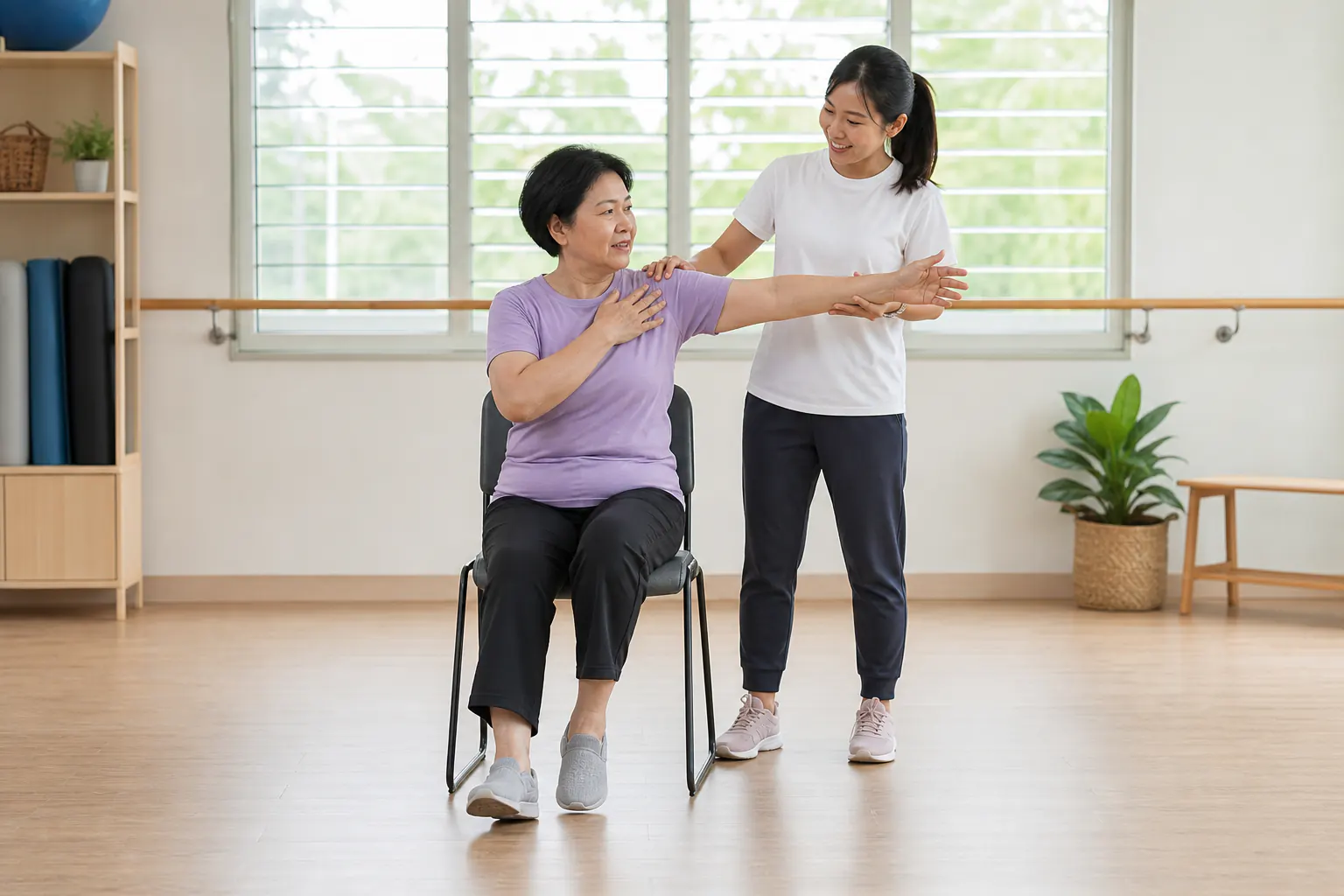
Smart strategies for training around injuries without making them worse. Exercises, modifications, and recovery tips for Malaysian gym-goers.
You tweaked your shoulder on bench press last Tuesday. Now you are standing in the gym lobby debating whether to go home or push through. This is a scenario every regular lifter in Malaysia faces eventually, and the answer is almost never "stop training completely."
That might sound reckless. It is not. Complete rest for most musculoskeletal injuries actually delays recovery. The evidence is clear - controlled loading promotes tissue healing better than sitting on your couch eating Maggi for two weeks.
But training around an injury requires intelligence, not bravado. Here is how to do it properly.
The Difference Between Training Through and Training Around
Training through an injury means ignoring it and doing exactly what you were doing before. That is stupid and will make things worse.
Training around an injury means modifying your programme so you continue loading healthy tissues while allowing the injured area to recover. Big difference.
If your right shoulder hurts during bench press, you do not stop training entirely. You find pressing variations that do not aggravate it. You hammer your legs, core, and maybe even your left arm. You stay active, maintain fitness, and keep your gym habit intact.
Step 1: Get a Proper Assessment
Before you modify anything, understand what you are dealing with. A sharp, sudden pain during a lift is different from a dull ache that has been building over weeks.
Red flags that need immediate medical attention:
- Sudden loss of strength or inability to move a joint
- Visible deformity or swelling
- Numbness or tingling
- Pain that wakes you up at night
- Pain that does not respond to any modification
For everything else - which covers most gym injuries - a sports physiotherapist can assess you properly. In KL, clinics like Physio Active, Rehamed Therapy, or Spine & Sports charge around RM150-250 for an initial assessment. Money well spent compared to months of guessing.
Step 2: Identify Your Pain-Free Movements
Once you know what is injured, your job is to find what you can do without pain. Not discomfort - actual sharp or worsening pain. Mild discomfort during movement is often acceptable, especially during rehab. But pain that increases during or after exercise is a stop signal.
Shoulder Injuries
The shoulder is the most commonly injured joint in the gym. Here is how to work around common shoulder issues:
Painful movement → Pain-free alternative:
- Flat bench press → Floor press (limits range of motion)
- Overhead press → Landmine press (arc path reduces impingement)
- Lateral raises → Cable Y-raises or band pull-aparts
- Behind-the-neck pressing → Nothing. Stop doing this exercise entirely.
- Barbell rows → Chest-supported rows (removes shoulder stabilisation demand)
Many shoulder injuries feel worse with internal rotation under load. Switching from barbell to neutral-grip dumbbell pressing often eliminates pain immediately.
Knee Injuries
Knee pain is common among Malaysian gym-goers, partly because many of us spend years in sedentary desk jobs before starting to squat.
Painful movement → Pain-free alternative:
- Back squats → Box squats to parallel (controlled range)
- Leg extensions → Reverse Nordic curls or Spanish squats
- Walking lunges → Reverse lunges (less shear force)
- Leg press (full depth) → Leg press (limited range, higher foot position)
- Running → Cycling or swimming at your local pool
If your knee hurts during squats, try elevating your heels on small plates (1.25kg plates work). This shifts some stress from the knee to the quads and often reduces pain significantly.
Lower Back Injuries
Lower back tweaks are frighteningly common and genuinely debilitating. But most non-traumatic lower back issues resolve within 6-12 weeks with proper management.
During acute phase (first 1-2 weeks):
- Walk daily, even if slowly
- Bird dogs, dead bugs, side planks - all pain-free
- Goblet squats with light weight
- Machines that support your back (chest-supported row, leg press)
After acute phase:
- Gradually reintroduce hip hinges with light Romanian deadlifts
- Trap bar deadlifts (more upright torso)
- Belt squats if your gym has one - many commercial gyms in Malaysia do not, but some serious gyms like Iron Haven or Strength Yard have them
- Cable pull-throughs as deadlift alternatives
Wrist and Elbow Injuries
Common among desk workers who also lift. Typing all day then gripping heavy barbells is a recipe for tendinopathy.
Modifications:
- Use fat gripz or wrap a towel around the bar (reduces grip strain)
- Switch to neutral-grip handles where possible
- Use straps for pulling movements to reduce grip demand
- EZ bar instead of straight bar for curls
- Wrist wraps for pressing (available at Decathlon for RM30-50)
Step 3: Restructure Your Programme
Here is a practical framework. Take your existing programme and sort every exercise into three categories:
- Green light: No pain, full intensity. Continue as normal.
- Yellow light: Mild discomfort but manageable. Reduce load by 30-50%, increase reps, monitor closely.
- Red light: Painful. Replace with an alternative or remove entirely.
Example - Upper body injury, lower body fine:
| Day | Original | Modified |
|---|---|---|
| Monday | Bench press 4x6 | Floor press 3x8 (yellow) |
| Monday | OHP 3x8 | Landmine press 3x10 (green) |
| Tuesday | Squats 4x5 | Squats 4x5 (green - no change) |
| Tuesday | Deadlifts 3x5 | Deadlifts 3x5 (green - no change) |
| Thursday | Incline DB press 3x10 | Incline neutral grip 3x12 (yellow) |
| Friday | Front squats 3x8 | Front squats 3x8 (green - no change) |
Notice the injured side gets lighter loads and higher reps. The healthy movements stay the same or even get pushed harder to compensate.
Step 4: Use This Time to Fix Weaknesses
An injury is annoying, but it is also an opportunity. Cannot squat heavy? Spend 8 weeks building your single-leg strength with Bulgarian split squats and step-ups. Cannot bench press? Build your back with rows and pull-ups. Cannot deadlift? Hammer your core stability and hip mobility.
Some of the strongest people I have coached in Malaysia made their biggest long-term gains during injury periods because they were forced to address weaknesses they had been ignoring for years.
What About Cardio?
Most injuries allow some form of cardiovascular training. The key is finding a modality that does not load the injured area.
- Upper body injury: Stationary bike, walking, stair climber
- Lower body injury: Upper body ergometer (available at some gyms), swimming with pull buoy, seated battle ropes
- Back injury: Walking, recumbent bike, swimming (breaststroke may aggravate - try freestyle)
Malaysia's warm climate actually helps here. A 30-minute walk around your taman in the evening still counts as cardio and promotes blood flow to healing tissues.
How Long Should You Train Around an Injury?
This depends entirely on the injury. But here are general timelines:
- Muscle strain (Grade 1): 1-3 weeks of modification
- Muscle strain (Grade 2): 3-8 weeks of modification
- Tendinopathy: 8-16 weeks of graduated loading (this one requires patience)
- Ligament sprain (Grade 1-2): 2-8 weeks depending on joint
- Disc-related back pain: 6-16 weeks with gradual return
The critical point: return to normal training gradually. Do not go from modified training straight back to your previous maxes. Spend 2-3 weeks progressively increasing load before returning to full intensity.
When to Actually Stop Training
Sometimes the right call is complete rest. If you have:
- A fracture
- A complete muscle or tendon tear
- Post-surgical restrictions
- An infection or illness with fever
- Pain that worsens despite every modification
Then stop and follow your doctor's instructions. These situations are uncommon but real. No workout is worth permanent damage.
The Mental Side of Training Injured
Injuries mess with your head. You see your numbers drop, watch your gym mates progress without you, and feel like you are falling behind. I have seen clients at my gym in Petaling Jaya spiral into frustration that lasts longer than the injury itself.
Here is what helps: set new short-term goals that are not tied to your injury. Cannot chase a squat PR? Set a pull-up goal instead. Cannot bench heavy? See how much your overhead press improves. Having something to work toward keeps you engaged and stops the negative thought spiral.
Training around injuries is a skill. And like any skill, it improves with practice. Every experienced lifter has been through multiple injury cycles and come out stronger because they learned to adapt rather than quit. You will too.
Part of our comprehensive guide:
Recovery and Injury Prevention: Build Durability Into Your Training→Also in this series:
Related Articles
Find a Personal Trainer
Ready to put this into practice? Connect with a certified personal trainer near you, or explore by service and goal.