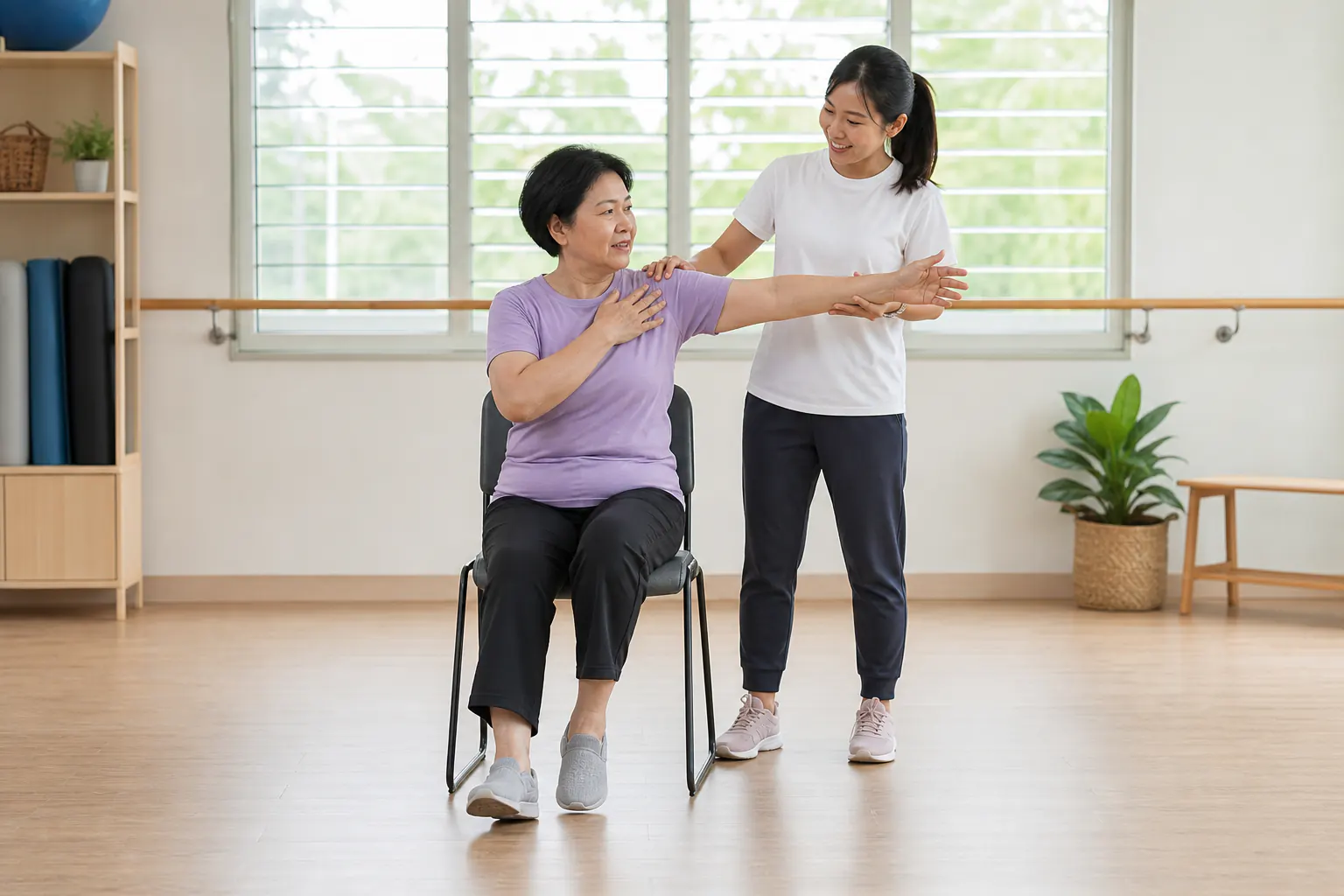
A complete guide to recovery and injury prevention for Malaysian lifters. Covers mobility work, common injuries, rehabilitation exercises, and building a body that lasts.
Why Recovery Is Not Optional
Most Malaysians who start a fitness programme focus entirely on training harder. They add more sessions, more weight, more intensity. What they neglect — recovery — is what eventually breaks them.
Injuries are the number one reason people quit training. A knee twinge becomes a chronic issue. A sore lower back becomes a herniated disc. An ankle rolled during futsal becomes recurring instability. All of these are preventable with proper recovery protocols and prehabilitation work.
This guide covers the recovery methods that actually work, the most common injuries in Malaysian fitness, and how to build a body that performs for decades, not just months.
The Recovery Hierarchy
Not all recovery methods are equal. Here they are ranked by impact:
1. Sleep (Non-Negotiable)
Seven to nine hours per night. Growth hormone peaks during deep sleep. Muscle protein synthesis is highest during rest. Malaysian lifters who sleep 5-6 hours are actively undermining their training.
Practical tips for Malaysian conditions:
- Air conditioning at 23-24°C (tropical heat disrupts sleep)
- Dark room (blackout curtains help with street lighting)
- No phone for 30 minutes before bed (blue light suppresses melatonin)
- Consistent wake time, even on weekends
2. Nutrition (Covered in Nutrition Guide)
Adequate protein for tissue repair. Sufficient calories for recovery. Hydration — 3-4 litres daily in Malaysian heat.
3. Active Recovery
Light movement on rest days improves blood flow and reduces stiffness. Walking, swimming, light cycling, or a yoga session. Not another hard training session disguised as "recovery."
Read more: Active Recovery Day Workout
4. Mobility Work
Targeted stretching and mobility drills that maintain range of motion and prevent the stiffness that leads to injury. Ten minutes daily is enough for most people.
Read more: Ankle Mobility Exercises
Common Injuries in Malaysian Fitness
Lower Back Pain
The most common complaint among Malaysian office workers who start training. Sitting 8-10 hours then loading a barbell onto a spine that has been compressed all day is a recipe for injury.
Prevention: Hip hinge practice (Romanian deadlifts with light weight), core strengthening, and standing breaks every 60 minutes during work.
Read more: Back Pain Exercises for Office Workers | Core Exercises for Back Pain
Anterior Pelvic Tilt
Another sitting-related issue. The hip flexors shorten, pulling the pelvis forward, creating an exaggerated lower back arch. Common in desk workers throughout KL and the Klang Valley.
Fix: Hip flexor stretches, glute activation exercises, and core strengthening. Consistent correction takes 4-8 weeks.
Read more: Anterior Pelvic Tilt Fix
Knee Injuries (ACL)
Common in futsal, badminton, and running — Malaysia's most popular recreational sports. ACL tears often result from poor landing mechanics and weak supporting muscles.
Prevention: Single-leg exercises, hamstring strengthening, proper landing drills, and gradually increasing sport intensity.
Read more: ACL Injury Prevention Exercises
Ankle Sprains
Extremely common in Malaysian recreational sports, particularly on uneven outdoor surfaces and indoor futsal courts. A single sprain that is not properly rehabilitated creates a cycle of recurring sprains.
Rehabilitation: Progressive ankle strengthening, proprioception training (balance drills), and gradual return to sport. Do not rush back — a partially healed ankle will sprain again.
Read more: Ankle Sprain Recovery Exercises | Ankle Sprain Rehab Programme
Achilles Tendon Issues
Runners and older lifters (40+) are most at risk. The Achilles tendon weakens with age and responds poorly to sudden increases in training volume.
Prevention: Eccentric calf raises, gradual volume increases (10% rule), and proper warm-up before explosive movements.
Read more: Achilles Tendon Strengthening
Recovery Methods: What Works and What Does Not
Works
- Sleep: The most powerful recovery tool. Free.
- Walking: 20-30 minutes on rest days improves blood flow without adding training stress.
- Foam rolling: Reduces muscle soreness and improves short-term range of motion. 5-10 minutes post-workout.
- Cold exposure: Cold showers (2-3 minutes) reduce inflammation after intense sessions.
- Massage: Deep tissue massage every 2-4 weeks for chronic tightness.
Read more: Cold Shower Recovery Benefits | Deep Tissue Massage Recovery
Limited Evidence
- Compression garments: May reduce soreness slightly. Not harmful.
- Cryotherapy chambers: Expensive, limited evidence versus cold showers.
- Supplement stacks: Most "recovery supplements" are marketing. Protein and creatine are the only ones with strong evidence.
Does Not Work
- Stretching before training: Static stretching before lifting reduces power output. Do dynamic warm-ups instead.
- "No pain, no gain" mentality: Training through pain leads to injury. Discomfort during exercise is normal. Sharp, stabbing, or joint pain is a warning signal.
Special Populations
Arthritis
Exercise is one of the most effective treatments for arthritis — but it must be appropriate. Low-impact strength training, swimming, and cycling maintain joint health without aggravating inflammation.
Read more: Arthritis Exercise Guide
Post-Pregnancy (Diastasis Recti)
Abdominal separation after pregnancy requires specific rehabilitation before returning to general training. Standard ab exercises (crunches, planks) can worsen the condition if started too early.
Read more: Diastasis Recti Exercise Guide
Working With a Trainer for Recovery
A personal trainer can identify movement compensations, mobility restrictions, and injury risks before they become problems. For recovery specifically, look for trainers with:
- Corrective exercise certification (NASM-CES or equivalent)
- Experience programming for injury rehabilitation
- Understanding of when to refer to physiotherapy
Frequently Asked Questions
Q: How many rest days do I need per week? A: Most people need 2-3 rest days per week. These can include light activity (walking, stretching) but should not include intense training. More rest is needed during calorie deficits, high-stress periods, or after illness.
Q: Should I train when I am sore? A: Mild muscle soreness (DOMS) is normal and you can train through it — in fact, light exercise often reduces soreness faster than complete rest. However, sharp pain, joint pain, or soreness that limits your range of motion means you should rest that muscle group.
Q: Is stretching before exercise necessary? A: Dynamic warm-ups (leg swings, arm circles, light cardio) before training — yes. Static stretching (holding positions) before training — no, it reduces power output. Save static stretching for after your workout or on rest days.
Q: How do I know if I am overtraining? A: Signs include: declining performance despite consistent training, persistent fatigue, difficulty sleeping, frequent illness, loss of motivation, and increased resting heart rate. The fix is usually more rest, not more training.
Q: When should I see a doctor versus a personal trainer? A: See a doctor or physiotherapist for: acute injuries (sudden onset pain), joint swelling, numbness or tingling, pain that worsens over 2 weeks despite rest, or any pain that prevents daily activities. A personal trainer can help with: chronic tightness, posture correction, return-to-exercise after medical clearance, and injury prevention.
Related Articles
Find a Personal Trainer
Ready to put this into practice? Connect with a certified personal trainer near you, or explore by service and goal.