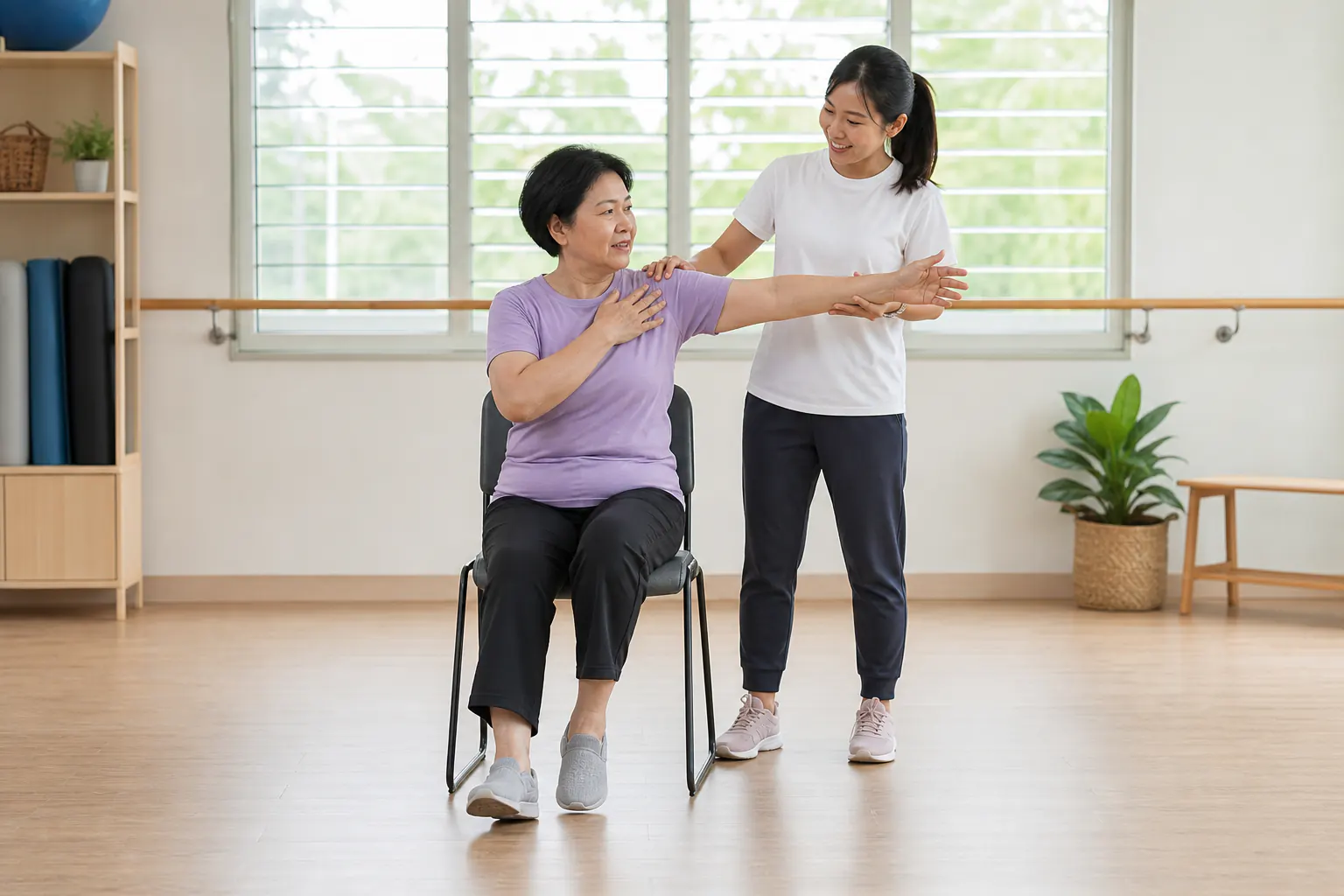
A practical guide for Malaysians with osteoarthritis or rheumatoid arthritis who want to stay active.
Arthritis is one of the leading causes of disability in Malaysia, particularly among those over 50. The two most common types - osteoarthritis (wear and tear) and rheumatoid arthritis (autoimmune) - both benefit enormously from regular exercise, despite the natural instinct to rest painful joints. Research consistently shows that appropriate exercise reduces pain, improves function, and slows disease progression.
The Exercise Paradox in Arthritis
Many Malaysians with arthritis avoid exercise because movement hurts. This creates a destructive cycle: inactivity leads to muscle weakness, which increases joint stress, which worsens pain, which leads to more inactivity. Breaking this cycle with the right type and amount of exercise is the single most important thing you can do for your joints.
Understanding the Difference
Osteoarthritis involves cartilage breakdown and is most common in the knees, hips, hands, and spine. It typically worsens with age and is strongly associated with excess body weight. Malaysia's rising obesity rates directly fuel the osteoarthritis epidemic.
Rheumatoid arthritis is an autoimmune condition where the body's immune system attacks the joint lining. It causes inflammation, swelling, and can affect joints on both sides of the body symmetrically. Exercise must be adjusted around flare-ups.
Best Exercises for Arthritic Joints
Water-Based Exercise (Gold Standard)
Swimming and water aerobics are considered the best exercise for arthritis. The buoyancy of water supports your body weight, reducing joint stress by up to 90 percent while providing natural resistance for strengthening. Public pools across Malaysia charge RM2 to RM5 per entry, making this an affordable option. Water temperature is naturally comfortable in Malaysia's tropical climate.
Walking
Low-impact and accessible, walking is the foundation of an arthritis exercise programme. Start with flat surfaces and comfortable distances. Many Malaysians walk in air-conditioned malls - this is perfectly valid and provides a smooth, level surface with places to rest if needed.
Cycling
Whether stationary or outdoor, cycling provides cardiovascular exercise with minimal joint impact. The smooth, circular motion actually helps nourish joint cartilage by pumping fluid through the joint. Stationary bikes are available at most gyms across Malaysia and eliminate balance and traffic concerns.
Resistance Training
Contrary to outdated advice, resistance training is not only safe for arthritis but highly beneficial. Stronger muscles absorb more force before it reaches the joint. Guidelines for arthritic individuals:
- Use moderate weights with controlled movements
- Avoid locking joints at the end of movements
- Perform exercises through a pain-free range of motion
- Allow 48 hours between resistance sessions for the same muscle group
- Start with machines, which provide guided movement paths, before progressing to free weights
Flexibility and Range of Motion
Daily gentle stretching maintains joint mobility. Hold each stretch for 20 to 30 seconds without bouncing. Tai chi, practised widely in Malaysian parks, improves flexibility, balance, and has been shown to reduce arthritis pain in multiple studies.
Managing Flare-Ups
Both osteoarthritis and rheumatoid arthritis have good days and bad days. On flare-up days:
- Reduce exercise intensity but try not to stop completely
- Switch to gentle range-of-motion exercises and walking
- Apply ice to swollen joints after activity
- Reduce the duration of your session rather than eliminating it entirely
For rheumatoid arthritis specifically, avoid vigorous exercise during active flare-ups with significant joint swelling and heat. Gentle range-of-motion exercises are appropriate even during flares.
Joint Protection During Exercise
- Warm up for at least 10 minutes before any exercise to increase blood flow to joints
- Choose low-impact over high-impact activities - swimming over running, cycling over jumping
- Use proper footwear with good shock absorption
- Modify exercises to work within your pain-free range
- Ice swollen joints for 15 minutes after exercise
Weight Management and Arthritis
In Malaysia, where obesity rates exceed 20 percent among adults, weight management deserves particular attention. Every kilogram of excess body weight adds four kilograms of force through the knee during walking and even more during stairs. Losing just 5 kilograms can reduce knee pain by 50 percent in overweight individuals with knee osteoarthritis. Exercise combined with dietary modification produces the best weight loss outcomes.
Supplements and Natural Remedies
Many Malaysians use traditional remedies and supplements for arthritis. While glucosamine and chondroitin have mixed evidence, some people report benefit. Fish oil has modest anti-inflammatory effects. However, no supplement replaces the proven benefits of regular exercise. Discuss any supplements with your doctor to avoid interactions with arthritis medication.
Getting Professional Help
A rheumatologist manages the medical aspects of arthritis, while a personal trainer designs and supervises your exercise programme. In Malaysia, rheumatology appointments at government hospitals are subsidised, while private consultations range from RM150 to RM300. Personal training sessions focused on arthritis management cost between RM100 and RM200.
Start Gently, Progress Steadily
Begin with whatever you can manage - even five minutes of gentle movement is a starting point. Increase duration before intensity. Track your pain levels and joint stiffness to identify which exercises help most and which to modify. With consistent, appropriate exercise, most people with arthritis experience significant improvement in pain and function within eight to twelve weeks.
Part of our comprehensive guide:
Recovery and Injury Prevention: Build Durability Into Your Training→Also in this series:
Related Articles
Find a Personal Trainer
Ready to put this into practice? Connect with a certified personal trainer near you, or explore by service and goal.