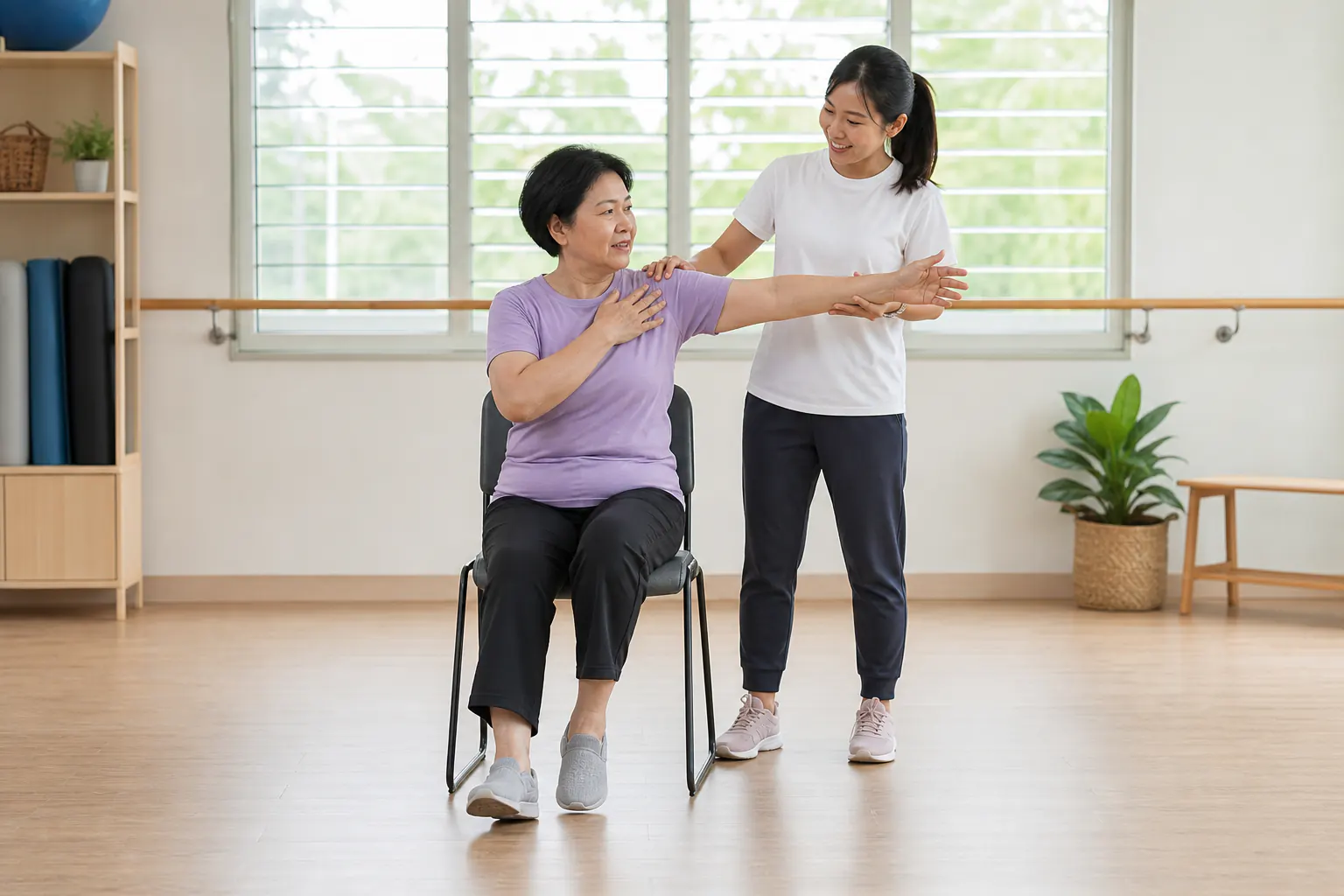
Smart active recovery day workouts that speed up muscle repair without overtraining. Light activities and routines perfect for Malaysia's climate.
Rest days do not mean lying on the couch watching Netflix for 12 hours. They also do not mean sneaking in another heavy training session because you feel guilty about not lifting. Active recovery sits between these extremes - light movement that promotes blood flow, reduces soreness, and accelerates muscle repair without creating additional training stress.
Done right, active recovery makes you feel better and perform better in your next gym session. Done wrong, it becomes extra training that steals from your recovery.
What Active Recovery Actually Does
When you train hard, your muscles accumulate metabolic waste products - hydrogen ions, lactate, and other byproducts of intense exercise. Your damaged muscle fibres also trigger an inflammatory response as part of the repair process.
Light movement on rest days helps by:
- Increasing blood flow to damaged muscles without creating additional damage. Blood delivers oxygen, nutrients, and immune cells while carrying away waste products.
- Promoting lymphatic circulation. Your lymphatic system (which removes cellular waste) relies on muscle contractions to function - it does not have its own pump like your cardiovascular system. Light movement keeps this system active.
- Reducing muscle stiffness. After a hard leg session, your quads and hamstrings tighten up. Gentle movement through full range of motion maintains flexibility and reduces that "can't walk down stairs" feeling.
- Supporting mental recovery. Complete rest days can leave highly motivated trainees feeling restless and anxious. Light activity satisfies the need to "do something" without compromising recovery.
The Rules of Active Recovery
Rule 1: Keep Intensity Below 60% of Maximum Heart Rate
Active recovery should feel easy. Not "moderate," not "a good workout" - genuinely easy. If you are breathing hard, sweating heavily, or feeling muscular fatigue, you have gone too far.
For most people, this means keeping your heart rate below 120 bpm. Use the talk test: you should be able to hold a normal conversation without pausing for breath.
Rule 2: Duration of 20-45 Minutes
Longer is not better. A 20-minute walk provides the same recovery benefits as a 90-minute walk. Keep it brief and purposeful.
Rule 3: No Loading of Trained Muscles
If you destroyed your legs yesterday, do not do bodyweight squats today and call it "active recovery." Choose activities that move the sore muscles gently without loading them against resistance.
Rule 4: If It Makes You More Tired, It Is Not Recovery
This is the ultimate test. If your active recovery session leaves you more fatigued than before, you did too much. Recovery activities should leave you feeling refreshed and looser.
Active Recovery Activities for Malaysia
Walking (20-40 minutes)
The simplest and most effective active recovery. A brisk walk around your neighbourhood, taman, or a nearby park gets blood flowing without any meaningful muscular stress.
In Malaysia, timing matters. Walk before 9am or after 6pm to avoid the worst heat. Evening walks around Lake Gardens, KLCC Park, Taman Jaya in PJ, or even just around your condo complex are perfect.
If it is raining (common in the afternoon), walk laps inside a shopping mall. Plenty of people do this - Mid Valley, Pavilion, and 1 Utama are essentially indoor walking tracks with air conditioning.
Swimming (20-30 minutes)
Swimming provides gentle, full-body movement in a non-weight-bearing environment. The water supports your body weight, reducing joint stress while maintaining circulation.
Do not swim laps at race pace - that is training, not recovery. Instead, swim at a leisurely pace with easy strokes. Alternate between freestyle, backstroke, and just floating for 20-30 minutes.
Your condo pool or a public pool (RM2-5 entry) works fine. Water temperature in Malaysian pools is usually warm enough that no cold-shock concerns exist.
Cycling (20-30 minutes)
Light cycling - either on a stationary bike at the gym or a leisurely outdoor ride - is excellent for active recovery, especially after lower body training days. The circular pedalling motion moves your hip, knee, and ankle joints through their ranges without impact.
Set the resistance low. Pedal at 60-70 RPM. It should feel like you are barely trying.
Yoga or Light Stretching (20-40 minutes)
A gentle yoga flow addresses both the physical and mental components of recovery. Restorative poses, light stretching, and controlled breathing reduce cortisol and promote parasympathetic nervous system activity (the "rest and digest" state).
You do not need a yoga class for this. A 20-minute YouTube yoga session in your living room works. Look for "gentle yoga" or "recovery yoga" - not power yoga or hot yoga, which are training sessions in disguise.
Foam Rolling and Self-Massage (15-20 minutes)
Foam rolling breaks up fascial adhesions and promotes blood flow to specific muscles. It hurts during the process but leaves you feeling significantly better afterward.
Key areas to roll:
- Quads and IT band (after leg day)
- Upper back and lats (after pull day)
- Glutes and piriformis (after squats or deadlifts)
- Calves (after any training)
Spend 60-90 seconds per muscle group, rolling slowly over tender areas. A foam roller from Decathlon costs RM30-50 and is worth every sen.
Light Sport Play
Playing a casual game of badminton (not competitive), kicking a football around (not a full match), or hitting at the driving range - these are fine as active recovery as long as you keep the intensity genuinely light.
In Malaysia, many housing estates have badminton courts, futsal courts, or open spaces. A casual 20-minute rally with a friend is perfect. A full-intensity competitive match is not recovery.
Sample Active Recovery Day
Here is a structured 30-minute active recovery session:
Minutes 0-5: Foam Rolling
- Quads: 60 seconds per leg
- Upper back: 60 seconds
- Glutes: 60 seconds per side
Minutes 5-15: Light Walking or Cycling
- Walking at a comfortable pace around your taman
- Or stationary bike at low resistance
Minutes 15-25: Mobility Work
- Hip 90/90 stretch: 60 seconds per side
- Cat-cow: 10 reps
- World's greatest stretch: 5 per side
- Shoulder pass-throughs with a band: 10 reps
- Deep squat hold (unloaded): 30 seconds x 3
Minutes 25-30: Breathing and Relaxation
- Lie on your back, knees bent
- 5 minutes of deep diaphragmatic breathing
- Inhale for 4 seconds, hold for 4, exhale for 6
This simple routine promotes recovery without generating any fatigue. You can do it at home with zero equipment (except a foam roller).
When Complete Rest Is Better Than Active Recovery
Active recovery is not always appropriate. Take complete rest if:
- You are genuinely exhausted - the kind of fatigue where walking to the kitchen feels hard
- You are sick or fighting an illness
- You have acute pain from a potential injury (not just soreness)
- You have trained intensely for 5-6 consecutive days
- Your sleep has been poor for multiple nights
- Your resting heart rate is elevated (a sign of incomplete recovery)
One complete rest day per week is the minimum for most training programmes. Some people need two, especially during high-stress periods at work or during heavy training blocks.
Active Recovery vs Deload Weeks
Active recovery days happen within your normal training week. Deload weeks are planned reductions in training volume and intensity, typically every 4-6 weeks.
They serve different purposes:
- Active recovery day: Maintains daily movement and promotes short-term recovery between sessions
- Deload week: Allows accumulated fatigue from weeks of hard training to dissipate, preventing overtraining
Both are necessary components of a well-designed programme. Skipping either will eventually catch up with you in the form of plateaus, excessive fatigue, or injury.
Think of active recovery as daily maintenance - like keeping your car engine running smoothly. Think of deload weeks as the scheduled service - a deeper reset that keeps everything functioning long-term.
Your body grows during recovery, not during training. Respect that process, move lightly on your off days, and show up to your next session stronger than if you had just stayed on the couch.
Part of our comprehensive guide:
Recovery and Injury Prevention: Build Durability Into Your Training→Also in this series:
Related Articles
Find a Personal Trainer
Ready to put this into practice? Connect with a certified personal trainer near you, or explore by service and goal.