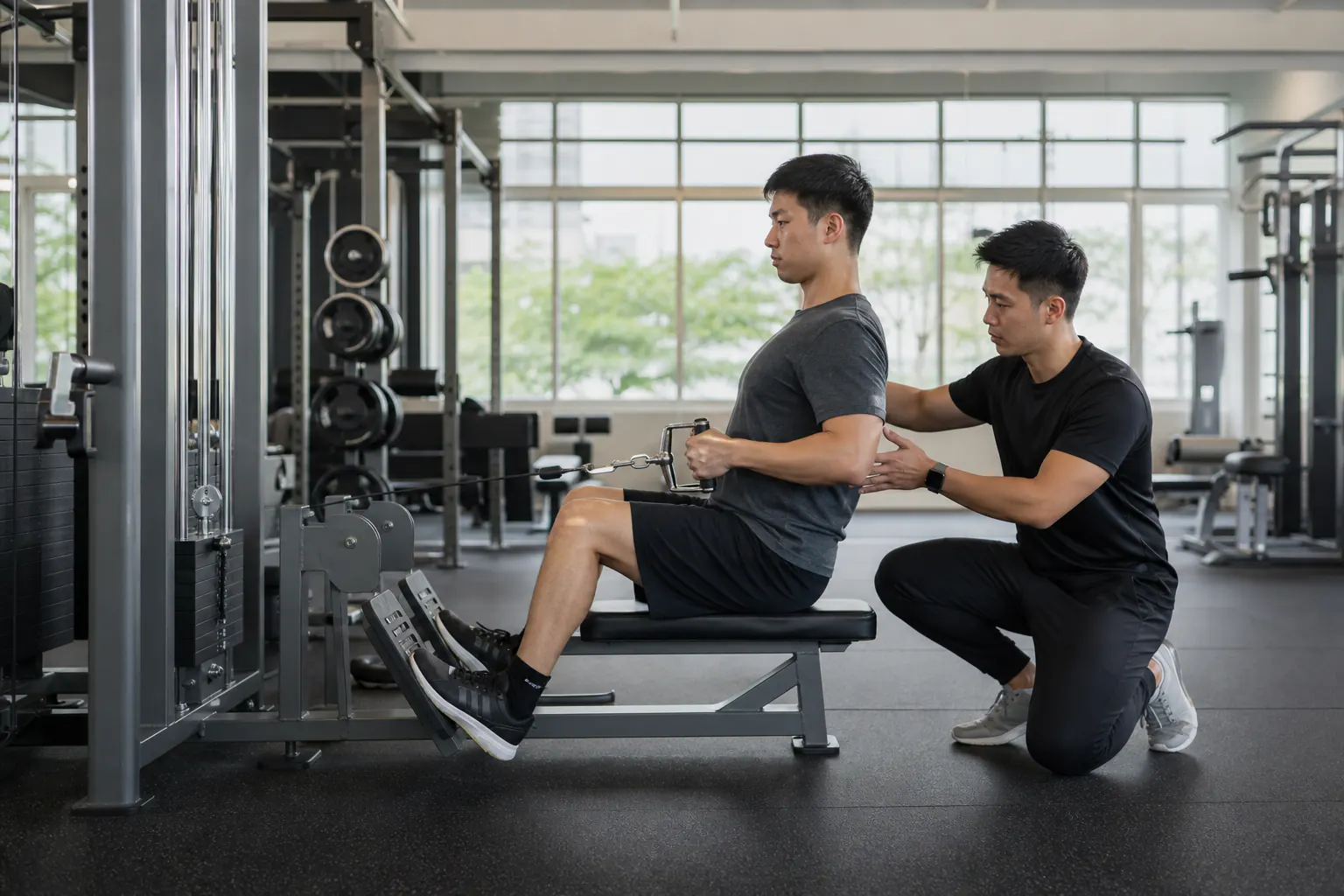
Master the stomach vacuum exercise for a tighter, stronger core. Step-by-step guide to this underrated core exercise for Malaysian fitness enthusiasts.
The Forgotten Core Exercise
While most gym goers in Malaysia focus on crunches, planks, and leg raises for their core training, there is an old-school exercise that targets a muscle most people have never heard of. The stomach vacuum is an isometric contraction of the transverse abdominis (TVA), the deepest layer of abdominal muscle that wraps around your midsection like a natural corset.
This exercise was a staple of the golden era of bodybuilding. Legends like Frank Zane and Arnold Schwarzenegger used stomach vacuums to develop the tight, controlled midsections that defined their physiques. Today, the exercise has fallen out of mainstream fitness, but its benefits for core strength, posture, and aesthetics are just as relevant as ever.
The stomach vacuum does not require any equipment, can be done anywhere, and takes only a few minutes per day. Yet its effects on your waistline and core function can be remarkable.
Understanding the Transverse Abdominis
Most core exercises target the rectus abdominis (the six-pack muscle) and the obliques (the side muscles). These are important, but they are the outer layers of your core. Beneath them lies the transverse abdominis, which functions fundamentally differently.
The TVA acts as a natural weight belt. When it contracts, it compresses the abdominal contents inward, stabilising the spine and pelvis. A strong TVA reduces waist circumference, improves posture, supports heavy lifts, and protects the lower back during everyday activities.
The problem is that the TVA is not effectively targeted by traditional ab exercises. Crunches and sit-ups primarily work the rectus abdominis. Planks engage the TVA somewhat, but the stomach vacuum isolates it more directly than any other exercise.
How to Perform the Stomach Vacuum
The Basic Technique
- Stand upright or position yourself on your hands and knees (the quadruped position is easiest for beginners).
- Exhale all the air from your lungs completely. Get every last bit of air out.
- Without inhaling, draw your belly button in towards your spine as far as possible. Imagine trying to make your stomach touch your back.
- Hold this position for ten to fifteen seconds while breathing shallowly through your chest. Do not hold your breath.
- Release and breathe normally for a few seconds.
- Repeat for three to five sets.
The key is the complete exhalation followed by the inward pull. This combination maximally activates the TVA and creates the characteristic hollowed-out appearance of a vacuum.
Progression Stages
Stage 1: Quadruped (Hands and Knees)
This is the easiest position because gravity assists the inward pull of your belly. Start here and practice until you can hold a vacuum for twenty seconds. This position is best done at home on a mat.
Stage 2: Supine (Lying on Your Back)
Lie on your back with your knees bent and feet flat on the floor. In this position, gravity is neutral. Exhale fully and draw your belly button towards the floor. Hold for twenty seconds.
Stage 3: Seated
Sit upright on a chair or bench without leaning against the backrest. This is harder because your core must stabilise your upright posture while performing the vacuum. This is an excellent option for practising at your desk in the office.
Stage 4: Standing
The most challenging position because your core must work against gravity and stabilise your entire body. Practise standing vacuums once you can comfortably hold the seated version for twenty to thirty seconds.
Target Progressions
- Week 1-2: 3 sets of 10-15 second holds in quadruped position
- Week 3-4: 3 sets of 15-20 second holds in supine position
- Week 5-6: 3 sets of 20-30 second holds in seated position
- Week 7-8: 3 sets of 20-30 second holds in standing position
- Beyond: 3-5 sets of 30-60 second holds in any position
Benefits of the Stomach Vacuum
A Tighter Waistline
The TVA, when strengthened, pulls your midsection inward even at rest. Regular stomach vacuum practice can visibly reduce your waist measurement, not by burning fat, but by improving the tone of the muscle that controls waist circumference. Many practitioners report a one to two inch reduction in waist measurement within a few weeks.
For Malaysians who struggle with belly fat, it is important to understand that the vacuum does not spot-reduce fat. It tightens the underlying muscle, creating a flatter, more controlled appearance. Combined with a proper diet for fat loss, the results can be dramatic.
Better Posture
A strong TVA supports the lumbar spine and helps maintain neutral spinal alignment. This translates to better standing and sitting posture. For Malaysian office workers who spend hours at desks, this improved postural support can reduce lower back pain and fatigue.
Enhanced Lifting Performance
The TVA is your body's natural weight belt. A strong vacuum ability translates to better intra-abdominal pressure during heavy lifts like squats, deadlifts, and overhead presses. Many experienced lifters use a brief vacuum-like contraction as part of their bracing technique before heavy sets.
Core Stability
Beyond aesthetics, the TVA provides deep core stability that supports virtually every physical activity. From carrying groceries, to playing badminton, to picking up your children, a strong TVA makes everyday movements easier and safer.
Improved Breathing
Practising stomach vacuums develops greater awareness and control of your diaphragm and breathing mechanics. The full exhalation required for the vacuum teaches you to use your respiratory muscles more effectively, which can benefit both training and daily life.
Common Mistakes
Holding Your Breath
The vacuum should be performed while breathing, not while holding your breath. After the initial full exhalation and inward pull, breathe shallowly through your chest while maintaining the vacuum. Holding your breath limits how long you can maintain the position and defeats the purpose of building endurance in the TVA.
Sucking In Your Stomach
Sucking in your stomach is not the same as performing a vacuum. Sucking in typically involves contracting the rectus abdominis and pulling the chest down. A vacuum specifically involves drawing the belly button inward using the TVA while keeping the chest lifted. The distinction is subtle but important.
Going Too Hard Too Soon
If you try to hold a vacuum for thirty seconds on your first attempt, you will likely fail and become discouraged. Start with ten-second holds in the easiest position and build gradually. The TVA, like any muscle, needs progressive training.
Inconsistency
The stomach vacuum produces results through daily practice, not occasional effort. Missing a few days will not undo your progress, but practising only once a week will not produce meaningful results. Aim for daily practice, ideally in the morning before breakfast when your stomach is empty.
Incorporating Vacuums Into Your Routine
Morning Practice
Perform three to five sets of stomach vacuums immediately after waking up, before eating breakfast. Your stomach is empty, making the exercise easier and more effective. This takes only three to five minutes and sets a positive tone for the day.
Pre-Workout Activation
Include one to two sets of vacuums as part of your warm-up before training. This activates the TVA and primes your core for the stabilising demands of your workout.
Office Practice
The seated vacuum can be practised at your desk without anyone noticing. Perform a few sets during your workday as a discreet core exercise and posture reminder.
Combined With Other Core Work
Add vacuum holds between sets of your regular core exercises. For example:
- Plank: 30 seconds
- Rest 15 seconds
- Stomach vacuum: 20 seconds
- Rest 15 seconds
- Leg raises: 15 reps
- Rest 15 seconds
- Stomach vacuum: 20 seconds
This combination trains all layers of the abdominal wall for comprehensive core development.
Realistic Expectations
The stomach vacuum is a simple exercise with genuine benefits, but it is not a magic solution. It will not give you visible abs if your body fat is too high. It will not replace compound exercises and progressive overload for building core strength. What it will do is tighten the deep layer of your core, improve your posture, reduce your waist measurement through better muscle tone, and enhance your ability to brace during heavy lifts.
Combined with a balanced training programme, proper nutrition, and consistency, the stomach vacuum is a valuable addition to any Malaysian fitness enthusiast's toolkit.
Final Thoughts
The stomach vacuum is one of the simplest yet most effective exercises for core development that most people are not doing. It requires no equipment, takes only minutes per day, and produces visible results within weeks. Start in the quadruped position, progress through the stages, and make it a daily habit. Your core, your posture, and your waistline will all benefit.
Part of our comprehensive guide:
The Complete Guide to Personal Training Methods in Malaysia→Also in this series:
Related Articles
Find a Personal Trainer
Ready to put this into practice? Connect with a certified personal trainer near you, or explore by service and goal.