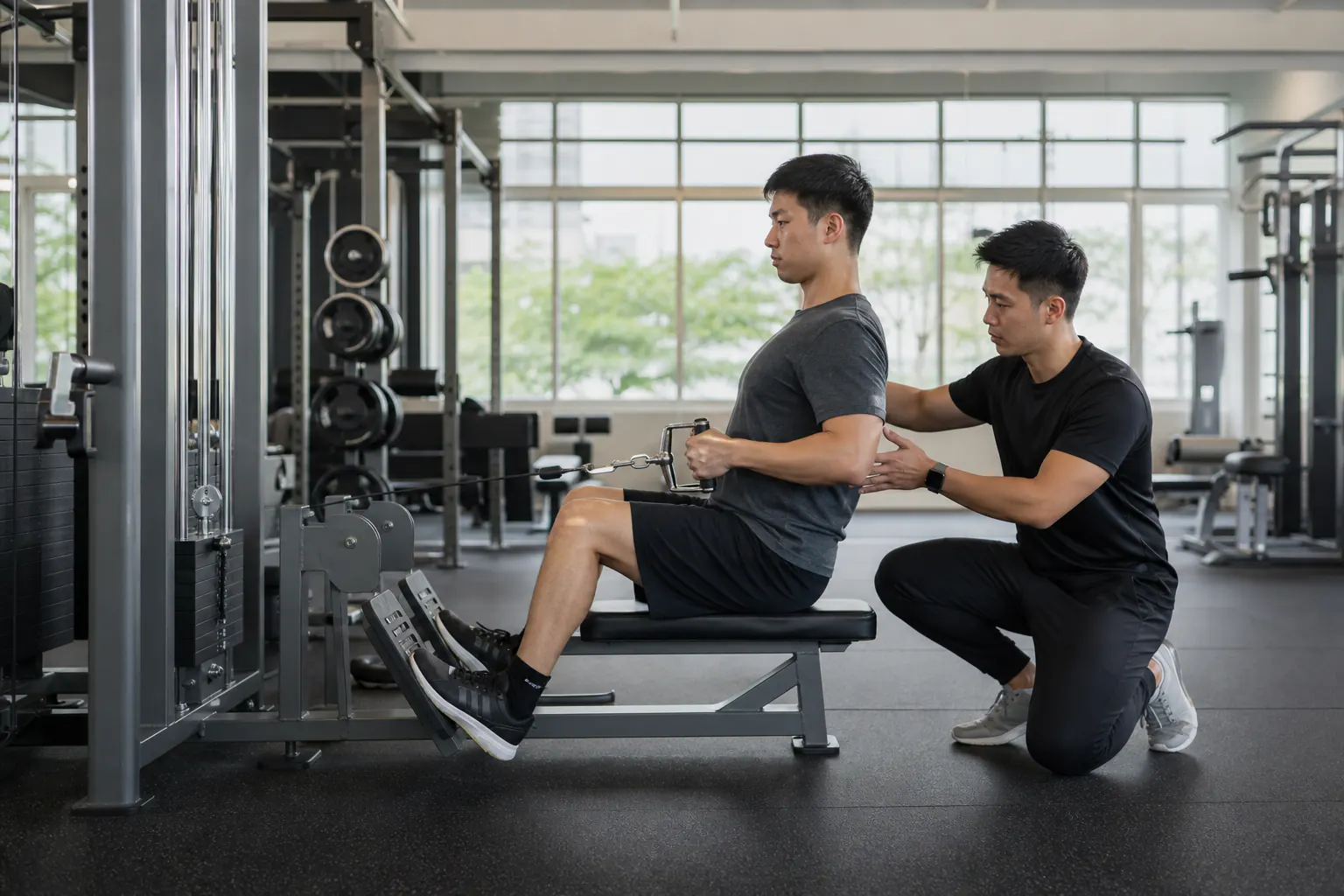
Isometric training builds strength at specific joint angles. How to use holds, pauses, and isometric contractions for better gym performance.
Isometric training - contracting your muscles without any visible joint movement - is the oldest form of strength training. Long before barbells existed, wrestlers, martial artists, and labourers built strength through sustained holds and static contractions.
Modern research confirms what they knew instinctively: isometric holds build strength, improve joint health, and can even reduce blood pressure. For gym-goers, strategic use of isometrics fills gaps that dynamic training misses.
How Isometrics Build Strength
When you hold a heavy weight motionless - like pausing at the bottom of a squat or holding a dead hang - your muscle fibres are contracting maximally even though no movement occurs. The muscle is generating force to match the load, and this force production is what drives strength adaptation.
Isometrics build strength specifically at the joint angle where you hold. A wall sit at 90 degrees builds quad strength at 90 degrees. A mid-range bicep hold builds bicep strength at that specific angle. This is called angle-specific strength.
Types of Isometric Training
Yielding isometrics
You hold a position against an external load. Examples: wall sit, dead hang, pause squat (holding the bottom position), plank. The load tries to move you; your muscles resist.
These primarily build muscular endurance and tendon strength at the held position.
Overcoming isometrics
You push or pull against an immovable object. Examples: pressing a barbell into safety pins (set above the sticking point), pulling against a bar that cannot move, pushing your hands together as hard as possible.
These build maximal force production because you can contract with 100% effort without any momentum or technique demands.
Practical Applications for Gym-Goers
Sticking point training
If you fail squats at a specific depth or bench press at a specific height, isometric holds at that exact angle build the strength you are missing. Set safety pins at your sticking point and press or squat into them for 5-10 seconds at maximal effort. 3-5 sets, 2-3 times per week.
Pause reps
Adding a 2-3 second pause at the bottom of any exercise eliminates the stretch reflex, making the concentric (lifting) phase harder. Pause squats, pause bench press, and pause deadlifts are standard tools in powerlifting programming for building strength out of the hole.
Isometric finishers
At the end of your dynamic sets, hold the most challenging position for 15-30 seconds. After your last set of leg press, hold the bottom position for 20 seconds. After bicep curls, hold the halfway position (90-degree elbow bend) for 15 seconds. This extends the muscle's time under tension beyond what dynamic reps alone provide.
Rehabilitation
Isometrics are the first type of strength training safe to perform after many injuries because they can be loaded at pain-free angles without requiring joint movement through potentially painful ranges. A quad set (tightening the quad without bending the knee) is one of the first exercises prescribed after ACL surgery.
Blood Pressure Benefit
A 2023 British Journal of Sports Medicine meta-analysis found that isometric exercise - specifically wall sits - was the most effective exercise modality for reducing blood pressure. More effective than running, cycling, or dynamic weight training. The protocol: 4 sets of 2-minute wall sits with 2 minutes rest between, 3 times per week.
For Malaysians with hypertension (common, affecting over 30% of adults), isometric training is a potent, drug-free intervention.
Programming Isometrics
Add to compound lifts: 2-3 pause reps at the end of your regular squat or bench press sets. This adds isometric demand without requiring extra exercises.
Dedicated holds: 3-4 sets of 15-30 second holds for target positions. Wall sits for quads, dead hangs for grip, plank for core.
Overcoming isometrics for sticking points: 3-5 sets of 5-10 second maximal pushes into safety pins at your weak point. Heavy effort, full recovery between sets (2-3 minutes).
Isometrics are a supplement to your dynamic training, not a replacement. Use them to fill specific gaps - sticking points, rehabilitation, tendon health, and blood pressure management. Three to four isometric exercises per week, added to your existing programme, is sufficient.
Part of our comprehensive guide:
The Complete Guide to Personal Training Methods in Malaysia→Also in this series:
Related Articles
Find a Personal Trainer
Ready to put this into practice? Connect with a certified personal trainer near you, or explore by service and goal.