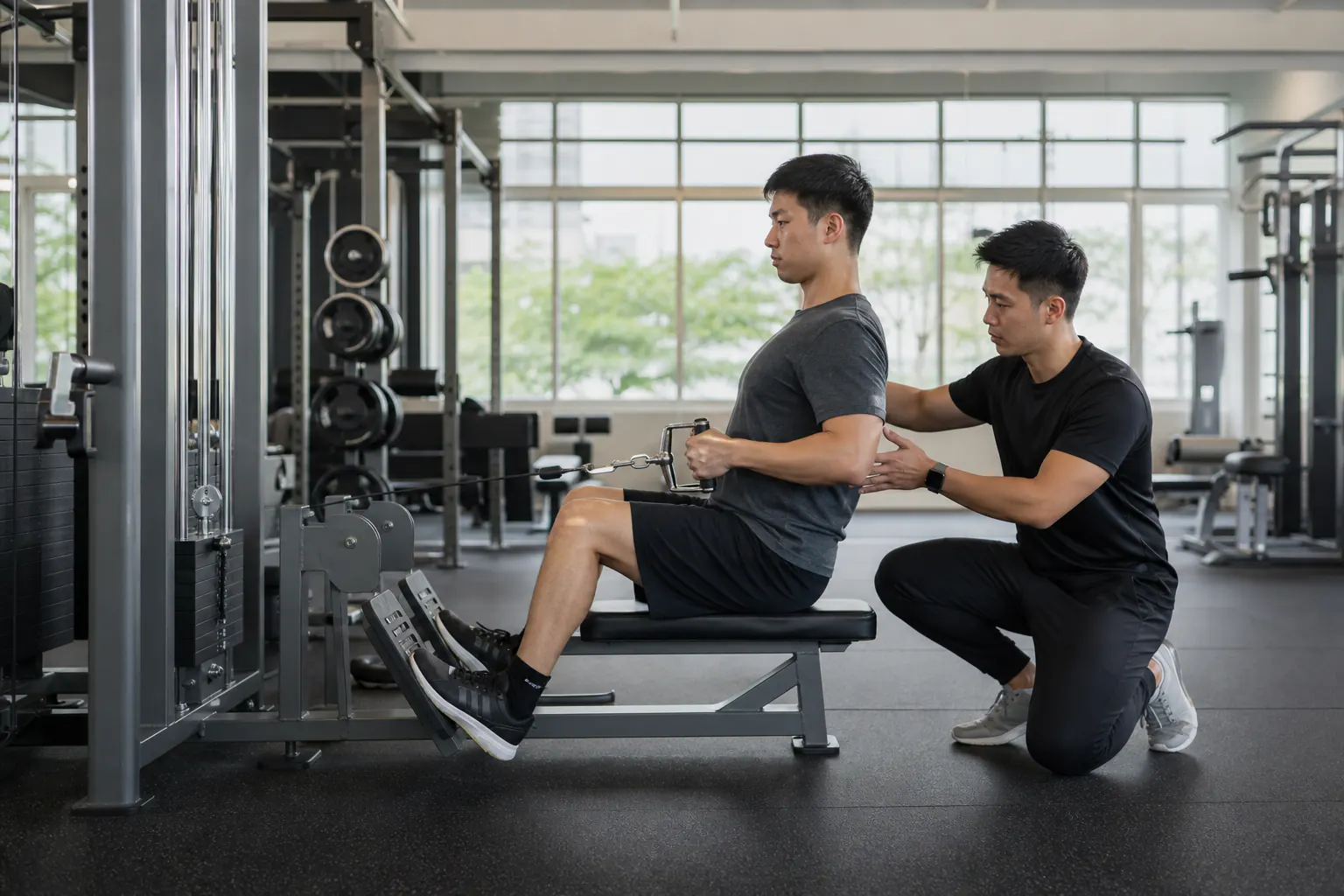
Discover why hand grip strength is a key indicator of overall health and longevity. Learn exercises to improve your grip strength with this Malaysian guide.
The Hidden Health Marker You Are Probably Ignoring
When most Malaysians think about fitness, they picture bicep curls, treadmill runs, or ab exercises. Almost nobody walks into a gym thinking about their grip strength. Yet research consistently shows that hand grip strength is one of the most reliable predictors of overall health, functional capacity, and even lifespan.
A landmark study published in The Lancet, involving nearly 140,000 participants across 17 countries including several in Southeast Asia, found that grip strength was a stronger predictor of cardiovascular death than systolic blood pressure. Every 5 kg decrease in grip strength was associated with a 17 percent increase in cardiovascular mortality. That should get your attention.
What Grip Strength Actually Tells Us
Your grip strength is not just about how firmly you can shake someone's hand at a business meeting in KLCC or hold onto a heavy bag of groceries from Tesco. It serves as a window into your overall muscular health and neurological function.
Indicator of total body strength. Grip strength correlates strongly with upper and lower body strength. People with strong grips tend to be stronger overall, which makes sense because the forearm muscles are engaged in virtually every upper body exercise.
Predictor of functional independence. As we age, grip strength determines whether we can open jars, carry bags, climb stairs with handrails, and perform daily tasks independently. For Malaysia's ageing population, this is particularly relevant.
Marker of nutritional status. Poor grip strength can indicate protein deficiency or malnutrition, which is surprisingly common even among well-fed Malaysians who consume calorie-dense but nutrient-poor diets.
Brain health connection. Emerging research links grip strength to cognitive function. Stronger grip has been associated with better memory, faster processing speed, and lower risk of dementia.
How to Test Your Grip Strength
The standard tool for measuring grip strength is a hand dynamometer, which you can find at most physiotherapy clinics in Malaysia or purchase online for around RM80 to RM200.
General benchmarks for healthy adults:
Men aged 20 to 40: 40 to 55 kg is average, above 55 kg is strong Women aged 20 to 40: 25 to 35 kg is average, above 35 kg is strong Men aged 40 to 60: 35 to 50 kg is average Women aged 40 to 60: 22 to 30 kg is average
If your numbers fall below these ranges, it is time to take grip training seriously.
Types of Grip Strength
Understanding the different types of grip helps you train comprehensively.
Crush Grip
This is the grip you use when shaking hands or squeezing a tennis ball. It involves closing your fingers against resistance. Crush grip is the most commonly tested form of grip strength.
Pinch Grip
This involves holding an object between your fingers and thumb, like picking up a weight plate by its edge. Pinch grip is important for handling tools and everyday objects.
Support Grip
This is your ability to hold onto something for an extended period, such as hanging from a pull-up bar or carrying heavy grocery bags from the wet market. Support grip directly impacts your performance in exercises like deadlifts and rows.
Wrist Strength
While not technically grip, wrist strength and stability are closely related and contribute to overall hand function. Weak wrists can limit your grip performance and increase injury risk.
Exercises to Build Grip Strength
Dead Hangs
Find a pull-up bar - most condo gyms and parks in Malaysia have them - and simply hang with straight arms for as long as possible. Start with 20 to 30 seconds and work up to 60 seconds or more. This builds support grip and decompresses your spine as a bonus.
Farmer's Walks
Pick up a heavy dumbbell or kettlebell in each hand and walk for 30 to 40 metres. Keep your shoulders back and core tight. This exercise builds grip endurance while also working your traps, core, and legs. If your gym is too small, walk in a figure-eight pattern.
Plate Pinches
Take two weight plates and hold them together smooth-side-out between your fingers and thumb. Hold for 20 to 30 seconds. Start with two 5 kg plates and progress to heavier loads.
Towel Hangs
Drape a thick towel over a pull-up bar and grip the towel instead of the bar. Hang for as long as possible. The thicker grip surface forces your forearm muscles to work significantly harder.
Wrist Curls and Reverse Wrist Curls
Sit on a bench with your forearms resting on your thighs, wrists hanging over the edge. Curl a light dumbbell or barbell up using only your wrists. Perform both palm-up (wrist curls) and palm-down (reverse wrist curls) versions. Three sets of 15 to 20 repetitions work well.
Gripper Training
Hand grippers are affordable - you can find them on Shopee or Lazada for as little as RM10 to RM30. Start with a resistance you can close for 10 to 15 repetitions and gradually progress to heavier grippers.
Integrating Grip Training Into Your Routine
You do not need to dedicate entire sessions to grip work. Instead, integrate it into your existing programme.
Use thicker bars or grips. Fat Gripz or similar attachments can be added to dumbbells and barbells, turning every pulling exercise into a grip exercise.
Reduce reliance on straps. While lifting straps have their place, using them for every set prevents your grip from developing. Reserve straps for your heaviest sets only.
Add grip finishers. Spend the last five minutes of your workout on grip-specific exercises. Dead hangs, farmer's walks, or plate pinches make excellent finishers.
Train grip on rest days. Light grip work like squeezing a stress ball or using a hand gripper can be done while watching TV, sitting in traffic, or during lunch breaks at the office.
Grip Strength for Specific Populations
Office workers in Malaysia who spend all day typing often develop weak grips due to repetitive fine motor movements without strength challenges. Counteract this with daily grip exercises.
Seniors should prioritise grip training to maintain independence. Simple exercises like squeezing a tennis ball can make a meaningful difference.
Athletes in sports popular in Malaysia - badminton, rock climbing, martial arts, and dragon boat racing - all benefit enormously from superior grip strength.
The Bottom Line
Grip strength is far more than a party trick. It is a legitimate health marker that predicts your risk of heart disease, your functional capacity as you age, and your overall muscular health. The good news is that grip strength responds quickly to training. Most people see noticeable improvements within four to six weeks of consistent work. Start incorporating grip exercises into your routine today - your health depends on it more than you might think.
Part of our comprehensive guide:
The Complete Guide to Personal Training Methods in Malaysia→Also in this series:
Related Articles
Find a Personal Trainer
Ready to put this into practice? Connect with a certified personal trainer near you, or explore by service and goal.