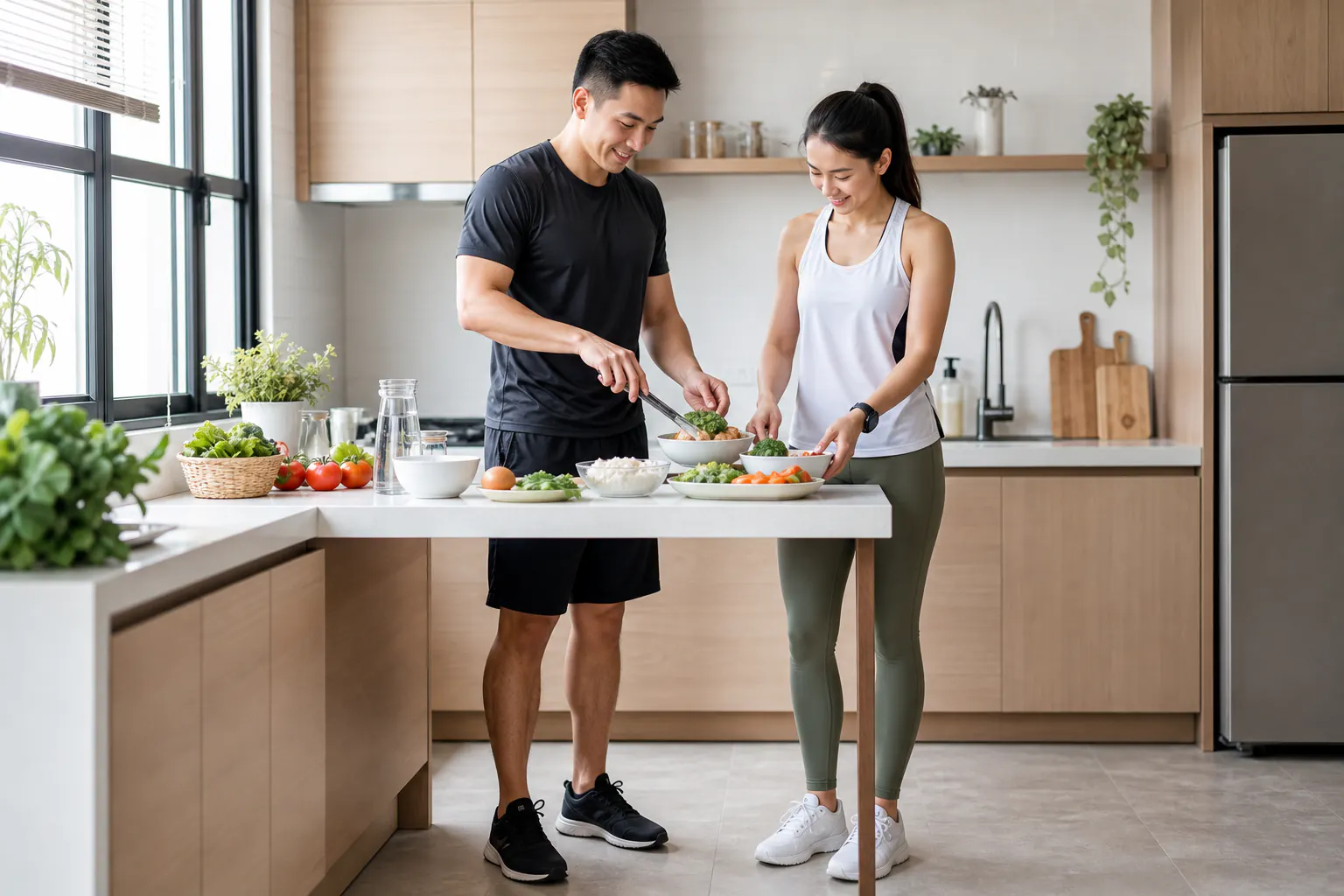
Vegan bodybuilding in Malaysia is challenging but doable. A coach covers protein sources, meal plans, supplements, and local food options.
Let me be upfront: vegan bodybuilding is harder than omnivore bodybuilding. Not impossible - I've coached several vegan athletes who've built impressive physiques - but pretending there's no difference does nobody any favours. The protein challenge is real, the calorie density issue is real, and in Malaysia specifically, navigating a food culture built around chicken rice, rendang, and ikan bakar while building muscle on plants takes extra planning.
That said, it's absolutely achievable. Here's how.
The Protein Problem (And How to Solve It)
Building muscle requires 1.6-2.2g of protein per kilogram of bodyweight daily. For a 70kg person, that's 112-154g of protein. On an omnivorous diet, hitting this is straightforward - a chicken breast here, some eggs there, a scoop of whey, done.
On a vegan diet, you need to be more deliberate. Plant proteins are generally lower in protein per calorie, less digestible (bioavailability is 10-30% lower than animal proteins), and often incomplete - missing or low in one or more essential amino acids.
The Digestibility Factor
Plant proteins have lower digestibility scores than animal proteins. The DIAAS (Digestible Indispensable Amino Acid Score) for common proteins:
- Whey protein: 1.09
- Chicken breast: 1.08
- Eggs: 1.13
- Soy protein isolate: 0.90
- Pea protein: 0.82
- Rice protein: 0.60
- Lentils: 0.58
This means you need to consume roughly 15-25% more total protein to account for lower digestibility. Practical target for vegan bodybuilders: 2.0-2.4g protein per kg bodyweight.
Best Vegan Protein Sources Available in Malaysia
Tofu and Tempeh - Your staples. Tempeh especially is a Malaysian advantage - it's cheap (RM2-4 per pack), widely available, and packs about 20g protein per 100g. It's also fermented, which improves digestibility and nutrient absorption. Eat it daily.
Edamame - Available frozen at most supermarkets (Jaya Grocer, Village Grocer, AEON). About 11g protein per 100g. Great snack or side dish.
Lentils (Dal) - Mamak restaurants serve dal everywhere. About 9g protein per 100g cooked. Pair with rice to complete the amino acid profile.
Chickpeas - Roughly 8-9g protein per 100g cooked. Make hummus, add to salads, or use in curries. Canned chickpeas are available at any supermarket for RM4-6.
Mock meats - Brands like Quorn, Gardein, and local options are increasingly available at Malaysian supermarkets. Some are surprisingly high in protein (15-20g per serving). Check labels - some are loaded with sodium and fillers.
Seitan - Made from vital wheat gluten, seitan has about 25g protein per 100g. Hard to find pre-made in Malaysia, but you can order vital wheat gluten from Shopee and make your own. Tastes and textures remarkably like meat.
Nutritional yeast - Not a primary protein source, but adds 8g per 2 tablespoons plus B-vitamins. Available at health food stores or online. Sprinkle it on everything.
Soy milk - Higher protein than other plant milks (7-9g per 250ml vs 1-2g for almond milk). The fresh soy milk from hawker stalls is cheap and readily available, though often sweetened. Ask for "kurang manis" or find unsweetened versions at supermarkets.
Sample Vegan Meal Plan for Muscle Building (2,500 calories, ~170g protein)
Meal 1 - Breakfast (7am)
- 300g silken tofu scramble with mixed vegetables and turmeric
- 2 slices whole grain bread with peanut butter (2 tbsp)
- 1 glass unsweetened soy milk (300ml)
- Protein: ~38g
Meal 2 - Lunch (12pm)
- Brown rice (200g cooked)
- Tempeh goreng (150g tempeh)
- Stir-fried kangkung with garlic
- Mixed bean salad with chickpeas (100g)
- Protein: ~42g
Meal 3 - Pre-Workout Snack (3pm)
- Edamame (150g)
- 1 banana
- Protein: ~17g
Meal 4 - Post-Workout (6pm)
- Vegan protein shake (pea + rice blend, 30g scoop)
- 1 cup oats with mixed seeds (chia, pumpkin, sunflower)
- Protein: ~38g
Meal 5 - Dinner (8pm)
- Tofu or tempeh curry with coconut milk
- Quinoa or brown rice (200g cooked)
- Side of dal (150g)
- Protein: ~35g
Daily Total: ~170g protein, ~2,500 calories
Adjust portions up or down based on your specific calorie needs.
Critical Supplements for Vegan Bodybuilders
Vitamin B12 - Non-Negotiable
Plants don't produce B12. You will become deficient without supplementation, leading to fatigue, neurological issues, and anaemia. Take 250-1000mcg daily or 2,500mcg twice weekly. Costs about RM30-50 per month from Shopee or pharmacy chains like Guardian or Watsons.
Creatine - Highly Recommended
Vegans have lower baseline creatine stores than meat-eaters because creatine is found primarily in animal muscle. Supplementing 5g daily of creatine monohydrate is arguably even more beneficial for vegans than for omnivores. Expect noticeable strength and performance improvements. RM50-70 for a 3-month supply.
Vitamin D3
Most Malaysians are vitamin D deficient despite living near the equator (sunscreen, indoor lifestyles, dark clothing). Vegan D3 sourced from lichen is available - standard D3 is from lanolin (sheep wool). Take 2,000-4,000 IU daily.
Omega-3 (DHA/EPA)
Fish is the standard source. Vegans should use algae-based omega-3 supplements instead. ALA from flaxseed and chia doesn't convert efficiently to DHA/EPA (only 5-10% conversion). Algae omega-3 runs about RM80-120 per month.
Iron
Plant-based iron (non-heme) is less bioavailable than animal-based iron (heme). Monitor your levels with blood work. If deficient, supplement with iron bisglycinate (gentler on the stomach). Pair iron-rich foods with vitamin C to enhance absorption - squeeze lime juice on your dal and tempeh.
Zinc
Another mineral that's less bioavailable from plant sources. Pumpkin seeds, lentils, and chickpeas contain zinc, but absorption is reduced by phytates. Consider 15-30mg zinc picolinate daily, taken away from high-phytate meals.
Training Adjustments for Vegan Athletes
Your training programme doesn't need to change dramatically, but there are a few considerations:
Recovery may take slightly longer. Some vegan athletes report needing more recovery time between sessions, likely due to the anti-inflammatory nature of plant-based diets (some inflammation is necessary for adaptation) and potentially lower creatine stores. If you notice slower recovery, add an extra rest day or reduce volume slightly.
Carb intake is naturally higher. Plant-based diets tend to be carb-heavy, which is actually great for training performance. You'll likely have excellent glycogen stores and solid energy during workouts.
Monitor your weight closely. It's common for new vegan bodybuilders to accidentally eat in a calorie deficit because plant foods are less calorie-dense. If the scale isn't moving up during a bulk, add more calorie-dense foods: peanut butter, coconut milk curries, avocado, nuts, olive oil.
Eating Vegan at Malaysian Restaurants
Vegetarian Indian Restaurants
Your best friend. Found everywhere in Malaysia. Banana leaf meals with dal, vegetable curries, and rice provide decent protein. Ask for extra dal and tofu dishes. Avoid relying too heavily on fried items - the calories add up fast without proportional protein.
Chinese Vegetarian Restaurants
Buddhist vegetarian restaurants serve mock meat dishes that can be surprisingly high in protein. Mock chicken, mock duck, and various tofu preparations. Check if they use egg - some "vegetarian" Chinese restaurants aren't fully vegan.
Mamak Stalls
Limited but workable. Roti canai with dal provides some protein. Mee goreng without egg. Teh tarik is usually fine (condensed milk is dairy - ask for soy). Honestly, mamak is not your best option for high-protein vegan eating, but it works in a pinch.
Fast Food
Most fast food chains now offer some vegan options. Subway has the Plant Patty. Burger King has the Plant-Based Whopper. These aren't ideal from a whole-foods perspective, but they're convenient when you're stuck.
Common Objections and Honest Answers
"You can't build real muscle without meat"
False. Numerous competitive bodybuilders have built impressive physiques on plant-based diets. Is it slightly harder? Yes. Impossible? No. The scientific literature is clear: protein source matters less than total protein intake and amino acid completeness over the course of a day.
"Soy will mess up your hormones"
The soy-estrogen myth has been thoroughly debunked. A meta-analysis of over 30 studies found no significant effect of soy consumption on testosterone levels in men. Phytoestrogens in soy have a much weaker effect than actual estrogen. You'd need to consume absurd amounts (10+ servings daily) to see any hormonal impact.
"Plant protein is incomplete"
Individual plant proteins may be incomplete, but combining different plant proteins throughout the day provides all essential amino acids. Rice + beans, tofu + quinoa, peanut butter + bread. You don't even need to combine them in the same meal - just over the course of the day.
Is Vegan Bodybuilding Worth the Extra Effort?
That depends entirely on your reasons for going vegan. If your motivation is ethical, environmental, or health-related, then yes - you can absolutely build muscle while honouring those values. The extra planning is manageable once you establish routines.
If your sole goal is maximising muscle growth with minimum friction, an omnivorous diet is objectively easier. No shame in acknowledging that.
Whatever you choose, the fundamentals don't change: progressive overload, adequate protein, caloric surplus for muscle gain, and consistency over months and years.
Related Articles
Find a Personal Trainer
Ready to put this into practice? Connect with a certified personal trainer near you, or explore by service and goal.