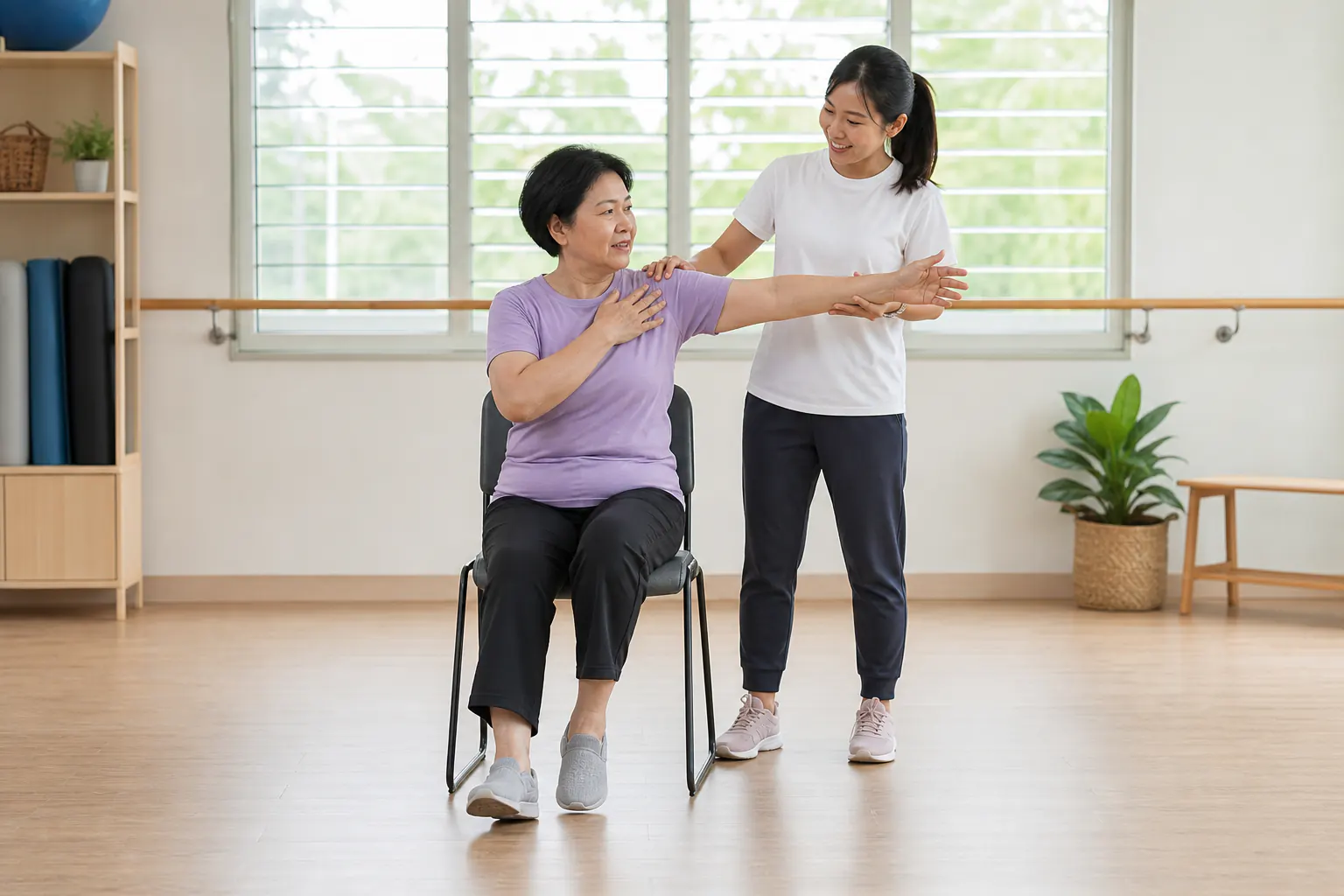
Suffering from sacroiliac joint pain? Learn the best exercises and stretches to relieve SI joint dysfunction and maintain your training programme.
Sacroiliac (SI) joint pain is a surprisingly common cause of lower back and buttock pain that is often misdiagnosed. The SI joint connects your sacrum (the triangular bone at the base of your spine) to your ilium (the large pelvic bone). When this joint becomes irritated or moves too much, it can cause significant discomfort that interferes with daily life and training.
How to Identify SI Joint Pain
SI joint pain is often confused with sciatica or lower back disc issues. Key characteristics that distinguish it include:
- Pain concentrated on one side of the lower back, just above the buttock
- Pain that worsens when standing on one leg, climbing stairs, or rolling over in bed
- Discomfort during prolonged sitting, particularly on hard chairs common in Malaysian kopitiam
- Pain that may radiate into the groin, hip, or back of the thigh but typically does not go below the knee
- Stiffness in the morning that improves with gentle movement
Common Causes
- Muscle imbalances: Weak glutes and tight hip flexors alter the mechanics of the pelvis
- Pregnancy and childbirth: Hormonal changes loosen the ligaments around the SI joint, which is relevant for many new mothers in Malaysia
- Asymmetric loading: Always carrying a bag on one shoulder or sitting with legs crossed
- Heavy unilateral training: Excessive single-leg work without adequate recovery
- Prolonged sitting: The sedentary lifestyle common among Malaysian office workers
Exercises for Relief
Glute Bridges with Hold
Lie on your back with knees bent and feet hip-width apart. Drive your hips upward and hold at the top for 5 seconds, squeezing your glutes firmly. Lower slowly. Perform 3 sets of 12. This strengthens the glutes, which are the primary stabilisers of the SI joint.
Clamshells with Resistance Band
Lie on your side with knees bent and a resistance band around your knees. Open your top knee while keeping your feet together. Focus on feeling the work in the outer hip. Perform 3 sets of 15 per side. Resistance bands cost as little as RM15 to RM40 at Decathlon or Mr DIY.
Pelvic Tilts
Lie on your back with knees bent. Gently rock your pelvis forward and backward, flattening and arching your lower back. This gentle movement helps mobilise the SI joint and reduce stiffness. Perform 20 slow repetitions.
Supine Figure-Four Stretch
Lie on your back, cross one ankle over the opposite knee, and pull the bottom leg toward your chest. Hold for 30 seconds per side. This stretches the piriformis and deep hip rotators that can contribute to SI joint irritation.
Bird Dog
On hands and knees, extend your right arm and left leg simultaneously while keeping your pelvis level. Hold for 5 seconds, then switch. This trains core stability and pelvic control. Perform 3 sets of 8 per side.
Adductor Squeeze
Lie on your back with knees bent and a pillow or ball between your knees. Squeeze for 10 seconds, release for 5 seconds. Perform 3 sets of 10. This engages muscles that help stabilise the pelvis from the inside.
Training Modifications
You do not need to stop training, but some modifications will help:
- Squats: Use a bilateral stance (both feet) rather than split squats or lunges if those provoke pain. Belt squats, available at better-equipped gyms like Anytime Fitness or Fitness First in Malaysia, remove spinal loading entirely.
- Deadlifts: Trap bar deadlifts are often better tolerated than conventional. Keep loads moderate.
- Avoid heavy unilateral leg work until symptoms settle. Replace lunges with leg press or goblet squats.
- Use a belt: A lifting belt provides additional stability to the pelvis during heavy lower body work. Quality belts cost RM100 to RM300 at fitness equipment shops in Malaysia.
Daily Habits
- Avoid sitting cross-legged for extended periods
- Use a lumbar support when driving or sitting at your desk
- Sleep with a pillow between your knees if you sleep on your side
- Alternate which shoulder carries your bag
- Stand evenly on both feet rather than shifting weight to one side
Professional Treatment
If pain persists beyond 4 weeks of self-management, consult a physiotherapist or sports medicine doctor. Some practitioners in Malaysia offer SI joint mobilisation techniques that can provide immediate relief. In severe cases, a diagnostic injection under ultrasound guidance, available at major hospitals for RM300 to RM800, can confirm the SI joint as the pain source and provide temporary relief.
Part of our comprehensive guide:
Recovery and Injury Prevention: Build Durability Into Your Training→Also in this series:
Related Articles
Find a Personal Trainer
Ready to put this into practice? Connect with a certified personal trainer near you, or explore by service and goal.