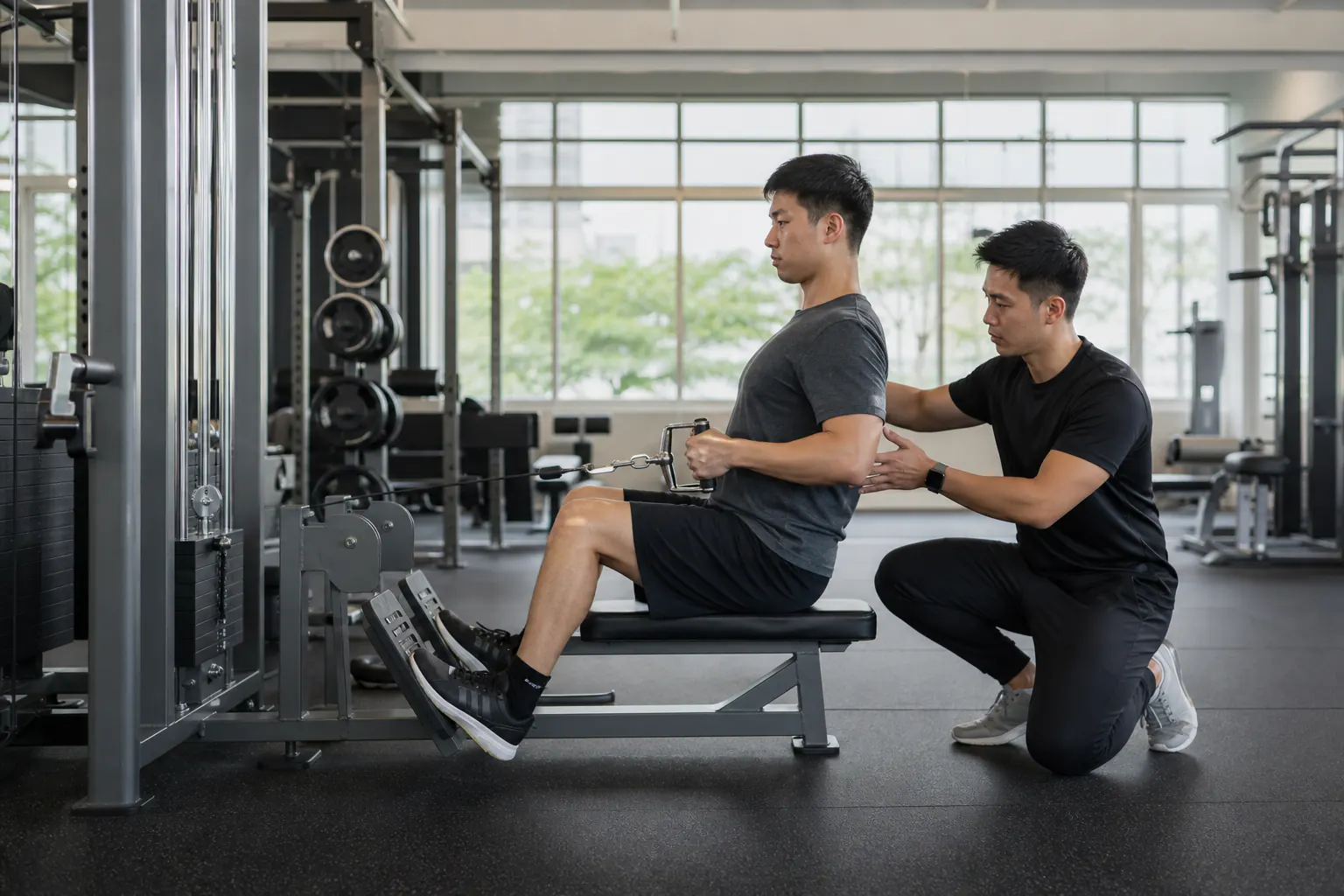
Build broader, more defined shoulders with this complete training guide. Exercises, programming, and nutrition tips for Malaysian gym-goers.
The Pursuit of Broader Shoulders
Wide shoulders create the visual foundation of an athletic physique. They make your waist look narrower, your frame more imposing, and your posture more commanding. Whether you are stepping into a gym in Bukit Bintang or training at your condo facility in Shah Alam, building wider shoulders is one of the most common goals among Malaysian men - and increasingly, women who want that strong, athletic look.
The good news is that shoulder width is not entirely determined by genetics. While your bone structure sets the framework, the muscles you build on top of that frame make a dramatic visual difference. With the right exercises, programming, and nutrition, anyone can develop noticeably broader shoulders.
Anatomy of the Shoulders
Your shoulders are composed of three heads of the deltoid muscle:
Anterior (front) deltoid. Located at the front of the shoulder. Activated during pressing movements and front raises. Most people overtrain this head through excessive bench pressing.
Lateral (side) deltoid. The key to shoulder width. This muscle sits on the outer edge of your shoulder and is what creates that wide, capped appearance. It requires dedicated isolation work because compound pressing movements do not fully stimulate it.
Posterior (rear) deltoid. Located at the back of the shoulder. Critical for posture, shoulder health, and a complete three-dimensional look. Often neglected, especially by those who focus on mirror muscles.
For maximum shoulder width, the lateral deltoid must be your primary focus, supported by balanced development of the anterior and posterior heads.
The Best Exercises for Shoulder Width
Lateral Raises - The King of Width
Stand with a dumbbell in each hand at your sides. Raise your arms out to the sides until they are parallel to the floor, then lower with control. This exercise isolates the lateral deltoid more than any other movement.
Key tips: Use a weight you can control for 12 to 15 reps. Avoid swinging or using momentum. Lead with your elbows, not your hands - imagine pouring water from a jug at the top of each rep. Perform 4 to 5 sets, as the lateral deltoid responds well to high volume.
Cable Lateral Raises
Using a cable machine set to the lowest position, stand sideways to the machine and raise the cable handle out to the side. The constant tension from the cable makes this superior to dumbbells for many lifters. Available at virtually every commercial gym in Malaysia.
Overhead Press
The overhead press is the foundational compound movement for shoulder development. Stand with a barbell or pair of dumbbells at shoulder height, then press overhead until your arms are fully extended. This hits all three deltoid heads with emphasis on the anterior and lateral portions.
Perform 3 to 4 sets of 6 to 10 reps with a challenging weight. Progress the load over time for continuous growth.
Arnold Press
Named after Arnold Schwarzenegger, this dumbbell press variation starts with palms facing you at chin level. As you press overhead, rotate your palms to face forward. This rotation engages the lateral deltoid more than a standard dumbbell press and provides a unique stimulus.
Upright Rows
Grip a barbell or EZ-bar with hands about shoulder-width apart. Pull the bar up along your body to chest height, leading with your elbows. This targets the lateral deltoids and traps effectively. Keep the weight moderate and avoid pulling too high if you have shoulder sensitivity.
Face Pulls
Using a cable machine with a rope attachment set at face height, pull the rope toward your face with elbows high and wide. Squeeze your rear deltoids and upper back at the end position. This exercise is essential for shoulder health, posture, and rear deltoid development.
Reverse Pec Deck or Rear Delt Flyes
Sit at a pec deck machine facing the pad, or bend over with dumbbells. Open your arms wide, squeezing your rear deltoids. Rear delt work is crucial for balanced development and injury prevention.
The Optimal Shoulder Training Programme
Option 1: Dedicated Shoulder Day
- Overhead press: 4 sets of 6-8 reps
- Lateral raises: 4 sets of 12-15 reps
- Cable lateral raises: 3 sets of 15-20 reps
- Arnold press: 3 sets of 10-12 reps
- Face pulls: 4 sets of 15-20 reps
- Rear delt flyes: 3 sets of 12-15 reps
Option 2: Shoulder Work Across the Week
If you follow a push-pull-legs or upper-lower split, distribute shoulder work as follows:
Push day: Overhead press and lateral raises Pull day: Face pulls and rear delt flyes Additional: 2 to 3 extra sets of lateral raises on any training day
The lateral deltoids recover quickly and can be trained with higher frequency - up to 4 times per week with moderate volume per session.
Training Principles for Shoulder Growth
Volume Is King
Research suggests that the deltoids respond best to higher training volumes compared to other muscle groups. Aim for 15 to 25 total sets per week for shoulders, with at least 8 to 10 of those sets dedicated to lateral raises.
Mind-Muscle Connection
The lateral deltoid is a small muscle that is easily overpowered by the traps and anterior delt. Focus on feeling the lateral head contract during every rep. Use lighter weights with strict form rather than heavy weights with momentum.
Progressive Overload
Over time, you must increase the challenge to continue growing. Add small increments of weight, extra reps, or additional sets every two to three weeks. Even progressing from 6 kg to 7 kg lateral raises over several months represents meaningful progress for this small muscle.
Variety in Rep Ranges
Combine heavy compound work (6 to 8 reps on overhead press) with moderate isolation (12 to 15 reps on lateral raises) and high-rep pump work (20 to 25 reps on cables). This approach targets all muscle fibre types.
Nutrition for Shoulder Growth
Building muscle requires a caloric surplus - eating more calories than you burn. For Malaysian men looking to add shoulder size, aim for 300 to 500 extra calories per day above your maintenance level.
Protein is critical. Consume 1.6 to 2.2 grams per kilogram of body weight daily. Great Malaysian protein sources include chicken breast from economy rice stalls, eggs, fish like ikan siakap and salmon, tempeh, and tofu. Supplement with whey protein if needed - widely available at stores like GNC and online retailers in Malaysia.
Carbohydrates fuel intense training sessions. Rice, sweet potatoes, oats, and wholemeal bread provide the energy your muscles need to train hard and recover.
Do not neglect healthy fats. Avocado, nuts, olive oil, and the omega-3 fatty acids in fish support hormone production and overall recovery.
Common Shoulder Training Mistakes
Neglecting the rear delts. An imbalance between front and rear deltoids leads to rounded shoulders and increased injury risk. Always include face pulls or rear delt flyes in your programme.
Too much front delt work. If you already bench press and do incline pressing, your anterior deltoids get plenty of stimulation. Focus your direct shoulder work on the lateral and rear heads.
Ego lifting on lateral raises. Swinging heavy dumbbells with momentum does not build lateral delts - it builds traps and invites shoulder injuries. Drop the weight and control every rep.
Ignoring shoulder health. Perform rotator cuff warm-ups before every pressing session. Band pull-aparts and external rotations keep your shoulders healthy and training consistently, which is the real key to long-term growth.
Building wider shoulders is a process that takes months of consistent, intelligent training. Focus on the lateral delts, train with adequate volume and proper form, eat to support growth, and remain patient. The results will come.
Part of our comprehensive guide:
Muscle Building Fundamentals: A Complete Malaysian Guide→Also in this series:
Related Articles
Find a Personal Trainer
Ready to put this into practice? Connect with a certified personal trainer near you, or explore by service and goal.