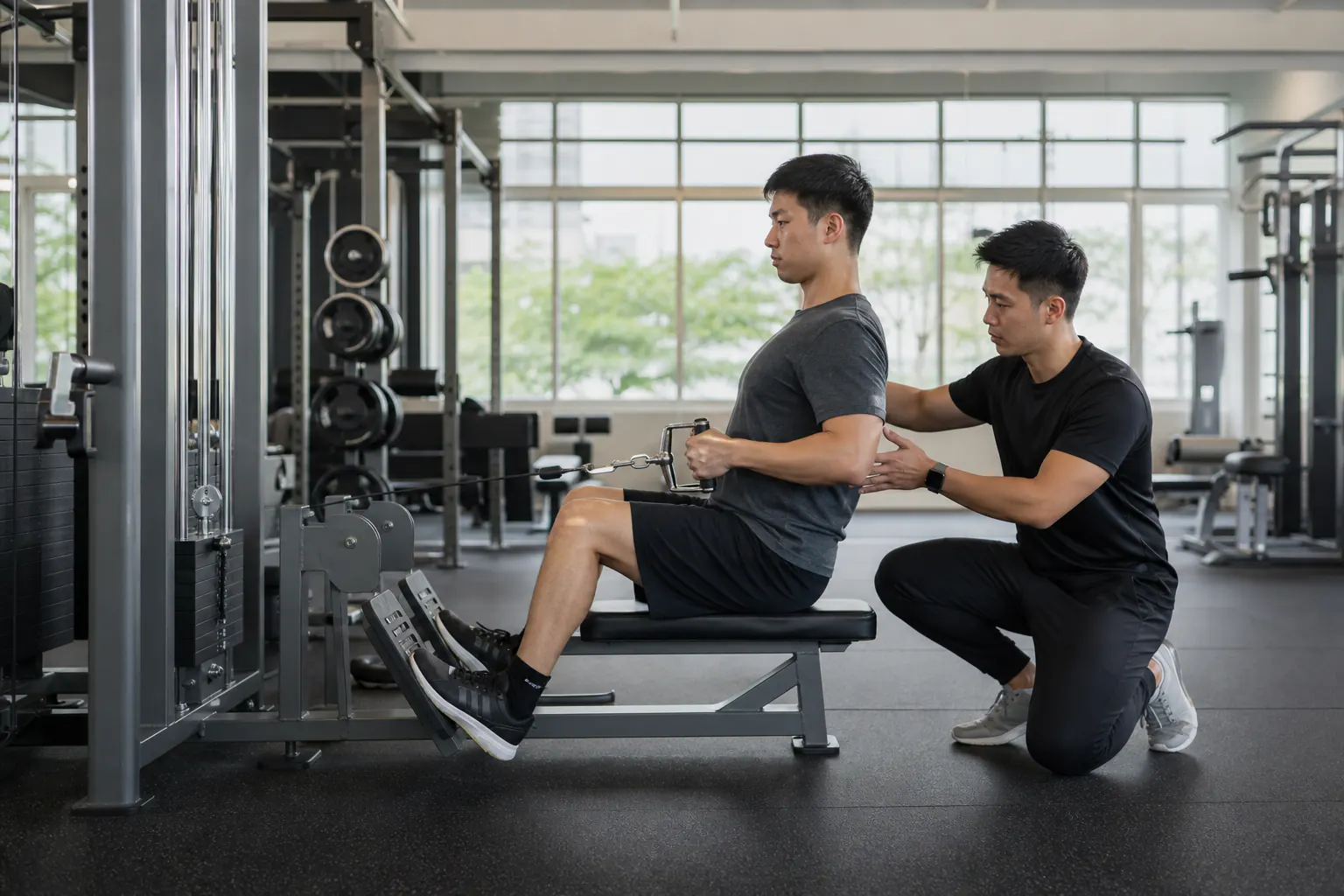
Master every lat pulldown variation to build a wider, thicker back. Detailed technique guide for each grip and attachment option at your Malaysian gym.
The Lat Pulldown: A Gym Essential
The lat pulldown machine is found in virtually every gym in Malaysia, from the largest Celebrity Fitness outlets to the smallest neighbourhood workout spaces. It is one of the most effective machines for building back width and strength, and its versatility makes it suitable for everyone from complete beginners to advanced bodybuilders.
Yet most gym-goers use this machine in only one way - a standard wide-grip pulldown - and miss out on the significant benefits that different grips, attachments, and angles provide. Each variation targets your back muscles differently, and understanding these differences allows you to build a more complete, balanced physique.
Anatomy of the Back Muscles
To understand why different pulldown variations matter, you need to know the key muscles involved:
Latissimus dorsi (lats). The largest back muscle, responsible for that wide V-taper look. It pulls your arms down and back toward your body.
Teres major. Sits above the lats and assists with the same pulling movements. Often called the "little lat."
Rhomboids. Located between your shoulder blades. They pull your scapulae together, contributing to back thickness.
Lower trapezius. The lower portion of the trap muscle, responsible for pulling your shoulder blades down and together.
Biceps. Assist in all pulling movements. Some grip variations emphasise bicep involvement more than others.
The Variations
1. Wide-Grip Lat Pulldown
Grip: Overhand (pronated), hands placed 1.5 times shoulder width apart on the wide bar.
Technique: Sit with thighs secured under the pads. Lean back slightly (about 15 to 20 degrees). Pull the bar down to your upper chest, driving your elbows down and back. Squeeze your lats at the bottom, then control the return.
Primary target: Outer lats and teres major. This is the king of back width exercises.
Common mistakes: Pulling behind the neck (stresses the shoulder), leaning back excessively, using momentum to pull the weight down.
2. Close-Grip Lat Pulldown
Grip: Use a V-bar or close-grip handle attachment. Palms face each other (neutral grip).
Technique: Same seated position. Pull the handle toward your upper chest, squeezing your elbows into your sides. Focus on pulling with your elbows rather than your hands.
Primary target: Lower lats and mid-back. This variation allows for a greater range of motion and often a stronger contraction than the wide-grip version.
Why it matters: If you feel the wide-grip version mostly in your arms, switching to a close grip often helps you feel your back working better because the neutral grip reduces bicep dominance.
3. Underhand (Reverse) Grip Pulldown
Grip: Supinated (palms facing you), hands shoulder-width apart on a straight bar.
Technique: Pull the bar toward your lower chest, focusing on driving your elbows back behind your body. Lean back slightly more than in the wide-grip version.
Primary target: Lower lats and biceps. The supinated grip allows your lats to achieve a deeper contraction and places your biceps in their strongest pulling position.
Pro tip: This variation is excellent for building the lower lat tie-in - the area where your lats attach near the waist, creating that detailed, complete look.
4. Neutral-Grip Wide Pulldown
Grip: Use a wide neutral-grip bar (available at many gyms) with palms facing each other.
Technique: Similar to the standard wide-grip pulldown but with palms in neutral position. Pull to your upper chest with elbows wide.
Primary target: Lats with reduced shoulder stress. This grip is often the most comfortable for people with shoulder issues - common among Malaysian gym-goers who bench press frequently.
5. Single-Arm Pulldown
Grip: Use a single D-handle attachment. Perform one arm at a time.
Technique: Sit or half-kneel at the cable machine. Pull the handle down and toward your hip, fully extending at the top and squeezing hard at the bottom. Keep your torso upright - resist the temptation to rotate.
Primary target: Individual lat development, correcting muscle imbalances. Each side works independently, preventing your stronger side from compensating.
Why it matters: Almost everyone has some degree of back asymmetry. Single-arm work addresses this directly. If your left lat is weaker, it cannot hide behind your stronger right side.
6. Behind-the-Neck Pulldown (With Caution)
Grip: Wide overhand grip, pulling the bar behind your head to touch the base of your neck.
Technique: Only perform this if you have excellent shoulder mobility. Keep your head slightly forward (do not crane your neck) and use a lighter weight than your regular pulldowns.
Primary target: Upper lats and teres major. The angle shifts emphasis slightly compared to front pulldowns.
Important note: This variation is controversial due to shoulder injury risk. Many trainers, myself included, prefer to avoid it entirely in favour of safer alternatives that provide similar benefits. If you have any shoulder issues, skip this completely.
7. Straight-Arm Pulldown
Grip: Stand facing the cable machine with the bar set at the highest position. Use a wide overhand grip with arms nearly straight (slight elbow bend).
Technique: Push the bar down toward your thighs in an arc, keeping your arms relatively straight throughout. Squeeze your lats at the bottom. This is the only pulldown variation performed standing.
Primary target: Lats in isolation, without bicep assistance. This is a pure lat exercise because the elbow joint barely moves, removing bicep involvement almost entirely.
When to use: As a warm-up to activate your lats before heavy rows and pulldowns, or as a finisher at the end of your back workout for a deep lat pump.
8. Rope Pulldown
Grip: Attach a rope handle to the high pulley. Grip each end of the rope.
Technique: Pull the rope down and apart toward your shoulders, allowing the ends of the rope to split at the bottom. This spreading action adds a rear deltoid and rhomboid component that other pulldown variations lack.
Primary target: Lats, rhomboids, and rear delts.
Programming Pulldown Variations
For Back Width (V-Taper)
Prioritise wide-grip pulldowns and wide neutral-grip pulldowns. Aim for 3 to 4 sets of 8 to 12 reps, focusing on a full stretch at the top and a hard squeeze at the bottom.
For Back Thickness
Emphasise close-grip pulldowns, underhand pulldowns, and rope pulldowns. These variations hit the mid-back and rhomboids more effectively. Use moderate weight with controlled reps in the 10 to 15 range.
For Muscle Balance
Include single-arm pulldowns at least once per week. Start with your weaker side and match reps with the stronger side.
Sample Back Day Including Multiple Pulldown Variations
- Wide-grip lat pulldown: 4 sets of 8-10 reps (heavy, controlled)
- Barbell or dumbbell rows: 4 sets of 8-10 reps
- Close-grip pulldown: 3 sets of 10-12 reps
- Single-arm pulldown: 3 sets of 12 per arm
- Straight-arm pulldown: 3 sets of 15 reps (finisher)
Technical Tips for Maximum Back Engagement
Initiate with your elbows, not your hands. Think of your hands as hooks and focus on driving your elbows down and back. This cue shifts the emphasis from your arms to your back.
Depress your shoulders before pulling. Before each rep, pull your shoulder blades down away from your ears. This engages the lower traps and ensures your lats are doing the work.
Use a full range of motion. Let your arms extend fully at the top - do not cheat the stretch. Many gym-goers in Malaysia use too-heavy weight with half reps, which dramatically reduces the effectiveness of the exercise.
Control the eccentric. The negative (returning the weight up) portion of the rep is where significant muscle growth occurs. Take 2 to 3 seconds to return the weight rather than letting it fly up.
Grip width matters. Wider grips target the outer lats, narrower grips hit the lower lats and mid-back. Vary your grip width across training sessions.
The lat pulldown machine may seem basic, but with the right knowledge of variations and techniques, it becomes one of the most versatile tools in your gym for building the back you want. Experiment with different grips and attachments, focus on feeling your back muscles work, and progress the weight gradually. A wider, stronger back awaits.
Part of our comprehensive guide:
Muscle Building Fundamentals: A Complete Malaysian Guide→Also in this series:
Related Articles
Find a Personal Trainer
Ready to put this into practice? Connect with a certified personal trainer near you, or explore by service and goal.