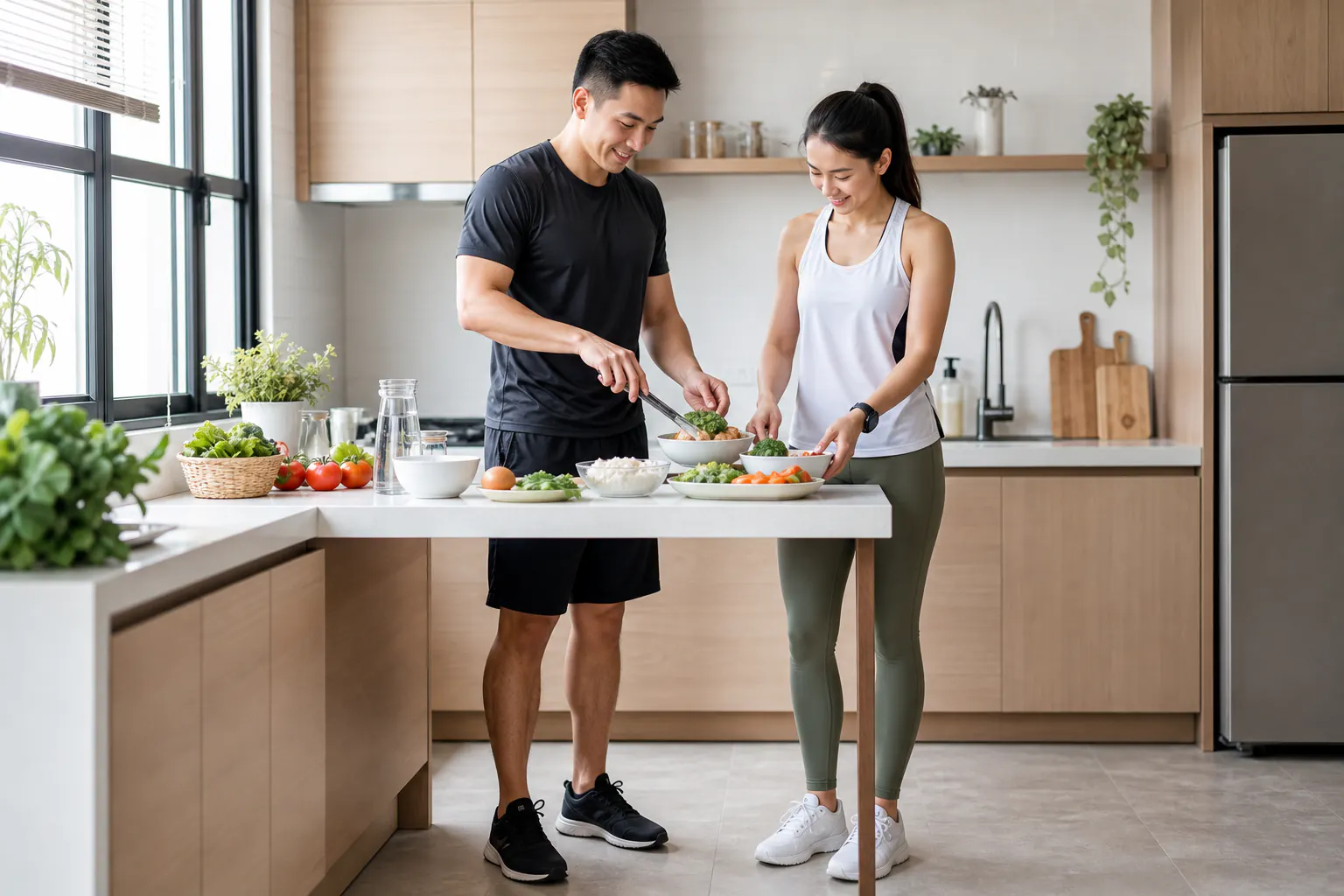
Use the glycemic index to plan better meals with Malaysian foods. Practical GI-based meal planning for training performance and body composition.
Most Malaysian gym-goers have heard of the glycemic index but have no idea how to actually use it. They vaguely know that white rice is "high GI" and brown rice is "better," but that is where the understanding stops. Time to fix that.
The glycemic index ranks carbohydrates on a scale of 0 to 100 based on how quickly they raise blood sugar after eating. High GI foods spike blood sugar fast. Low GI foods release glucose slowly. Neither is inherently good or bad - the timing and context determine everything.
GI Ratings of Common Malaysian Foods
Here is where it gets practical. These are GI values for foods you actually eat, not some Western-centric list of foods you cannot find at a pasar malam.
High GI (70+):
- White rice (jasmine): 89
- Nasi lemak rice (coconut rice): 72-80
- White bread (Gardenia-type): 75
- Roti canai: 75-80
- Watermelon: 76
- Instant noodles (Maggi): 73
Medium GI (56-69):
- Basmati rice: 58
- Sweet potato (keledek): 63
- Roti wholemeal: 62
- Banana (pisang): 51-62 depending on ripeness
- Papaya: 59
- Mee hoon (rice vermicelli): 58
Low GI (55 and below):
- Brown rice: 50
- Oats: 42
- Lentils (dal): 32
- Chickpeas: 28
- Tempeh: 15
- Most vegetables: under 20
- Apple: 36
- Orange: 43
When High GI Foods Actually Help
Right after training is the one time you want fast-digesting carbs. Your muscles are depleted of glycogen and primed to absorb glucose. A high GI meal within 30-60 minutes post-workout accelerates recovery.
This is when your nasi lemak actually works in your favour. That plate of white rice with sambal, egg, and ikan bilis after a hard leg session is replenishing glycogen stores fast. Add some protein - a chicken thigh, some fried fish - and you have a solid post-workout meal.
Post-workout meal examples (high GI focus):
- Nasi campur with white rice, grilled chicken, telur dadar, and ulam - roughly 500-600 calories
- Two roti canai with dal and a protein shake - about 450 calories plus 25g protein from the shake
- White rice with ikan bakar and kangkung - 400-500 calories
When Low GI Foods Are Better
For meals eaten two or more hours before training, or on rest days, lower GI foods keep blood sugar stable, energy consistent, and hunger controlled. This matters especially if you are cutting weight.
Stable blood sugar also means fewer cravings. If you have ever eaten a big plate of white rice at lunch and felt sleepy by 2pm, that is the GI crash hitting you. Swap to brown rice or add more protein and fat to slow digestion, and that afternoon slump disappears.
Pre-workout meal examples (low-medium GI, eaten 2-3 hours before training):
- Brown rice with grilled chicken breast and stir-fried broccoli
- Overnight oats with whey protein, banana, and peanut butter
- Wholemeal roti with dal and a boiled egg
The GI Is Not the Whole Story
Here is what most articles leave out: the glycemic index measures individual foods eaten alone. Nobody eats plain white rice by itself. When you combine carbs with protein, fat, and fibre, the overall glycemic response drops significantly.
A plate of white rice (GI 89) with chicken curry, some sayur, and sambal will have an effective GI much lower than 89. The fat in the curry, the protein from the chicken, and the fibre from the vegetables all slow glucose absorption.
This means you do not need to obsess over individual food GI values. Focus on building balanced meals instead.
Glycemic Load Matters More Than GI
Glycemic load accounts for portion size. Watermelon has a high GI of 76, but a typical serving contains so little carbohydrate that its glycemic load is only 4 - very low. You would need to eat half a watermelon to get a significant blood sugar spike.
Conversely, a massive plate of even medium-GI food will still raise blood sugar substantially just from volume.
How to calculate glycemic load: GL = (GI x grams of carbs per serving) ÷ 100
For a cup of white rice (about 45g carbs, GI 89): GL = (89 x 45) ÷ 100 = 40 - that is high.
For a cup of brown rice (about 45g carbs, GI 50): GL = (50 x 45) ÷ 100 = 22.5 - moderate.
A Full Day Meal Plan Using GI Principles
Training day (training at 6pm):
Breakfast (7am): Overnight oats with protein powder, chia seeds, and sliced banana - low GI, sustained energy all morning.
Lunch (12pm): Brown rice with ayam bakar, ulam, and sambal belacan - medium GI, keeps blood sugar steady through the afternoon.
Pre-workout snack (4:30pm): A banana and a handful of dates - medium-high GI for quick energy before training.
Post-workout (7:30pm): White rice with grilled fish, telur dadar, and kangkung goreng - high GI for fast glycogen replenishment.
Rest day:
Breakfast (8am): Two eggs scrambled with spinach and wholemeal toast - low GI.
Lunch (12:30pm): Chicken rice with extra cucumber and soup - medium GI, smaller rice portion than usual.
Snack (3pm): Greek yogurt with mixed nuts - very low GI.
Dinner (7pm): Grilled salmon or tenggiri steak with roasted sweet potato and a salad - low-medium GI.
Does GI Matter for Fat Loss?
Somewhat, but not as much as total calories. You can eat all low GI foods and still gain fat if you eat too much. That said, lower GI meals tend to keep you fuller longer, reduce cravings, and make it easier to maintain a calorie deficit.
If you are cutting and finding it hard to control hunger, switching your main carb sources from white rice to brown rice, oats, or sweet potato can make a noticeable difference. Not because low GI is magic, but because stable blood sugar reduces the urge to snack.
Practical Tips for Malaysian Eating
At a mamak: Order roti wholemeal instead of roti canai. Or stick to roti canai but add a protein-heavy side like tandoori chicken. The protein and fat will blunt the GI response.
At a nasi campur stall: Load up on lauk (protein dishes) and sayur (vegetables). Go lighter on the rice. This naturally reduces the glycemic load of the meal.
At home: Cook rice with a bit of coconut oil, then refrigerate it overnight. Reheated rice has more resistant starch, which effectively lowers its GI by 10-15 points. This is a validated finding, not a bro-science trick.
When buying packaged food: Check for the GI symbol on products. Some Malaysian brands now include GI ratings on their packaging, especially for breads and cereals.
Who Needs to Pay Extra Attention to GI?
Diabetics or pre-diabetics - roughly 18.2 percent of Malaysian adults have diabetes, one of the highest rates in Asia. If you fall into this category, GI-based meal planning is not optional. It is essential for managing blood sugar alongside your training.
For everyone else, GI is a useful tool but not something to obsess over. Get your total calories and protein right first. Then use GI principles to fine-tune meal timing around training for better performance and recovery.
Related Articles
Find a Personal Trainer
Ready to put this into practice? Connect with a certified personal trainer near you, or explore by service and goal.