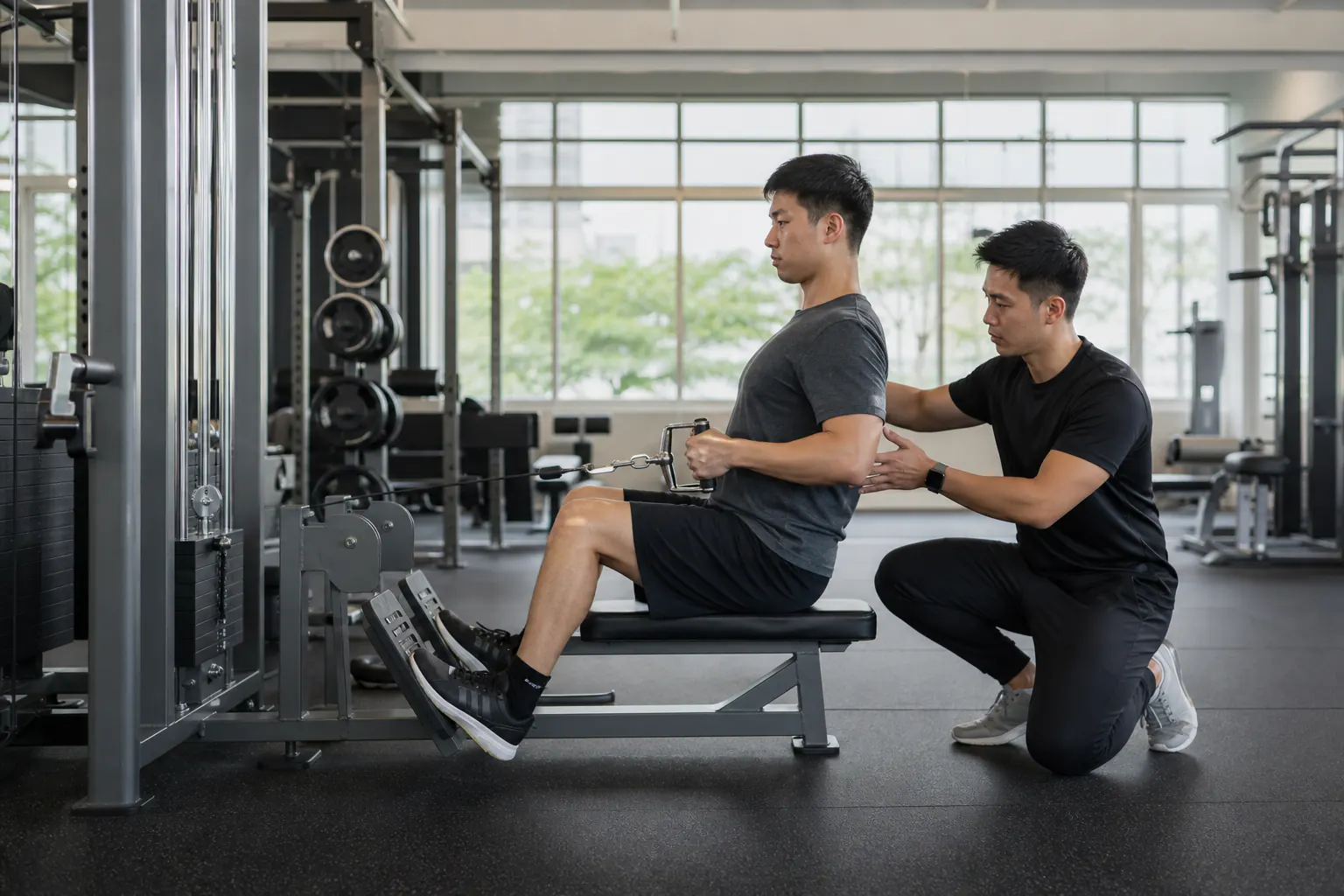
Unlock new muscle growth with eccentric training. Learn how emphasising the lowering phase builds more muscle and strength for Malaysian lifters.
Every rep has two phases: the concentric, where you lift the weight, and the eccentric, where you lower it. Most gym-goers in Malaysia focus all their attention on lifting the weight and let it drop back down with little control. This is a massive missed opportunity. The eccentric phase is actually where most muscle growth stimulus occurs, and deliberately emphasising it can unlock new levels of development.
If your gains have stalled, eccentric training might be the missing piece.
Understanding Eccentric Contractions
During an eccentric contraction, your muscle lengthens while producing force. When you lower the bar during a bench press, your pectorals and triceps are actively controlling the descent while being stretched. This simultaneous lengthening and force production creates unique physiological effects that the concentric phase does not.
Your muscles can handle approximately 20 to 40 percent more load during the eccentric phase than the concentric phase. This means you are actually leaving stimulus on the table during the lowering portion of every rep if you are just letting the weight drop.
Why Eccentric Training Builds More Muscle
Greater Mechanical Tension
Mechanical tension is the primary driver of muscle hypertrophy. Because muscles can produce more force eccentrically, emphasising this phase exposes muscle fibres to greater mechanical tension per repetition. Research consistently shows that eccentric-focused training produces equal or greater hypertrophy compared to concentric-focused training.
More Muscle Damage
Eccentric contractions cause more micro-damage to muscle fibres than concentric contractions. While excessive muscle damage is counterproductive, moderate damage triggers the repair and adaptation processes that lead to bigger, stronger muscles. This is why you feel more sore after exercises with a large eccentric component, like walking downhill or slow negatives.
Preferential Fast-Twitch Fibre Recruitment
Heavy eccentric loading preferentially recruits fast-twitch muscle fibres, which have the greatest potential for growth. This selective recruitment provides a strong hypertrophy stimulus even at moderate overall loads.
Greater Neural Adaptations
Eccentric training improves the nervous system's ability to control heavy loads. This enhanced neural efficiency translates to improved strength in both eccentric and concentric phases over time.
Eccentric Training Methods
Slow Eccentrics (Tempo Training)
The simplest method. Instead of lowering the weight over one to two seconds, take three to five seconds on the eccentric phase. For a bench press, this means slowly lowering the bar to your chest over a four-second count before pressing it back up normally.
A typical tempo prescription looks like 4-1-2-0: four seconds down, one-second pause, two seconds up, zero pause at the top. Apply this to any exercise - squats, rows, curls, presses - for immediate eccentric emphasis.
Use 70 to 80 percent of your normal working weight, as the extended time under tension makes the same load significantly harder. Three to four sets of six to eight reps is appropriate.
Eccentric Overload
Load the bar with more weight than you can concentrically lift, and only perform the eccentric phase. A training partner or safety equipment helps you return the weight to the start position.
For example, load the bench press with 110 percent of your one-rep max. Have two spotters help you unrack and control the bar to the locked position. Lower the bar to your chest over five seconds while your spotters help minimally. They then help you lift it back to the start for the next rep.
This method is extremely demanding and should be used sparingly - once every one to two weeks on a given exercise. Perform three to five eccentric-only reps.
Accentuated Eccentrics
Lift the weight normally using both limbs, then lower it with one limb only. For leg press, press with both legs and lower with one. For dumbbell curls, curl with both arms assisting then lower with one arm. This provides eccentric overload without needing spotters.
Two-Up, One-Down
A variation of accentuated eccentrics. Perform the concentric with both limbs and the eccentric with one. This works exceptionally well for leg curls, leg extensions, and machine-based exercises common in Malaysian gyms.
Negative-Only Training
Perform only the eccentric portion of the exercise. For pull-ups, jump or step to the top position and lower yourself over five to 10 seconds. This is an excellent progression for people who cannot yet perform a full pull-up and a powerful muscle-building technique for advanced lifters.
Practical Applications
Eccentric Squats
Descend over four to five seconds into the bottom of the squat, pause for one second, then drive up at normal speed. Use 75 percent of your normal squat weight. Four sets of six reps. The quad burn will be intense.
Eccentric Bench Press
Lower the bar to your chest over four seconds, pause briefly, and press back up. This builds pressing strength and chest mass while teaching you to control the bar path precisely. Three to four sets of six to eight reps.
Eccentric Romanian Deadlift
Take five seconds to lower the dumbbells along your legs during the RDL. The extended eccentric stretches the hamstrings under load, creating an exceptional growth stimulus. Three sets of eight reps with moderate weight.
Eccentric Pull-Ups
Pull yourself to the top as normal, then take five seconds to lower back to a dead hang. This method builds tremendous lat strength and muscle. If you cannot do regular pull-ups yet, performing three sets of five slow eccentric-only reps is one of the fastest ways to develop enough strength for your first full rep.
Eccentric Bicep Curls
Curl the weight up in one to two seconds, then lower over four to five seconds. The biceps respond exceptionally well to eccentric emphasis due to their role in controlling loads during carrying and lowering movements. Three sets of eight to 10 reps.
Programming Eccentric Training
Full Eccentric Phase
Dedicate four to six weeks to an eccentric-emphasis training block where every exercise uses a four-second eccentric tempo. Reduce weights by 15 to 20 percent to account for the increased time under tension. After the block, return to normal tempos and expect to handle heavier loads.
Selective Emphasis
Apply eccentric emphasis to one to two exercises per session, typically your primary compound lifts. Keep accessory work at normal tempos. This provides the eccentric stimulus without making every exercise exhausting.
Monthly Rotation
Include one eccentric-focused session per week, rotating the target muscle groups monthly. Week one emphasises eccentric chest work, week two legs, week three back, and week four shoulders and arms.
Recovery Considerations
Eccentric training creates more muscle damage than standard training, which means longer recovery times. Allow 72 hours between eccentric-heavy sessions for the same muscle group. Protein intake should be prioritised at 1.8 to 2.2 grams per kilogram to support the increased repair demands. Sleep quality is even more critical - aim for seven to nine hours.
In Malaysia's heat, post-workout nutrition and hydration become especially important after eccentric-heavy sessions. Have a protein-rich meal ready within two hours of training.
Expect More Soreness
DOMS from eccentric training is typically more intense and longer-lasting than from standard training. Your first eccentric session may leave you significantly sore for three to four days. This diminishes rapidly with repeated exposure - a phenomenon called the repeated bout effect. By your third or fourth eccentric session, soreness will be much more manageable.
Do not let initial soreness discourage you. The adaptation from eccentric training is worth the temporary discomfort.
The Bottom Line
Eccentric training is one of the most underutilised tools in the average Malaysian gym-goer's arsenal. By simply slowing down your lowering phase to four to five seconds on your main exercises, you can create a significantly greater muscle-building stimulus without changing anything else about your program. It costs nothing, requires no additional equipment, and the science strongly supports its effectiveness. Control the weight on the way down, and your muscles will have no choice but to grow.
Part of our comprehensive guide:
Muscle Building Fundamentals: A Complete Malaysian Guide→Also in this series:
Related Articles
Find a Personal Trainer
Ready to put this into practice? Connect with a certified personal trainer near you, or explore by service and goal.