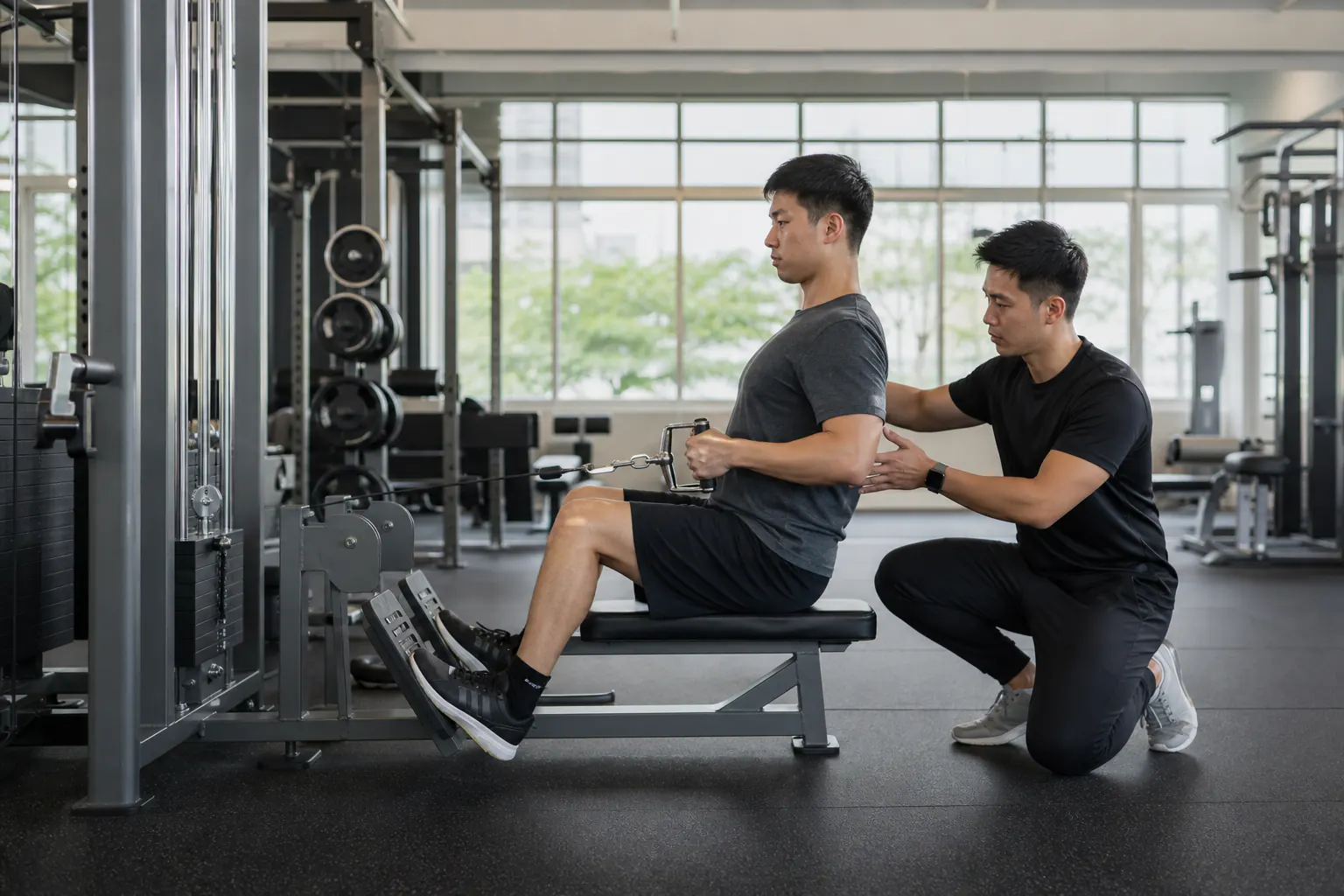
Discover realistic strength standards for Malaysian lifters. Benchmark your squat, bench press, and deadlift against local and global standards.
Why Strength Standards Matter
Every lifter wants to know: am I strong? It is a natural question, but without context, it is impossible to answer. A 100 kg bench press might be impressive for a 60 kg lifter but modest for someone weighing 90 kg. Strength standards provide a framework for evaluating your progress relative to your body weight, training experience, and the broader lifting population.
For Malaysian lifters specifically, strength standards are useful for setting realistic goals, identifying weaknesses, and maintaining perspective. The fitness industry is saturated with social media content from genetically gifted, often enhanced lifters that can create unrealistic expectations. Knowing where you actually stand relative to honest, achievable benchmarks keeps you motivated and grounded.
How Strength Standards Are Categorised
Most strength standard charts use five categories based on training experience and performance level:
Beginner: Someone who has been training for less than six months. Lifts are below average relative to body weight.
Novice: Six months to two years of consistent training. Competent with basic lifts and making steady progress.
Intermediate: Two to five years of consistent training. Lifts are above average and progress requires more structured programming.
Advanced: Five or more years of consistent training. Lifts are well above average and competitive at local levels.
Elite: Top percentile of lifters. Competitive at national or international levels. Typically requires many years of dedicated training and favourable genetics.
The Big Three: Squat, Bench Press, Deadlift
The three powerlifts form the most commonly used benchmark for overall strength. Here are realistic standards adjusted for the Malaysian context, presented as multiples of body weight.
Squat Standards (Back Squat)
| Level | Male | Female |
|---|---|---|
| Beginner | 0.75x BW | 0.5x BW |
| Novice | 1.25x BW | 0.85x BW |
| Intermediate | 1.5x BW | 1.15x BW |
| Advanced | 2.0x BW | 1.5x BW |
| Elite | 2.5x BW+ | 2.0x BW+ |
For a 70 kg Malaysian male, this means:
- Beginner: 52.5 kg
- Novice: 87.5 kg
- Intermediate: 105 kg
- Advanced: 140 kg
- Elite: 175 kg+
Bench Press Standards
| Level | Male | Female |
|---|---|---|
| Beginner | 0.5x BW | 0.3x BW |
| Novice | 0.85x BW | 0.5x BW |
| Intermediate | 1.15x BW | 0.75x BW |
| Advanced | 1.5x BW | 1.0x BW |
| Elite | 2.0x BW+ | 1.5x BW+ |
For a 70 kg Malaysian male:
- Beginner: 35 kg
- Novice: 60 kg
- Intermediate: 80 kg
- Advanced: 105 kg
- Elite: 140 kg+
Deadlift Standards
| Level | Male | Female |
|---|---|---|
| Beginner | 1.0x BW | 0.65x BW |
| Novice | 1.5x BW | 1.0x BW |
| Intermediate | 1.85x BW | 1.35x BW |
| Advanced | 2.35x BW | 1.75x BW |
| Elite | 3.0x BW+ | 2.25x BW+ |
For a 70 kg Malaysian male:
- Beginner: 70 kg
- Novice: 105 kg
- Intermediate: 130 kg
- Advanced: 165 kg
- Elite: 210 kg+
Other Useful Strength Benchmarks
Overhead Press
| Level | Male | Female |
|---|---|---|
| Beginner | 0.35x BW | 0.2x BW |
| Novice | 0.55x BW | 0.35x BW |
| Intermediate | 0.75x BW | 0.5x BW |
| Advanced | 1.0x BW | 0.7x BW |
Barbell Row
| Level | Male | Female |
|---|---|---|
| Beginner | 0.5x BW | 0.3x BW |
| Novice | 0.75x BW | 0.5x BW |
| Intermediate | 1.0x BW | 0.7x BW |
| Advanced | 1.25x BW | 0.9x BW |
Pull-Ups (Bodyweight)
| Level | Male | Female |
|---|---|---|
| Beginner | 1-3 reps | 0-1 reps |
| Novice | 5-8 reps | 1-3 reps |
| Intermediate | 10-15 reps | 5-8 reps |
| Advanced | 15-20 reps | 8-12 reps |
Malaysian-Specific Considerations
Average Body Weight
The average Malaysian male weighs approximately 65 to 72 kg, and the average female approximately 55 to 62 kg. These are generally lighter than Western averages, which affects how standard charts apply. The ratios above account for this by being based on body weight multiples rather than absolute numbers.
Powerlifting in Malaysia
Malaysia has a growing powerlifting community with competitions organised under federations like the Malaysia Powerlifting Alliance (MPA) and affiliated bodies. Competitive standards at the national level typically correspond to the Advanced category or above. Checking competition results from Malaysian meets can give you realistic local benchmarks.
Training Culture and Facilities
Many gyms in Malaysia, particularly condo gyms and budget chains, have limited equipment. Not having access to a power rack, quality barbells, or heavy enough plates can limit progression. If your gym's dumbbells only go up to 30 kg, your bench press development will eventually stall. Consider joining a gym with better equipment once you surpass novice-level standards.
Climate Considerations
Training in Malaysia's heat can affect performance on any given day. If you test your maxes in a hot, poorly ventilated gym, you may underperform compared to testing in a cool, air-conditioned facility. Keep this in mind when evaluating your numbers.
How to Test Your Strength
The One-Rep Max
The most direct measure is a one-rep max (1RM) test: the heaviest weight you can lift for a single repetition with proper form. To test safely:
- Warm up thoroughly with progressively heavier sets
- Rest three to five minutes between heavy attempts
- Increase weight in small increments (2.5 to 5 kg)
- Have a spotter present for bench press and squat
- Stop when form breaks down, not when you fail dramatically
Estimated One-Rep Max
If you prefer not to test heavy singles, you can estimate your 1RM from a heavier set of multiple reps. A common formula is:
Estimated 1RM = Weight x (1 + Reps / 30)
For example, if you bench press 80 kg for 5 reps: 80 x (1 + 5/30) = 80 x 1.167 = 93.3 kg estimated 1RM.
This method is less accurate with sets above ten reps but works well for sets of three to eight.
Using Standards to Guide Your Training
Identify Weak Points
If your squat is at the intermediate level but your bench press is still at novice, you have a clear weakness to address. Prioritise the lagging lift by adding volume, frequency, or dedicated programming.
Set Realistic Goals
Use the standards to set achievable short-term and long-term goals. Moving from novice to intermediate typically takes one to two years of consistent training. Moving from intermediate to advanced takes significantly longer and requires more specialised programming.
Maintain Perspective
Social media creates a distorted view of what is normal. Many lifting videos show only the best performances from the most gifted lifters. An intermediate-level squat already places you well above the general population in strength. An advanced-level lift puts you among the strongest people in most Malaysian gyms.
Track Progress Over Time
Record your lifts in a training log and check them against these standards periodically. Seeing yourself progress from beginner to novice, from novice to intermediate, is deeply motivating and provides objective evidence that your training is working.
The Path Forward
No matter where you currently stand on these charts, the path forward is the same: consistent training with progressive overload, proper nutrition, adequate recovery, and patience. Strength is built over years, not weeks. Trust the process, celebrate small improvements, and keep showing up. The standards are not finish lines; they are milestones on a lifelong journey of getting stronger.
Final Thoughts
Strength standards provide valuable context for your lifting journey. Use them as guideposts, not obsessions. Whether you are a beginner just learning the movements or an advanced lifter chasing competitive numbers, the most important comparison is with your previous self. Keep getting stronger, keep learning, and enjoy the process.
Part of our comprehensive guide:
Muscle Building Fundamentals: A Complete Malaysian Guide→Also in this series:
Related Articles
Find a Personal Trainer
Ready to put this into practice? Connect with a certified personal trainer near you, or explore by service and goal.