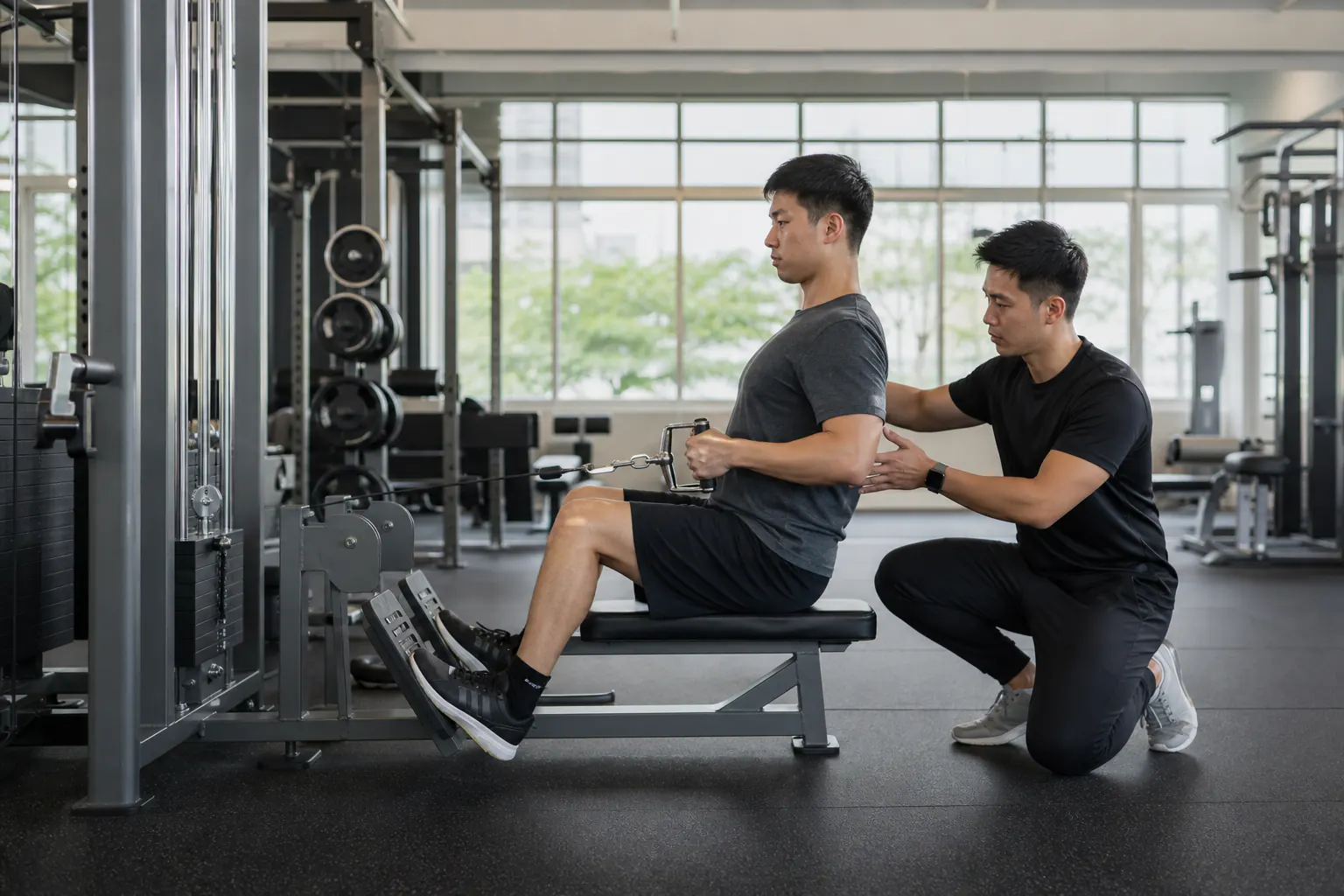
Master every bicep curl variation for bigger arms. From standing barbell curls to concentration curls, build complete bicep development.
The bicep curl is probably the first exercise most people think of when they picture someone lifting weights. Walk into any gym in Malaysia - from the big chains to the neighbourhood basement gym - and you will see people curling. But there is far more to bicep training than standing in front of the mirror doing basic curls.
Your biceps have multiple heads and functions, and different curl variations target different aspects of the muscle. Understanding these variations means bigger, more complete arm development.
Bicep Anatomy in Brief
The biceps brachii has two heads: the long head on the outside of your arm and the short head on the inside. Both heads cross the shoulder and elbow joints, meaning the biceps are involved in both elbow flexion and shoulder flexion.
Underneath the biceps lies the brachialis, a pure elbow flexor that adds thickness to the arm when well developed. The brachioradialis in the forearm also assists with curling movements. Different curl variations emphasise different parts of this muscular system.
Standing Barbell Curl
The classic. Stand with feet hip-width apart, grip a barbell at shoulder width with an underhand grip, and curl the weight up by flexing at the elbows. Lower under control.
This is the best variation for loading heavy and building overall bicep mass. The bilateral movement allows you to handle more weight than any dumbbell variation. Use a straight bar for standard emphasis or an EZ-curl bar if straight bars bother your wrists - a common issue that many Malaysian lifters experience.
Aim for three to four sets of eight to 12 repetitions. Avoid excessive body swing; a slight lean back at the top is natural, but full-body momentum defeats the purpose.
Dumbbell Bicep Curl
Hold a dumbbell in each hand with palms facing forward. Curl both simultaneously or alternate arms. Dumbbells allow each arm to work independently, revealing and correcting strength imbalances.
The freedom of movement also allows you to supinate, rotating your palm from neutral to fully supinated during the curl. This supination component activates the biceps more fully than a fixed-grip barbell curl.
Three to four sets of 10 to 12 repetitions per arm works well for hypertrophy.
Hammer Curl
Hold dumbbells with a neutral grip - palms facing each other throughout the movement. Curl up without rotating the wrist. The neutral grip shifts emphasis from the biceps to the brachialis and brachioradialis, building arm thickness rather than peak.
Hammer curls are essential for complete arm development. The brachialis lies beneath the biceps and, when developed, pushes the biceps up higher, creating the appearance of a bigger arm from all angles.
Three sets of 10 to 12 repetitions. You can typically handle slightly heavier weights than standard dumbbell curls due to the stronger mechanical position.
Incline Dumbbell Curl
Set an adjustable bench to a 45 to 60-degree incline. Sit back with a dumbbell in each hand, arms hanging straight down. Curl the weights up without moving your upper arms forward.
The incline position places your arms behind your body, stretching the long head of the biceps. This extra stretch creates a stronger contraction and emphasises the long head, which contributes to the bicep peak when viewed from the side.
This is one of the most effective variations for targeting the long head specifically. Three sets of 10 to 12 repetitions with lighter weights than standing curls - the stretch makes this much harder than it looks.
Preacher Curl
Using a preacher bench or an incline bench set at about 45 degrees, rest your upper arms on the pad with your armpits tucked snugly against the top. Curl a barbell, EZ-bar, or dumbbells from full extension.
The preacher bench eliminates body momentum and isolates the biceps completely. The arm position in front of the body emphasises the short head. The bottom portion of the movement is particularly challenging, making this variation excellent for building strength at the weakest point of the curl.
Three sets of 10 to 12 repetitions. Be careful at the bottom - do not let the weight pull your elbows into hyperextension. Control the descent.
Concentration Curl
Sit on a bench, lean forward, and brace the back of your upper arm against your inner thigh. Curl a dumbbell with one arm, squeezing hard at the top. This isolation exercise allows maximum focus on the bicep contraction.
EMG studies have shown that the concentration curl produces the highest bicep activation of any curl variation, likely because it completely eliminates momentum and forces the bicep to do all the work.
Three sets of 12 to 15 repetitions per arm. Use lighter weights and focus on the squeeze.
Cable Curl
Using a cable machine, perform curls with a straight bar, EZ-bar, or rope attachment. The cable provides constant tension throughout the entire range of motion, unlike free weights where tension decreases at the top of the curl.
Cable curls are excellent for finishing a bicep workout when you want to accumulate volume without the joint stress of heavy free weights. Three sets of 12 to 15 repetitions.
Spider Curl
Lie face down on an incline bench set to about 45 degrees. Your arms hang straight down in front of you. Curl a barbell or dumbbells from this position.
The spider curl is the opposite of the incline curl - your arms are in front of your body rather than behind it. This position emphasises the short head and peak contraction. It also makes cheating virtually impossible.
Three sets of 10 to 12 repetitions with moderate weight.
Reverse Curl
Use an overhand (pronated) grip on a barbell or EZ-bar and curl normally. The overhand grip dramatically reduces bicep involvement and shifts the load to the brachioradialis and brachialis. This builds forearm size and grip strength.
Many Malaysian gym-goers neglect reverse curls, but they are essential for balanced arm development and functional grip strength. Two to three sets of 12 to 15 repetitions.
Cross-Body Hammer Curl
Instead of curling straight up, curl the dumbbell across your body toward the opposite shoulder. This targets the brachialis and long head from a unique angle. The cross-body motion also recruits the forearm muscles differently.
Three sets of 10 to 12 repetitions per arm.
Programming Bicep Curls
For most Malaysian gym-goers seeking arm growth, train biceps directly two to three times per week with six to nine total sets per session. Choose two to three variations per workout, selecting exercises that target different aspects of the biceps.
A sample bicep session might include barbell curls for three sets of eight to 10 as your heavy compound movement, incline dumbbell curls for three sets of 10 to 12 for long head emphasis, and cable curls for three sets of 12 to 15 as a finishing pump exercise.
Rotate variations every four to six weeks to prevent staleness and ensure all heads and angles receive attention over time. Your arms grow outside the gym during recovery, so adequate protein intake and sleep remain more important than any curl variation.
Part of our comprehensive guide:
Muscle Building Fundamentals: A Complete Malaysian Guide→Also in this series:
Related Articles
Find a Personal Trainer
Ready to put this into practice? Connect with a certified personal trainer near you, or explore by service and goal.